
Does grafting coffee roots increase resilience to climate change?
Negative developments in climate change are increasingly becoming a concern for the coffee industry. Experts warn that coffee will be one of the most severely affected crops, causing damage to global coffee output and supply. Some studies show that grafting coffee roots techniques can increase the tree’s resistance to harsh weather. Let’s explore with XLIII Coffee!
Understanding coffee root grafting
According to Fabrizio Arigoni – Head of Plant Science at Nestle Research: the root system is an important part in assessing a plant’s vitality and abilities such as disease and drought resistance. Rootstock consists of roots and stem segments growing underground, which are essential for supporting the plant and absorbing nutrients. Grafted branches are branches or twigs that grow above the ground, containing the plant’s genetic material that determines what flowers and fruits will develop. Basically, coffee grafting is the combination of coffee species or varieties with different advantages, to create trees with better resilience.
For example, grafting Arabica coffee branches onto Robusta coffee rootstock is a common way to strengthen the root system of Arabica coffee plants. Because robusta rootstock is larger and stronger, when grafted onto an arabica stem, the tree can absorb more water and nutrients.

Ghép gốc cà phê đem lại sức sống mới cho cây cà phê
Grafting coffee roots is a method that has been around since the late 19th century. Currently, it is considered one of the sustainable techniques that can bring benefits and optimize the adaptability of coffee plants. Benoît Bertrand – geneticist at the French agricultural research organization CIRAD, said that many scientific studies have found that grafting well-chosen coffee roots can help coffee trees adapt to soil conditions. difficult climate or climate. Grafting coffee roots can also allow the tree to better adapt to higher temperatures, prolonged drought, excess water and higher aluminum content. Furthermore, rootstock varieties can also help coffee plants be better protected against certain pests and diseases. Some rootstocks also mitigate the effects of global warming without affecting quality or yield.
Experts also say that when growing Arabica coffee, rootstock grafting is used to protect the tree from nematodes. These are small parasitic worms that can suck nutrients from the coffee plant’s root system, thereby inhibiting growth. Coffee with suitable root grafts can absorb more nutrients, limiting the amount of fertilizer.

Coffee root grafting improves farmers' resilience
A coffee farm is a small business, the farmer’s income depends on the balance between input and output. If coffee plants adapt better to climate change, farmers can have more sustainable livelihoods thanks to increased output and productivity of coffee lots.
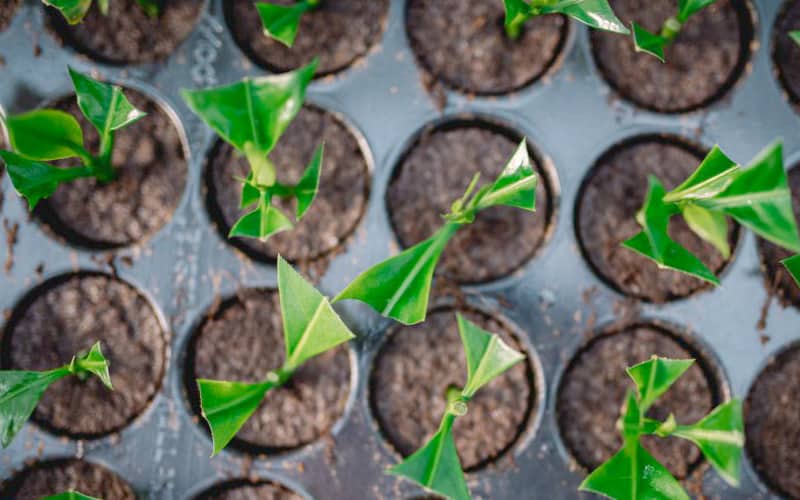
Currently, with the development of science and technology, researchers are trying to evaluate whether these rootstocks can increase carbon fixation, reduce water use and increase nitrogen consumption. . At the same time, they tested whether the microbiome (the community of microorganisms, such as bacteria, fungi and yeast) in coffee roots was improved by rootstock grafting. By using wild coffee species in rootstock grafting, researchers can make a difference for the better in protecting lesser-known species in the Coffea genus.
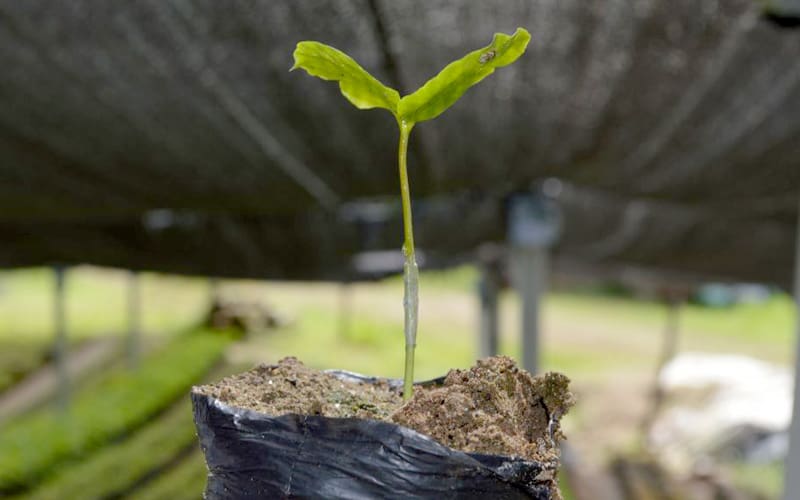
Climate change is a complex, large-scale problem and a significant threat to the future of the coffee industry. However, preventative measures such as grafting can help coffee farmers adapt to changing environmental conditions. Coffee rootstock research can support progress in discovering new solutions that are sustainable and deployable at scale. Rootstock will also significantly improve the productivity and climate adaptability of coffee trees while minimizing the impact of climate change.
If you want to experience specialty coffee beans, visit XLIII Coffee to enjoy and feel.
Don’t forget to follow XLIII Coffee’s Journal channel to read useful information in the coffee industry.
Articles you may be interested in:
– Degas coffee – Eliminates distance to bring fullness to the taste
– What is lactic fermented coffee? Can innovative testing become a new trend?

Bài viết mới

- Find the Origin
Mandela coffee variety – A convergence of generations from a masterpiece breeding strategy
Amidst the constant fluctuations of the era, Mandela emerges as a gentle yet resilient response from the soil. Instead of attempting to alter or impose upon nature, this breeding strategy is, in essence, a profound act of listening. Each Mandela coffee bean carries the bloodline of multiple generations, possessing both the serene, steadfast nature of native trees and the sparkling elegance of premium varieties. It is a sacred continuation, where the flow of generations ultimate honors the original value of the species, imparting an intact and sustainable vitality into every cup.


- Taste the Origin
Nigussie Nare – Murago Outgrowers #03028: Cultivated from the Values of Sustainable Reciprocity
Nestled beneath the shade trees of Sidama, Bensa, the Nigussie Nare – Murago Outgrowers #03028 coffee lot serves as a living testament to the values of sustainable reciprocity. This symbiosis begins with the intimate bond between a rich indigenous ecosystem and the smallholder farmers of the Murago region. Each harvested bean is the culmination of a virtuous cycle: a stable environment produces exceptional bean quality, and sustainable economic growth, in turn, continues to protect the verdant canopy of the great forest.

- Taste the Origin
Rift Valley Coffee Caucus #03757 – A Testament to Western Kenya’s Collective Spirit
Turning our gaze to the Great Rift Valley of East Africa, the fertile volcanic landscapes are witnessing an inspiring transformation. Moving away from fierce, survival-driven competition, smallholder farmers in Western Kenya have chosen to join forces, forging a resilient and unified network. The Rift Valley Coffee Caucus #03757 lot stands as the ultimate testament to this remarkable collective synergy.

- Breaking News
Airworks Coffee & XLIII Coffee – A “handshake” that brings original flavors across borders
XLIII Coffee, alongside our key wholesale partner Airworks Coffee, officially announces the latest release of specialty coffee lots for the North American market. This event reaffirms our commitment to bringing original flavors across all geographical barriers to coffee enthusiasts.
Early access (for Subscribers of Airworks): 10:00 AM (PST) | Wednesday, April 29, 2026
General access: 10:00 AM (PST) | Friday, May 1, 2026
We invite our Customers and Partners to visit (airworkscoffee.com) for detailed information and to prepare for this special release!
- Taste the Origin
Unveiling May Discovery Subscription: Nueva Alianza Mejorada #4731 & Nueva Alianza Mejorada #4732
The Discovery Subscription is a silent dialogue, a place where the soul of the connoisseur finds a harmonious beat with distant lands. Like a transparent lens, we become storytellers, meticulously peeling back layers of cultural sediment, the breath of the soil, and the human philosophies hidden within every coffee bean.
May arrives with brilliant streaks of golden sunlight, a time when we long to hide beneath the lush, dew-drenched canopies of Santa Teresa. Amidst the silence of the Andes, when compassion touches Mother Earth, what will we hear? Perhaps it is a sweet response that nature reserves solely for souls who know how to wait patiently.

Specialty Coffee in Vietnam
BRAND VALUE
YOU SHOULD HAVE KNOWN
XLIII Coffee has been aiming to become a big, impactful company with social responsibilities,
have access to high-quality raw materials and convey the complete original values of coffee to our customer
