
How long can coffee be stored: Green Beans, Roasted, Ground, and Brewed?
When stored properly, expired coffee rarely causes food poisoning concerns, but it loses its taste and affects the overall experience. So, what is the optimal storage time for different types of coffee? How can we preserve the freshness of coffee for as long as possible? Let’s explore the details with XLIII Coffee in this article.
I. Does Coffee Spoil Quickly?
Similar to other foods, coffee contains organic compounds and minerals that easily react with each other and external factors, leading to chemical changes. As a result, coffee quality gradually decreases over time. Ground coffee will spoil faster than whole beans because of its larger surface area exposed to air. Whole beans maintain quality longer, but it’s still best to consume them within a few weeks after roasting to ensure a fresh taste.
When exposed to air, humidity, heat, and light, coffee undergoes oxidation, which causes it to lose its aroma and fresh flavor. High humidity softens the beans, making them prone to mold, while high temperatures cause aromatic compounds to evaporate more quickly. Direct light destroys the compounds in the coffee, causing the beans to discolor and lose quality. Therefore, to preserve coffee’s freshness, these factors must be avoided.

Whole bean coffee may retain its quality longer, but is still best consumed within a few weeks of roasting to ensure fresh flavor
II. Coffee Storage Times for Different Types
The shelf life of coffee varies depending on its state, brewing method, and storage environment. In standard conditions, whole beans last longer than brewed coffee. Here’s a table outlining the storage times for popular coffee types, from green beans to brewed coffee:
|
Coffee Type |
Storage Time |
Optimal Storage Conditions |
Note |
|
Green Coffee Beans |
12 – 18 months |
Humidity < 12%, store in a dry, cool place, avoid direct sunlight, temperature 20-25°C |
Flavor deteriorates significantly after extended storage |
|
Roasted Whole Beans |
2 – 4 weeks (after roasting) |
Store in an airtight container, avoid light and air |
After 4 weeks, flavor begins to fade, but can last up to 3 months if properly stored |
|
Ground Coffee |
1 – 2 weeks (after grinding) |
Store in an airtight container, keep in a dry place |
Ground coffee oxidizes quickly, best to grind as needed |
|
Brewed Coffee |
1 – 2 hours |
Keep in a thermos if necessary |
After 2 hours, flavor changes and may become bitter |
|
Cold Brew |
7 – 10 days (in the fridge) |
Store in an airtight glass bottle, keep at 4°C |
After 10 days, flavor fades and may become sour |
Specific Storage Details:
1. Green Coffee Beans
Green coffee beans are unroasted and typically have an optimal moisture level of 10-12%. If stored properly, they can maintain flavor and quality for 6 to 12 months, or even up to 2 years under ideal conditions. However, high humidity can cause mold, and excessive heat can lead to the loss of freshness and aroma. Green coffee should be stored in a dry, cool environment, away from direct light and high humidity, ideally at temperatures of 20-25°C.

Green coffee beans can stay fresh for 6 to 12 months
2. Roasted Whole Beans
Roasted whole beans have a shorter shelf life compared to green beans. After roasting, the aroma begins to dissipate, and compounds in the beans are more susceptible to oxidation. The best storage period for roasted whole beans is 2 to 4 weeks after roasting. After 4 weeks, the coffee loses its fresh flavor but can still be used within 3 months if stored properly. The actual shelf life may vary depending on the producer, packaging, and when the coffee was purchased.

After 4 weeks, roasted coffee will lose its fresh flavor, but can still be used within 3 months if stored properly
3. Ground Coffee
Ground coffee has a larger surface area exposed to air, which accelerates the oxidation process. It’s best to consume it within a week after grinding to preserve its flavor. After a week, the coffee starts to lose its aroma and may absorb odors from the environment. If not used immediately, ground coffee should be stored in the refrigerator in an airtight container.

Ground coffee has a larger surface area exposed to air, causing oxidation to occur more quickly
4. Brewed Coffee
Brewed coffee is the most prone to flavor loss due to the sensitivity of aromatic compounds to air, temperature, and time. Depending on the brewing method and storage conditions, brewed coffee can maintain its flavor for a few hours or days.
Hot brewed coffee (Espresso, Pour-Over, Phin, etc.) is best consumed within 1 to 2 hours at room temperature. It’s recommended to drink it within the first 30 minutes. After that, the flavor will diminish, and the coffee may become bitter or sour. If the coffee cools down and is stored in the refrigerator, it can last for about 12-24 hours, but its flavor will change significantly. After 24 hours, the coffee is likely no longer enjoyable.

Cold brew should not be left at room temperature for too long
Cold brew, which is made using a cold immersion method, extracts flavors slowly without heat, allowing it to retain its taste longer than hot brewed coffee. Cold brew can be stored in a sealed bottle in the refrigerator for 2 to 7 days. To maintain optimal freshness, it’s best consumed within the first 2-3 days. Additionally, cold brew with milk or cream should be consumed within 2 hours.
Conclusion
Properly storing coffee helps maintain the fresh taste of each type. With just a few adjustments in storage, you can elevate your daily coffee experience. Be sure to remember these tips!
III. FAQs
1. How long can green coffee beans be stored?
Green coffee beans can be stored for 12 to 18 months if kept in a dry, cool place with low humidity. However, the quality of the beans will gradually decrease over time, so it’s best to consume them within 12 months for the best flavor.
2. Why shouldn’t roasted coffee be stored in the fridge?
Roasted coffee should not be stored in the fridge because the beans can absorb odors from other foods, which affects the flavor. Also, temperature fluctuations may create moisture, reducing the coffee’s quality.
3. How long can cold brew be stored in the fridge?
Cold brew can be stored in the fridge for 2 to 3 days. To keep the flavor intact, store it in a sealed glass bottle and avoid exposure to air or other food odors.
4. How should ground coffee be stored to maintain its flavor for the longest time?
Ground coffee should be stored in an airtight container or a ziplock bag with a one-way valve, in a cool place away from direct sunlight. For extended storage, it can be kept in the refrigerator, but it’s best to grind only as much as needed for the day.
5. How long can brewed hot coffee be kept?
Brewed hot coffee should be consumed within 30 minutes to 1 hour for the best flavor. Afterward, it may become bitter or sour. If you need to store it, keep it in a sealed container in the fridge for up to 24 hours.

Bài viết mới

- Taste the Origin
Nigussie Nare – Murago Outgrowers #03028: Cultivated from the Values of Sustainable Reciprocity
Nestled beneath the shade trees of Sidama, Bensa, the Nigussie Nare – Murago Outgrowers #03028 coffee lot serves as a living testament to the values of sustainable reciprocity. This symbiosis begins with the intimate bond between a rich indigenous ecosystem and the smallholder farmers of the Murago region. Each harvested bean is the culmination of a virtuous cycle: a stable environment produces exceptional bean quality, and sustainable economic growth, in turn, continues to protect the verdant canopy of the great forest.

- Taste the Origin
Rift Valley Coffee Caucus #03757 – A Testament to Western Kenya’s Collective Spirit
Turning our gaze to the Great Rift Valley of East Africa, the fertile volcanic landscapes are witnessing an inspiring transformation. Moving away from fierce, survival-driven competition, smallholder farmers in Western Kenya have chosen to join forces, forging a resilient and unified network. The Rift Valley Coffee Caucus #03757 lot stands as the ultimate testament to this remarkable collective synergy.

- Breaking News
Airworks Coffee & XLIII Coffee – A “handshake” that brings original flavors across borders
XLIII Coffee, alongside our key wholesale partner Airworks Coffee, officially announces the latest release of specialty coffee lots for the North American market. This event reaffirms our commitment to bringing original flavors across all geographical barriers to coffee enthusiasts.
Early access (for Subscribers of Airworks): 10:00 AM (PST) | Wednesday, April 29, 2026
General access: 10:00 AM (PST) | Friday, May 1, 2026
We invite our Customers and Partners to visit (airworkscoffee.com) for detailed information and to prepare for this special release!
- Taste the Origin
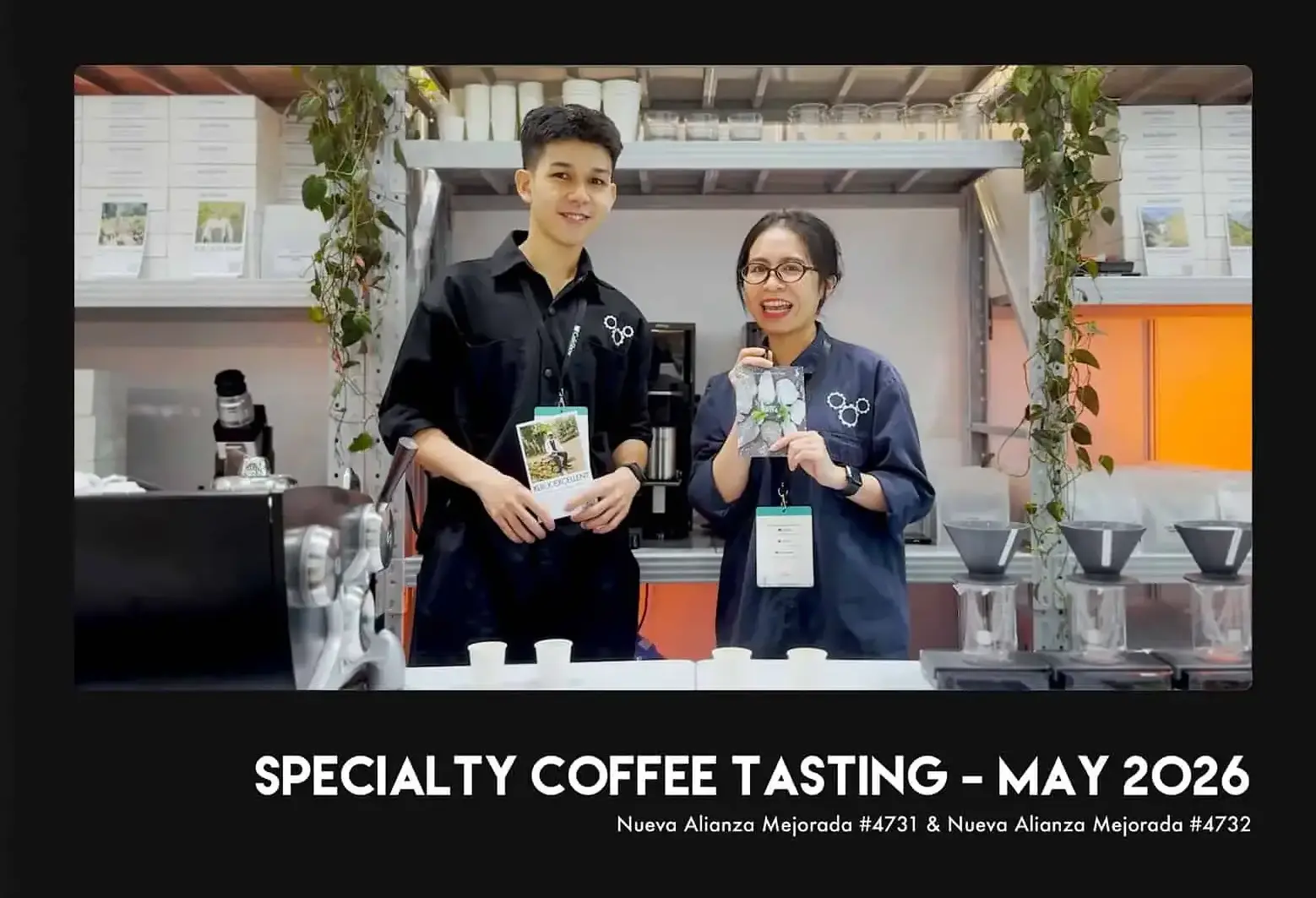
Unveiling May Discovery Subscription: Nueva Alianza Mejorada #4731 & Nueva Alianza Mejorada #4732
The Discovery Subscription is a silent dialogue, a place where the soul of the connoisseur finds a harmonious beat with distant lands. Like a transparent lens, we become storytellers, meticulously peeling back layers of cultural sediment, the breath of the soil, and the human philosophies hidden within every coffee bean.
May arrives with brilliant streaks of golden sunlight, a time when we long to hide beneath the lush, dew-drenched canopies of Santa Teresa. Amidst the silence of the Andes, when compassion touches Mother Earth, what will we hear? Perhaps it is a sweet response that nature reserves solely for souls who know how to wait patiently.

- Taste the Origin
Nueva Alianza Pacamara #4733 – The essence of Cusco with elegant jasmine notes
Nueva Alianza Pacamara #4733 is a testament to the miraculous terroir and dedicated cultivation of the renowned Cusco region. The combination of the characteristic Pacamara bean size and ideal altitude has forged a flavor profile of immense sophistication and depth. From the very first moment, this lot captivates with its elegant jasmine notes, radiating a gentle, pure fragrance akin to a flower blooming in the morning dew.

- Taste the Origin
Nueva Alianza Orange Gesha #4737 – An expedition of recessive genetic traits into the sensory realm
In a world of authenticity, Nueva Alianza Orange Gesha #4737 represents the proud emergence of rare biological traits often obscured by nature’s universality. Carrying a recessive genetic code, Lot #4737 embarks on an “expedition” into the connoisseur’s mind, where record-breaking fructose concentrations are released to perfectly fill every sensory gap with absolute smoothness and purity.
Through washed processing and extremely-light roasting, vibrant citrus nuances and ethereal floral notes, once hidden deep within the genetic structure, now manifest with power, transforming the tasting experience into a journey of ontological completion, where the rarity of recessive genes finally reigns supreme in flavor.

Specialty Coffee in Vietnam
BRAND VALUE
YOU SHOULD HAVE KNOWN
XLIII Coffee has been aiming to become a big, impactful company with social responsibilities,
have access to high-quality raw materials and convey the complete original values of coffee to our customer
