
How to adjust the roasting curve to own the right batch of coffee
Temperature is an important variable that affects the way coffee beans change during all stages of roasting. Creating a roasting curve to track temperature variations can help roasters better predict roasting results or adjust roasting temperatures for better results. Let’s learn more about the roasting curve with XLIII Coffee through this article!
The role of the roasting curve in the roasting process
The roasting curve is a line that depicts the rise and fall of the roasting temperature per minute, displayed on a roasting chart. Each type of coffee will have different roasting charts and roasting curves.
They are often viewed by roasters as a tool for monitoring the temperature in the oven, helping them create a guide to recreate the roast profile for each individual coffee or flavor profile. For example, high-density coffee like Kenya will require a higher inlet temperature than wild Ethiopian coffees.
The roasting curve also shows the level of heat required for the stages that coffee goes through in the roasting process such as drying, first crack, second crack, etc., based on the sample roasting profile. If there is a standard profile, roasters will be able to complete the batch of coffee faster, right, save time, and avoid mistakes that damage the coffee. In addition, by applying the same amount of heat, the roasting curve for each roast also helps the batches of coffee to be uniform in flavor and color after roasting.

How to create the right roasting curve
Choose the correct charging temperature
To roast coffee properly, you need to pay attention to the charging temperature according to the roasting curve displayed on the screen. This temperature indicates the amount of energy inside the drum to start roasting or the internal temperature level before you put the coffee in. The charging temperature should match the roasting curve you want to follow.
If the charging temperature is too low, you won’t have control over the reference roasting curve and have to heat up quickly at the Maillard stage, says Anne Cooper, a roasting consultant at Equilibrium Master Roasters. This will cause the coffee to have less flavor development and a grassy smell. If the charging temperature is too high, the machine will generate too much heat in the drum and burn the coffee creating a burnt, smoky and spicy smell.

Temperature management in the Mallard phase
The Maillard stage occurs when the heat reaches maturity and begins to promote chemical reactions in the coffee beans. At that time, the carbohydrates and amino acids in the coffee beans interact with each other, creating dark brown Melanoidin molecules. These molecules not only change the color of the coffee beans but also give the coffee its flavor and character.
To get the best coffee, you should pay attention to the duration of the Maillard phase, tracking on a roasting curve.
The famous coffee roaster, Rob Hoos, advises that to get the best coffee, you should closely monitor the changes of the Maillard stage on a roasting curve. Because if the time of the Maillard process is too short or too long, it will lose the characteristics of the coffee. At the same time, prolonging this period for too long can make the coffee taste bitter and salty.

Controlling the heating in the crack stages
Coffee beans begin to crack (first crack) after the Maillard stage. This is the time when heat and pressure make the substances in the particles resonate to the maximum extent, the outer shell is not enough to make them expand and expand, releasing water vapor and carbon dioxide. At this point, the roaster must adjust the temperature so that the roasting curve quickly reaches the first crack compared to the reference curve and stops early to create a light, fresh and herbal flavor.
After cracking, the coffee beans enter the growing phase, which lasts until the end of the roasting process. Controlling the development of a longer roasting curve will shorten the Maillard period, resulting in a more sour and sweet coffee.
At the end of the roasting process, the time it takes for the beans to first crack will have a marked effect on the caramelization, acidity, sweetness, and overall flavor of the beans. The shorter the time, the brighter and less carmelized the flavor can be. Over time, the flavor will “evolve” or turn brown, caramelized, and less bright. This is also the time when the heating rate of the grain can decrease too quickly or drop below zero causing flavor imbalance. Therefore, roasters need to pay attention to monitoring the roasting curve and provide enough heat even at the end of the process to ensure the perfection of the coffee batch.

At this point, you probably already know the importance and basics of how to adjust the roasting curve to get the right batch of coffee to your taste. Come to XLIII Coffee to immediately experience the cup of roasted specialty coffee and learn more great things in the world of specialty coffee!
Articles you may be interested in
– How has technology democratized coffee trading?

Bài viết mới

- Find the Origin
Mandela coffee variety – A convergence of generations from a masterpiece breeding strategy
Amidst the constant fluctuations of the era, Mandela emerges as a gentle yet resilient response from the soil. Instead of attempting to alter or impose upon nature, this breeding strategy is, in essence, a profound act of listening. Each Mandela coffee bean carries the bloodline of multiple generations, possessing both the serene, steadfast nature of native trees and the sparkling elegance of premium varieties. It is a sacred continuation, where the flow of generations ultimate honors the original value of the species, imparting an intact and sustainable vitality into every cup.


- Taste the Origin
Nigussie Nare – Murago Outgrowers #03028: Cultivated from the Values of Sustainable Reciprocity
Nestled beneath the shade trees of Sidama, Bensa, the Nigussie Nare – Murago Outgrowers #03028 coffee lot serves as a living testament to the values of sustainable reciprocity. This symbiosis begins with the intimate bond between a rich indigenous ecosystem and the smallholder farmers of the Murago region. Each harvested bean is the culmination of a virtuous cycle: a stable environment produces exceptional bean quality, and sustainable economic growth, in turn, continues to protect the verdant canopy of the great forest.

- Taste the Origin
Rift Valley Coffee Caucus #03757 – A Testament to Western Kenya’s Collective Spirit
Turning our gaze to the Great Rift Valley of East Africa, the fertile volcanic landscapes are witnessing an inspiring transformation. Moving away from fierce, survival-driven competition, smallholder farmers in Western Kenya have chosen to join forces, forging a resilient and unified network. The Rift Valley Coffee Caucus #03757 lot stands as the ultimate testament to this remarkable collective synergy.

- Breaking News
Airworks Coffee & XLIII Coffee – A “handshake” that brings original flavors across borders
XLIII Coffee, alongside our key wholesale partner Airworks Coffee, officially announces the latest release of specialty coffee lots for the North American market. This event reaffirms our commitment to bringing original flavors across all geographical barriers to coffee enthusiasts.
Early access (for Subscribers of Airworks): 10:00 AM (PST) | Wednesday, April 29, 2026
General access: 10:00 AM (PST) | Friday, May 1, 2026
We invite our Customers and Partners to visit (airworkscoffee.com) for detailed information and to prepare for this special release!
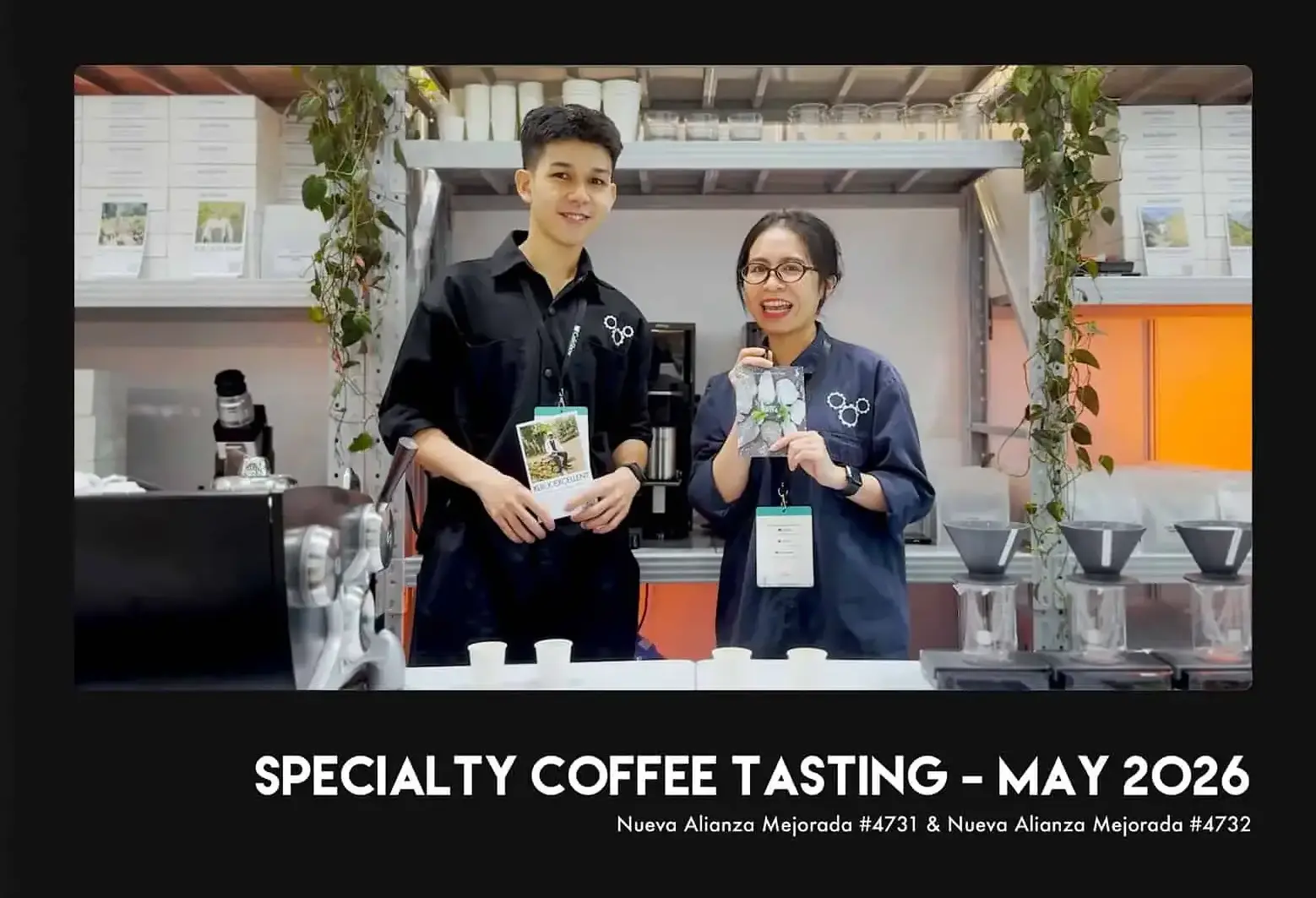
- Taste the Origin
Unveiling May Discovery Subscription: Nueva Alianza Mejorada #4731 & Nueva Alianza Mejorada #4732
The Discovery Subscription is a silent dialogue, a place where the soul of the connoisseur finds a harmonious beat with distant lands. Like a transparent lens, we become storytellers, meticulously peeling back layers of cultural sediment, the breath of the soil, and the human philosophies hidden within every coffee bean.
May arrives with brilliant streaks of golden sunlight, a time when we long to hide beneath the lush, dew-drenched canopies of Santa Teresa. Amidst the silence of the Andes, when compassion touches Mother Earth, what will we hear? Perhaps it is a sweet response that nature reserves solely for souls who know how to wait patiently.

Specialty Coffee in Vietnam
BRAND VALUE
YOU SHOULD HAVE KNOWN
XLIII Coffee has been aiming to become a big, impactful company with social responsibilities,
have access to high-quality raw materials and convey the complete original values of coffee to our customer
