
Kaffa Coffee and the Journey from the Ethiopian Rainforest
Kaffa coffee from Ethiopia is a symbol of wild coffee, embodying the pristine essence of the rainforest and the long-standing history of the Arabica species.
I. Overview of Kaffa Coffee
The Wild Origins of Kaffa Coffee
Kaffa coffee is one of the last remaining wild populations of Coffea Arabica in the world, growing naturally in the ancient rainforests of the Kaffa region in southwestern Ethiopia. This area is considered the biological cradle of the Coffea Arabica species – one of the three main coffee species commercialized globally (alongside Robusta and Liberica).

Unlike the hybrid or domesticated Arabica varieties commonly grown today, Kaffa coffee retains its original, untouched genetic makeup. This makes it not only a valuable subject for botanical genetic research but also highly attractive in the modern specialty coffee industry, which values authenticity, terroir, and genetic diversity.
The Legend and History of Kaffa Coffee
According to a widely shared legend in the global coffee community, the Kaffa region is associated with the story of Kaldi – the young goatherd who discovered coffee.
As the story goes, Kaldi noticed that his goats became unusually energetic after eating red berries from a mysterious tree in the Kaffa forest. His curiosity sparked a journey of discovery that led to humans using coffee cherries as a natural source of energy for the first time.

Although there is no definitive historical evidence confirming Kaldi’s existence, the tale remains a powerful symbol of Arabica’s origin in Kaffa. This narrative has since been reinforced by modern genetic studies.
Genomic analysis shows the highest genetic diversity of Arabica is found in the Kaffa region, proving that this species originated in Ethiopia before spreading to Yemen, then to the Middle East, Europe, and the rest of the world. This fact has elevated Kaffa to an iconic status in global coffee history.
Geographic Features of the Kaffa Coffee Habitat
The Kaffa forests, where Kaffa coffee grows wild, are located at elevations ranging from 1,400 to 2,100 meters above sea level, within the southwestern Ethiopian highlands.
The region’s climate is characterized by high humidity, annual rainfall between 1,800 and 2,200 mm, and stable temperatures ranging from 14°C to 26°C – ideal conditions for coffee cultivation.
The forest ecosystem in Kaffa stands out for its dense canopy, rich biodiversity, and multilayered vegetation structure, allowing Kaffa coffee trees to thrive in natural shade. This region is not only a sanctuary for wild coffee but also home to thousands of endemic and endangered plant and animal species.
In recognition of its ecological importance and genetic conservation value, Kaffa was designated a UNESCO Biosphere Reserve in 2010. Protecting the Kaffa forest means safeguarding the natural gene bank of Arabica coffee – an essential resource for the future of the global coffee industry in the face of growing climate challenges.

II. Unique Biological Characteristics of Kaffa Coffee
Thriving in untouched primary forests, Kaffa coffee possesses rare biological traits that reflect the natural purity of Coffea Arabica in its most ancestral form.
A Completely Unaltered Genetic Structure
The genetic makeup of Kaffa coffee has never been hybridized or domesticated by humans, allowing it to retain the original genetic identity inherited from the ancient ancestors of the Arabica species.
According to research by the Ethiopian Institute of Agricultural Research (EIAR) and World Coffee Research, Kaffa coffee populations exhibit 2 to 3 times more genetic diversity than commercial Arabica varieties like Bourbon or Typica, which have undergone generations of selective breeding.
Natural Growth Patterns
Kaffa coffee grows entirely in the wild under dense forest canopies, shaded by tall trees and free from human cultivation. This ecosystem provides ideal conditions for slow but sustainable growth, reflecting its truly “ancient wild” nature.
Biological surveys conducted by CIRAD (French Agricultural Research Centre for International Development) have documented that Kaffa coffee demonstrates strong resistance to pests and climatic fluctuations, thanks to its rich and heterogeneous genetic pool.
In addition, Kaffa coffee beans are typically smaller, take longer to mature, and yield less than cultivated varieties – traits that clearly indicate a species untouched by industrial farming.
This is precisely why Kaffa is regarded as a “living gene bank” for future breeding programs aimed at resilience and adaptation.


Highest Biodiversity Within the Arabica Species
According to the Ethiopian Biodiversity Institute (EBI), the Kaffa region hosts over 5,000 distinct lines of Coffea Arabica, making it the most genetically diverse center for Arabica coffee in the world.
This diversity is not only a critical resource for scientific research and conservation but also a vital gene pool for developing future cultivars that can resist diseases like coffee leaf rust or adapt to increasingly dry conditions caused by climate change.
These extraordinary biological traits underscore the unique genetic value of Kaffa coffee and open vast opportunities for research, conservation, and climate-resilient innovations within the global coffee industry.
III. Opportunities and Challenges in Commercializing Kaffa Coffee
The Kaffa coffee holds exceptional biological value and tremendous potential in the global specialty coffee market. However, transforming this wild coffee species into a commercial product presents numerous challenges, requiring a cautious approach that balances environmental conservation with sustainable economic development.
Opportunities
As the only remaining Coffea Arabica species still growing wild in its native environment, Kaffa coffee represents the “prototype” of Arabica – untouched by domestication, hybridization, or industrial commercialization. This makes it exceptionally valuable in the Specialty Coffee market.
Coffee connoisseurs are increasingly drawn to beans with deep traceability, distinct biological identity, and unique origin stories. Kaffa coffee perfectly aligns with this trend, offering two core traits of authenticity: a birthplace rooted in the cradle of coffee and an entirely original genetic structure.
In terms of sensory, Kaffa delivers a rich and surprising flavor profile, with elegant acidity and natural aromas reminiscent of damp earth, fallen leaves, wild berries, and forest herbs.
These flavor layers are rarely found in modern Arabica cultivars, which have been selectively bred to suit mainstream markets. Because of its rarity, unique character, and symbolic heritage, Kaffa holds high commercial potential in the premium segment of the coffee industry.
Challenges
Despite its allure, commercializing Kaffa coffee which was deeply rooted in its wild nature poses significant challenges.
First, its yield is extremely low. Kaffa coffee trees grow scattered throughout primary forests, following natural growth cycles without human intervention. Harvesting is labor-intensive, fully reliant on manual foraging, and cannot be mechanized or easily scaled like industrial plantations.
Second, while Kaffa’s flavor profile is complex and compelling, it can be inaccessible to the average consumer. Its “wild” character can sometimes be perceived as challenging or unfamiliar, requiring a refined palate or a willingness to explore unconventional tastes.
Moreover, processing Kaffa coffee demands strict technical precision. From post-harvest handling and drying to roasting and brewing, every step requires deep knowledge and sensitivity to preserve its delicate flavor layers. This places pressure on the supply chain, especially for roasters aiming to maintain its “original essence.”


A Vision for Sustainable Harvesting and Conservation
To integrate Kaffa into the global Specialty Coffee value chain sustainably, producers and conservation organizations are exploring semi-wild coffee production models.
This method allows the coffee trees to grow naturally in their native ecosystem, while implementing conservation-driven oversight such as designated harvesting zones, intercropping systems, and selective seed propagation without altering the plant’s genetic structure.
Equally important is the role of local communities, who have intimate knowledge of the landscape, harvest timing, and preservation of native coffee plants. Empowering them to participate more deeply in the value chain supports both ecological sustainability and local economic development. This approach embodies the core philosophy of equity and fairness that the Specialty Coffee sector strives to uphold.
IV. Kaffa Coffee and Its Connection to Ethiopian Indigenous Culture
Kaffa coffee is a living embodiment of the deep bond between nature and the people of Ethiopia. From the wild forests where it grows to the rooftops of local homes in the Kaffa region, this coffee has woven itself into both the material and spiritual fabric of everyday life, becoming an inseparable part of the region’s cultural heritage.
In daily life,
In Kaffa, this coffee is far more than just a wild plant growing in the rainforest. It is part of the people’s lifeblood, a cultural symbol preserved through generations.
While much of the world has shifted toward large-scale cultivation to meet market demands, the indigenous people of Kaffa have maintained their ancestral way of life: harvesting coffee cherries directly from the forest, just as their forebears did, without the interference of modern agricultural techniques.
This approach not only reflects a philosophy of living in harmony with nature, but also plays a crucial role in conserving the wild coffee species in its most pristine natural condition.
In spiritual and cultural life,
Beyond its role as an agricultural product, Kaffa coffee holds a sacred place in local tradition. Ethiopians refer to it as “the tree of Mother Earth” – a symbol imbued with both spiritual reverence and a deep connection to life and origins.
In the spiritual life of the Kaffa people, coffee is a vessel of memory, a source of communal bonding, and the centerpiece of stories passed down over generations, shared around steaming cups in moments of reflection and togetherness.

From daily rituals to cultural depth, Kaffa coffee features prominently in traditional ceremonies, most notably the Ethiopian Coffee Ceremony.
This ritual elevates the act of brewing and enjoying coffee to an art form or a sacred practice.
The three rounds of brewing, the blessings spoken, and the meditative atmosphere of the gathering transform coffee into a bridge: between past and present, between individuals, and between humanity and nature.
Conclusion
From Ethiopia’s ancient rainforests to the spiritual rhythms of its people, Kaffa coffee is not only the origin of coffee as the world knows it, but also a living cultural heritage, passed down and preserved across generations.
Images collected by XLIII Coffee.
V. FAQs
1. How is wild Kaffa coffee different from today’s common Arabica varieties
Kaffa coffee is a wild, naturally growing species found in Ethiopia’s primary rainforests – untouched by domestication or hybridization. Unlike modern Arabica cultivars, which have been selectively bred for yield and flavor optimization, Kaffa maintains its original genetic diversity and strong disease resistance. This makes it a rare genetic resource that scientists and the coffee industry are working hard to preserve.
2. Why is Kaffa coffee considered a “living heritage” of the global coffee industry?
Kaffa is not only the birthplace of the first Coffea Arabica trees ever discovered, but also one of the few places where wild coffee still grows in its natural, unaltered state. Its existence outside of cultivation, combined with its biological, historical, and cultural value, makes Kaffa a “living heritage” – a vital link between modern coffee and its ancient origins thousands of years ago.
3. What flavor notes does Kaffa coffee bring from the Ethiopian rainforest?
Kaffa’s flavor profile reflects the forest environment in which it grows natural, untamed, and complex. Expect bright acidity reminiscent of dark berries, a gentle sweetness, herbal aftertastes, and a cool, earthy sensation evocative of fresh forest air.
4. Is Kaffa the only region in Ethiopia where wild coffee grows?
No. In addition to Kaffa, other Ethiopian forest regions such as Sheka, Jimma, and Illubabor also host naturally growing coffee. However, Kaffa stands out due to its symbolic historical importance, exceptional biodiversity, and its connection to the very name “coffea”, making it the most iconic reference point for wild coffee.
5. What can modern coffee drinkers learn from Kaffa coffee?
Kaffa invites today’s coffee drinkers to reconnect with coffee’s natural origins where trees grow without human intervention. It reminds us of the beauty of the untouched, the importance of biodiversity, and the value of savoring coffee not only with our palate but with a deep appreciation for the nature that gave birth to it.

Bài viết mới

- Find the Origin
Mandela coffee variety – A convergence of generations from a masterpiece breeding strategy
Amidst the constant fluctuations of the era, Mandela emerges as a gentle yet resilient response from the soil. Instead of attempting to alter or impose upon nature, this breeding strategy is, in essence, a profound act of listening. Each Mandela coffee bean carries the bloodline of multiple generations, possessing both the serene, steadfast nature of native trees and the sparkling elegance of premium varieties. It is a sacred continuation, where the flow of generations ultimate honors the original value of the species, imparting an intact and sustainable vitality into every cup.


- Taste the Origin
Nigussie Nare – Murago Outgrowers #03028: Cultivated from the Values of Sustainable Reciprocity
Nestled beneath the shade trees of Sidama, Bensa, the Nigussie Nare – Murago Outgrowers #03028 coffee lot serves as a living testament to the values of sustainable reciprocity. This symbiosis begins with the intimate bond between a rich indigenous ecosystem and the smallholder farmers of the Murago region. Each harvested bean is the culmination of a virtuous cycle: a stable environment produces exceptional bean quality, and sustainable economic growth, in turn, continues to protect the verdant canopy of the great forest.

- Taste the Origin
Rift Valley Coffee Caucus #03757 – A Testament to Western Kenya’s Collective Spirit
Turning our gaze to the Great Rift Valley of East Africa, the fertile volcanic landscapes are witnessing an inspiring transformation. Moving away from fierce, survival-driven competition, smallholder farmers in Western Kenya have chosen to join forces, forging a resilient and unified network. The Rift Valley Coffee Caucus #03757 lot stands as the ultimate testament to this remarkable collective synergy.

- Breaking News
Airworks Coffee & XLIII Coffee – A “handshake” that brings original flavors across borders
XLIII Coffee, alongside our key wholesale partner Airworks Coffee, officially announces the latest release of specialty coffee lots for the North American market. This event reaffirms our commitment to bringing original flavors across all geographical barriers to coffee enthusiasts.
Early access (for Subscribers of Airworks): 10:00 AM (PST) | Wednesday, April 29, 2026
General access: 10:00 AM (PST) | Friday, May 1, 2026
We invite our Customers and Partners to visit (airworkscoffee.com) for detailed information and to prepare for this special release!
- Taste the Origin
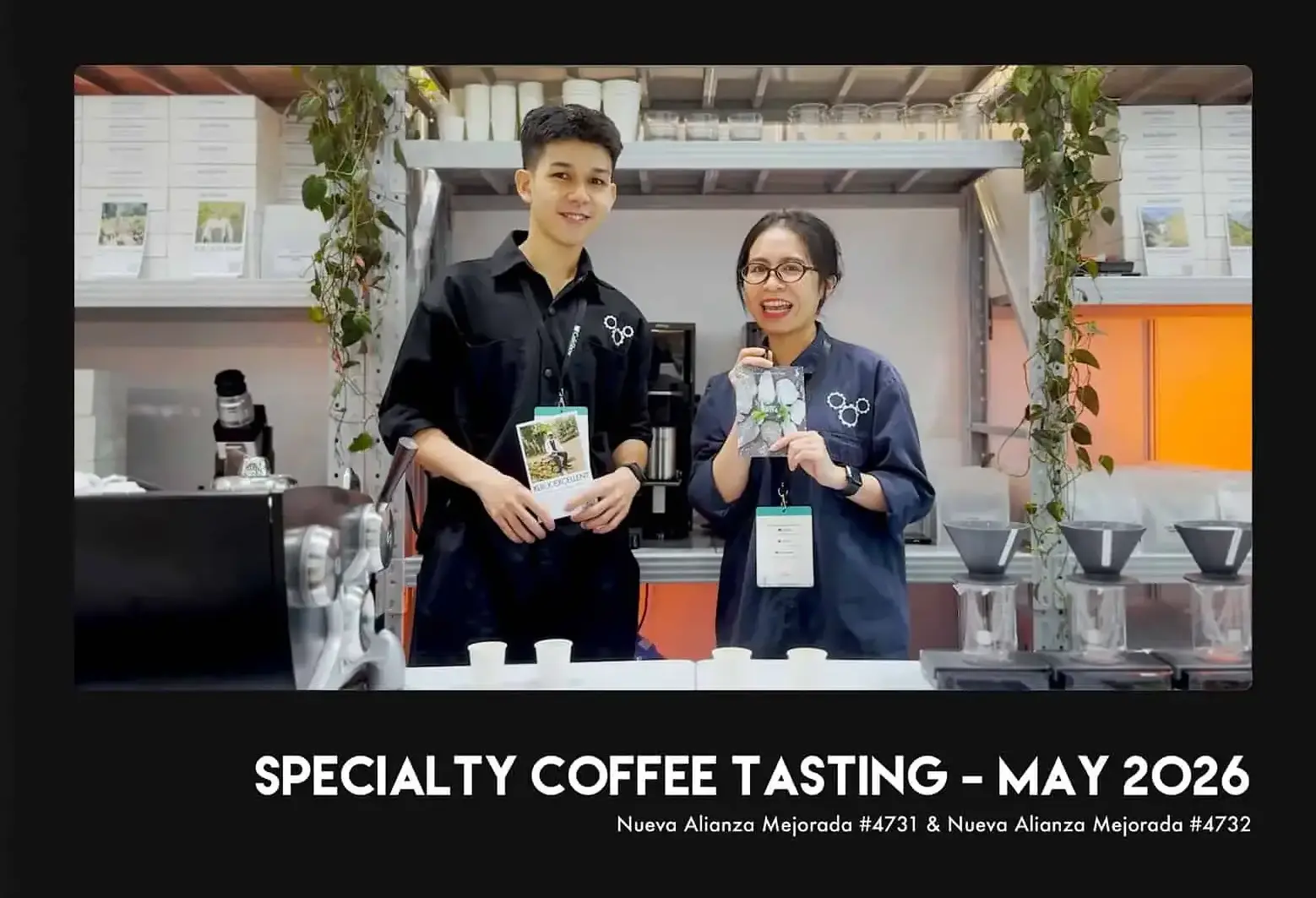
Unveiling May Discovery Subscription: Nueva Alianza Mejorada #4731 & Nueva Alianza Mejorada #4732
The Discovery Subscription is a silent dialogue, a place where the soul of the connoisseur finds a harmonious beat with distant lands. Like a transparent lens, we become storytellers, meticulously peeling back layers of cultural sediment, the breath of the soil, and the human philosophies hidden within every coffee bean.
May arrives with brilliant streaks of golden sunlight, a time when we long to hide beneath the lush, dew-drenched canopies of Santa Teresa. Amidst the silence of the Andes, when compassion touches Mother Earth, what will we hear? Perhaps it is a sweet response that nature reserves solely for souls who know how to wait patiently.

Specialty Coffee in Vietnam
BRAND VALUE
YOU SHOULD HAVE KNOWN
XLIII Coffee has been aiming to become a big, impactful company with social responsibilities,
have access to high-quality raw materials and convey the complete original values of coffee to our customer
