
What opportunities and challenges does the distinctiveness of extremely light roast coffee face?
Extremely Light Roast is a roasting technique that brings coffee beans to just the minimum level of development, preserving their original flavor identity – from soil and climate to processing. Yet, it’s right at that fragile threshold where the unique opportunities and challenges of this method begin to emerge.
I. Extremely Light Roasting – A Chance to Reveal Coffee’s True Identity
Extremely light roasting is a highly regarded technique in the world of specialty coffee, as it gives each bean the opportunity to fully express its unique character. Roasted at a delicate temperature range of just 189–194°C (372–381°F), the beans reach only the lightest stage of development. At this point, nearly all of their natural qualities—shaped by terroir (soil, climate), variety, and processing method—are preserved intact. Green coffee beans, initially pale green with aromas reminiscent of fresh leaves or raw legumes, undergo a subtle transformation. The bean surface expands, the color begins to shift, and the hidden layers of flavor gradually awaken.

At this precise level of roast, the personality of the roaster becomes more evident—not through manipulation of flavor, but through restraint, finesse, and a deep respect for the bean’s inherent qualities.
The light roast style, long embraced in Nordic countries like Norway and Denmark, laid the groundwork for the development of extremely light roasting. Roasters such as Tim Wendelboe and The Coffee Collective are known for their ultra-light approach, designed to highlight vibrant acidity, natural sweetness, and pronounced fruity notes. They also advocate enjoying coffee in its purest form—without milk or sugar—to fully appreciate the distinctions between origins.
This Nordic influence has inspired the current wave of extremely light roasting, shaping a movement toward cleaner, more transparent, and multi-dimensional coffee experiences. At XLIII Coffee, we’ve built upon that foundation, refining and evolving the extremely light roast to deliver a coffee profile that is both unique and deeply expressive.
II. The Precision and Demands of Extremely Light Roasting
Not every roasting machine or technique is suitable for meeting the rigorous standards of extremely light roasting. This roast level demands not only cutting-edge equipment but also exceptional sensory skills and top-quality green coffee beans.
Roasting Equipment
A machine used for extremely light roasting must provide precise thermal control and allow for subtle adjustments in airflow. This ensures the beans develop slowly and evenly from the inside out—without scorching or uneven expansion. Each roasting profile requires meticulous testing and continual fine-tuning within a very narrow margin. Even a slight fluctuation in temperature or airflow can lead to uneven development, ultimately disrupting the balance of the coffee’s flavor structure.
The Roaster’s Expertise and Sensory Awareness
While the equipment plays a critical role, the roaster’s ability to perceive changes in color, sound (such as the first crack), and aroma during roasting is equally vital. At the extremely light level, the time between the first crack and the bean release is often less than one minute. This requires intense focus and quick, intuitive decision-making. Delaying too long risks overdevelopment; acting too quickly leads to underdevelopment. The roaster must act like a guide—keenly observing and responding to the subtle, silent transformations happening within the bean.
The Quality of the Green Coffee
Only the highest-quality green coffee beans can withstand the precision of extremely light roasting. These beans must be virtually free of defects, maintain stable moisture content, and have a strong internal cell structure. Only exceptional varieties—those with vibrant flavor potential and a rich, lingering finish—can fully express themselves at this roast level. For this reason, extremely light roasting is often considered the ultimate test of a bean’s quality and integrity.

Properly executed, extremely light roasted beans retain their shape and internal complexity. Their light-colored surface and gently expanded outer shell reflect the even, delicate development that takes place during the roast.
III. The Challenges and Limitations of Extremely Light Roasting
Extremely light roasting opens a new frontier in coffee appreciation, yet it comes with significant challenges. When beans are underdeveloped during the roasting process, they can produce unpleasant flavors—grassy (resembling raw green plants) or sharply sour with little balance. These flavor faults are difficult to correct because, unlike darker roasts, extremely light roasts don’t allow for blending or flavor masking techniques to hide imperfections. Every second of the roast must be carefully calibrated, demanding exceptional precision and expertise from the roaster.
Additionally, extremely light roast coffee may not be the most accessible choice for beginners. Its bright acidity and delicate body can be unfamiliar—even off-putting—to those accustomed to the bold, rich, chocolatey, or caramel notes of traditional dark roasts. That’s why enjoying extremely light roasts often requires a more patient and open-minded approach to taste.

There’s also the matter of raw material. Not every harvest produces beans suitable for this roasting style. Natural variations—such as inconsistent ripeness, unpredictable weather, or fluctuating processing quality—can make it difficult to find green coffee of a high enough standard. This scarcity places greater importance on careful selection and long-term commitment from both farmers and roasters to maintain a consistent, high-quality experience.
Furthermore, extremely light roasting isn’t ideal for every type of coffee. Certain bean varieties—especially those with lower density or substandard processing—tend to reveal their flaws more clearly when roasted too lightly. Beans lacking structural integrity may result in brews that feel thin, unrefined, or lacking in aftertaste.
Conclusion
Extremely light roasting is both a technical craft and an artistic expression. It represents a commitment to preserving the coffee’s original character. The opportunity and benefit of this method lies in its ability to highlight a coffee’s natural traits, offering a refined, layered tasting experience. At XLIII Coffee, we approach this roasting style with great care and intention, striving to protect and present each bean’s truest flavor. Every cup we serve is a unique expression—an invitation to explore the identity of each variety and origin, through a journey grounded in nature and unmatched in authenticity.
All imagery courtesy of XLIII Coffee.
IV. FAQs
1. What is extremely light roasting, and why is it popular in specialty coffee?
Extremely light roasting is a coffee roasting level that preserves the bean’s natural characteristics—ranging from its terroir and varietal to the processing method used. This approach allows the coffee’s flavor profile to shine through with clarity and nuance. It’s particularly favored in the specialty coffee world because it captures the authentic identity of each origin and variety, offering a transparent tasting experience that reflects the land and the craftsmanship behind each bean.
2. How does extremely light roast coffee differ from other roast levels?
Extremely light roast coffee typically has a pale color and a lighter body. It maintains the original flavors of the bean—highlighting notes of fruit, florals, and a bright, smooth acidity. Unlike darker roasts, which are often complemented with milk or sugar, extremely light roasts are best enjoyed black to fully appreciate their pure and delicate flavors.
3. What factors determine the success of an extremely light roast batch?
Producing a successful extremely light roast relies on three key elements: first, a high-performance roaster capable of precise temperature and airflow control; second, a skilled roaster with a refined sensory awareness to know exactly when to end the roast; and third, top-quality green coffee—free from defects, with consistent moisture and density. A harmonious balance between equipment, technique, and raw material is essential to preserve the bean’s distinctive characteristics.
4. Why can extremely light roasts be challenging for newcomers to enjoy?
Extremely light roast coffee offers a distinctive profile: bright acidity, a lighter mouthfeel, and refined complexity. For those accustomed to the bold, rich, caramel or chocolate notes of darker roasts, this can feel unfamiliar or even off-putting. It requires a patient and open-minded approach to tasting—one that values subtlety and origin-specific flavor over intensity.

Bài viết mới

- Taste the Origin
Nigussie Nare – Murago Outgrowers #03028: Cultivated from the Values of Sustainable Reciprocity
Nestled beneath the shade trees of Sidama, Bensa, the Nigussie Nare – Murago Outgrowers #03028 coffee lot serves as a living testament to the values of sustainable reciprocity. This symbiosis begins with the intimate bond between a rich indigenous ecosystem and the smallholder farmers of the Murago region. Each harvested bean is the culmination of a virtuous cycle: a stable environment produces exceptional bean quality, and sustainable economic growth, in turn, continues to protect the verdant canopy of the great forest.

- Taste the Origin
Rift Valley Coffee Caucus #03757 – A Testament to Western Kenya’s Collective Spirit
Turning our gaze to the Great Rift Valley of East Africa, the fertile volcanic landscapes are witnessing an inspiring transformation. Moving away from fierce, survival-driven competition, smallholder farmers in Western Kenya have chosen to join forces, forging a resilient and unified network. The Rift Valley Coffee Caucus #03757 lot stands as the ultimate testament to this remarkable collective synergy.

- Breaking News
Airworks Coffee & XLIII Coffee – A “handshake” that brings original flavors across borders
XLIII Coffee, alongside our key wholesale partner Airworks Coffee, officially announces the latest release of specialty coffee lots for the North American market. This event reaffirms our commitment to bringing original flavors across all geographical barriers to coffee enthusiasts.
Early access (for Subscribers of Airworks): 10:00 AM (PST) | Wednesday, April 29, 2026
General access: 10:00 AM (PST) | Friday, May 1, 2026
We invite our Customers and Partners to visit (airworkscoffee.com) for detailed information and to prepare for this special release!
- Taste the Origin
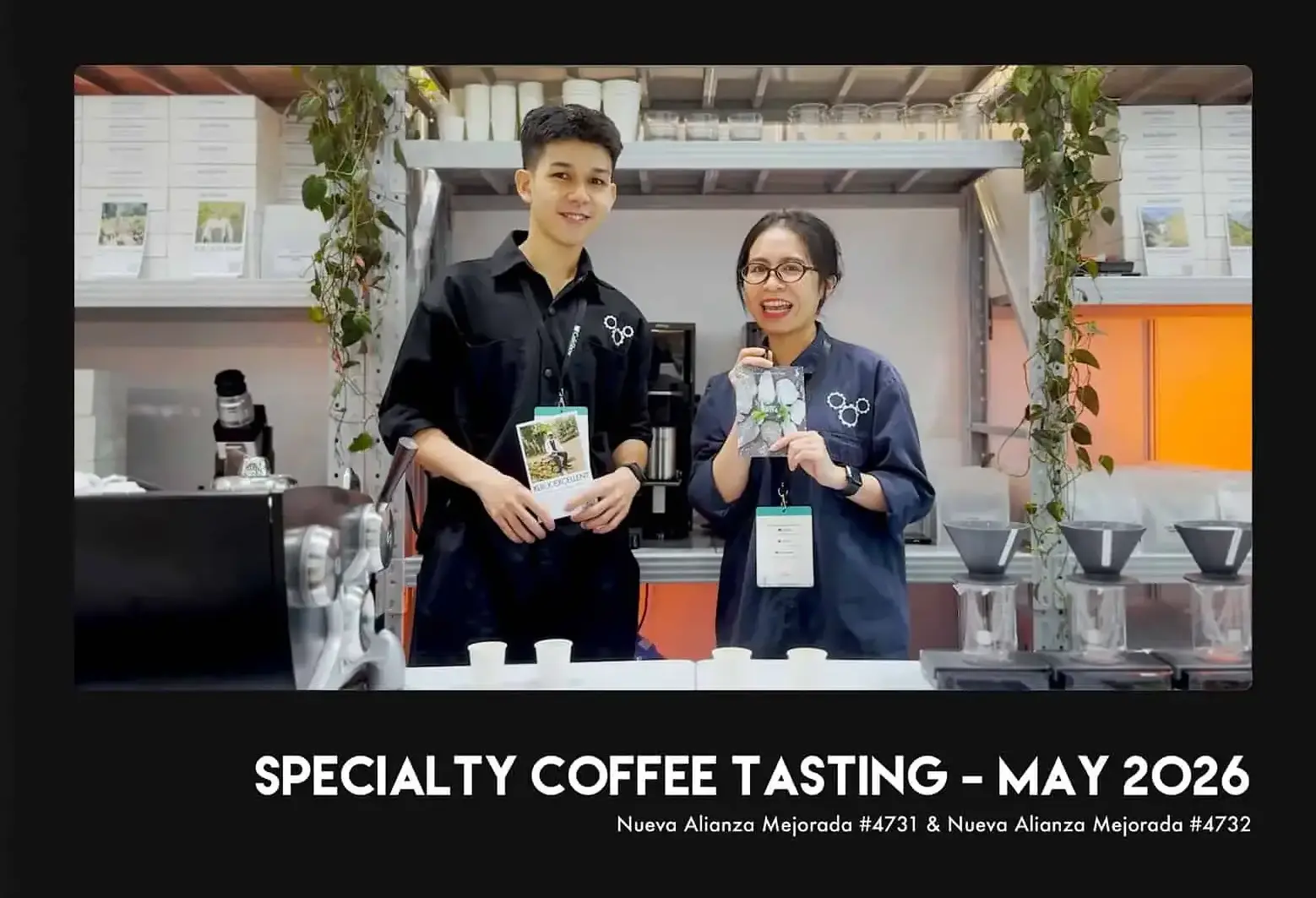
Unveiling May Discovery Subscription: Nueva Alianza Mejorada #4731 & Nueva Alianza Mejorada #4732
The Discovery Subscription is a silent dialogue, a place where the soul of the connoisseur finds a harmonious beat with distant lands. Like a transparent lens, we become storytellers, meticulously peeling back layers of cultural sediment, the breath of the soil, and the human philosophies hidden within every coffee bean.
May arrives with brilliant streaks of golden sunlight, a time when we long to hide beneath the lush, dew-drenched canopies of Santa Teresa. Amidst the silence of the Andes, when compassion touches Mother Earth, what will we hear? Perhaps it is a sweet response that nature reserves solely for souls who know how to wait patiently.

- Taste the Origin
Nueva Alianza Pacamara #4733 – The essence of Cusco with elegant jasmine notes
Nueva Alianza Pacamara #4733 is a testament to the miraculous terroir and dedicated cultivation of the renowned Cusco region. The combination of the characteristic Pacamara bean size and ideal altitude has forged a flavor profile of immense sophistication and depth. From the very first moment, this lot captivates with its elegant jasmine notes, radiating a gentle, pure fragrance akin to a flower blooming in the morning dew.

- Taste the Origin
Nueva Alianza Orange Gesha #4737 – An expedition of recessive genetic traits into the sensory realm
In a world of authenticity, Nueva Alianza Orange Gesha #4737 represents the proud emergence of rare biological traits often obscured by nature’s universality. Carrying a recessive genetic code, Lot #4737 embarks on an “expedition” into the connoisseur’s mind, where record-breaking fructose concentrations are released to perfectly fill every sensory gap with absolute smoothness and purity.
Through washed processing and extremely-light roasting, vibrant citrus nuances and ethereal floral notes, once hidden deep within the genetic structure, now manifest with power, transforming the tasting experience into a journey of ontological completion, where the rarity of recessive genes finally reigns supreme in flavor.

Specialty Coffee in Vietnam
BRAND VALUE
YOU SHOULD HAVE KNOWN
XLIII Coffee has been aiming to become a big, impactful company with social responsibilities,
have access to high-quality raw materials and convey the complete original values of coffee to our customer
