
Solve 8 mistakes when making coffee at home, you may not know
Are you using expensive equipment or fresh coffee beans, but still not getting great coffee when brewing at home? You may be making one of these 8 core mistakes in your brewing process. Let’s explore these issues together and find solutions to improve your coffee-making at home with XLIII Coffee!

8 Common Coffee Brewing Mistakes at Home and How to Fix Them
Brewing coffee at home may seem simple, but mistakes like incorrect grind size, skipping the blooming phase, using old beans, and failing to control key variables or equipment can ruin the flavor of your coffee. By fixing these, you’ll brew coffee as good as a professional barista.
1. Using the Wrong Grind Size
The grind size directly impacts the rate of flavor extraction from the coffee beans. Each brewing method and coffee type requires a specific grind size. For example, using too large a grind with espresso will cause the water to flow too quickly, resulting in weak coffee. Conversely, if you use too fine a grind for pour-over methods, the water will flow too slowly, leading to over-extraction and bitter coffee.
Understanding your brewing method is the first step in choosing the right grind size. For example, French press brewing requires a coarse grind to prevent sludge, while espresso needs a fine grind to achieve optimal pressure. If you use pre-ground coffee, check the packaging for the recommended grind size or ask the seller for advice.
2. Ignoring Water Quality
Water makes up 98-99% of your cup of coffee, so its quality is crucial. Tap water often contains chlorine or minerals, which can alter the coffee’s taste, making it unpleasant or imbalanced.
Use filtered or mineral water to achieve the best flavor. If you’re unsure about your water quality, consider investing in a home filtration system or choose bottled water with controlled mineral content. Avoid using water that has been boiled multiple times, as it can concentrate impurities that affect the coffee’s aromatic compounds and natural acids.
3. Incorrect Coffee-to-Water Ratio
Failing to measure the right coffee-to-water ratio can result in coffee that’s either too strong (bitter, harsh) or too weak (bland, watery). This mistake usually happens when you “eyeball” the amounts instead of using a measuring tool.
Use a scale to measure accurately. A common ratio for filter brewing methods is 1:15 to 1:18, meaning 1 gram of coffee for every 15-18 ml of water. You can adjust the ratio to suit your taste, but measuring ensures consistency with every brew. If you don’t have a scale, using a measuring spoon is a good alternative.
4. Brewing at the Wrong Temperature
Too hot water (above 205°F/96°C) can burn the coffee, creating a burnt, bitter taste. Conversely, water that’s too cool (below 195°F/90°C) won’t extract the full range of flavors, leaving your coffee flat and weak.
For the ideal brewing temperature, heat the water to just below boiling (about 93-96°C), or use a thermometer. If you don’t have one, let the water rest for about 30 seconds after boiling before brewing. Some kettles are designed to maintain a stable temperature, which is helpful for optimal brewing.
5. Not Waiting for the Coffee to Rest After Roasting (Degassing)
After roasting, coffee beans release CO₂ over several days, a process called degassing. Brewing too soon after roasting, while the beans are still releasing gas, can hinder the extraction process, affecting the flavor balance of your coffee.
To address this, let your coffee rest for 3-7 days after roasting, depending on the type of beans and roast level. This ensures the beans reach a more stable state, offering a more balanced and harmonious flavor.
6. Skipping the Coffee Blooming Phase
Even after degassing, coffee still contains some CO₂. If you don’t allow the coffee to bloom, the trapped gas will prevent the water from fully saturating the grounds, leading to uneven extraction and a less full-bodied taste.
The blooming phase is especially important when using fresh coffee. Pour a small amount of hot water over the grounds, just enough to wet them, and wait about 30 seconds. This helps release the CO₂, allowing for better extraction. This simple step can make a significant difference in the final flavor.
7. Using Old Coffee Beans
Coffee beans lose their flavor over time due to oxidation, and stale beans can taste bland or even musty. This happens as volatile compounds responsible for the aroma and flavor dissipate.
Always choose fresh coffee, ideally roasted within the last 2-3 weeks. Pay attention to the roast date on the packaging and store your beans in an airtight container, away from light and heat. If you drink coffee frequently, XLIII Coffee’s anti-moisture, airtight containers are an excellent choice to keep your beans fresh.
8. Forgetting to Clean Your Equipment
Coffee oils and residues that remain in your grinder or brewing equipment can oxidize over time, causing unpleasant flavors and compromising the purity of your coffee.
Clean your equipment regularly. Use a brush or specialized tool to remove coffee grounds from your grinder. For your brewing devices, rinse them after every use and perform a deep clean weekly using a suitable cleaning solution to remove any leftover oils. A clean device ensures your coffee’s flavor remains intact.
What to Do if Avoiding These Mistakes Doesn’t Improve Your Coffee?
If you’ve avoided all these common mistakes and your coffee still isn’t up to your expectations, the problem could be with the quality of the beans or your brewing equipment. Low-quality, overly dark-roasted, or poorly stored beans are unlikely to produce great coffee, even with proper technique. Always choose specialty coffee from reputable roasters, ensuring they have a clear origin and are freshly roasted.
Also, check your brewing equipment. A malfunctioning grinder or poorly maintained brewing device can affect the quality of your extraction. If your equipment seems fine but the coffee still isn’t great, try experimenting with a different brewing method. Sometimes methods like Pour-over, AeroPress, or French press may suit your taste better. Most importantly, be patient and keep experimenting to find your perfect coffee recipe!
Brewing coffee is truly an exciting journey of trial and error. Even if you’ve avoided the common mistakes, don’t be discouraged if your coffee still isn’t perfect. You may just need more time to fine-tune the variables like brewing method, bean type, grind size, coffee-to-water ratio, and temperature. Every factor plays a role in the final result, and finding the right combination is an ongoing process of experimentation.
Don’t be afraid to adjust and explore, from trying different beans to discovering new brewing methods. See each brewing session as an opportunity to learn and improve your skills. With patience and precision, you’ll eventually craft the perfect cup of coffee tailored to your tastes!

Bài viết mới

- Taste the Origin
Nigussie Nare – Murago Outgrowers #03028: Cultivated from the Values of Sustainable Reciprocity
Nestled beneath the shade trees of Sidama, Bensa, the Nigussie Nare – Murago Outgrowers #03028 coffee lot serves as a living testament to the values of sustainable reciprocity. This symbiosis begins with the intimate bond between a rich indigenous ecosystem and the smallholder farmers of the Murago region. Each harvested bean is the culmination of a virtuous cycle: a stable environment produces exceptional bean quality, and sustainable economic growth, in turn, continues to protect the verdant canopy of the great forest.

- Taste the Origin
Rift Valley Coffee Caucus #03757 – A Testament to Western Kenya’s Collective Spirit
Turning our gaze to the Great Rift Valley of East Africa, the fertile volcanic landscapes are witnessing an inspiring transformation. Moving away from fierce, survival-driven competition, smallholder farmers in Western Kenya have chosen to join forces, forging a resilient and unified network. The Rift Valley Coffee Caucus #03757 lot stands as the ultimate testament to this remarkable collective synergy.

- Breaking News
Airworks Coffee & XLIII Coffee – A “handshake” that brings original flavors across borders
XLIII Coffee, alongside our key wholesale partner Airworks Coffee, officially announces the latest release of specialty coffee lots for the North American market. This event reaffirms our commitment to bringing original flavors across all geographical barriers to coffee enthusiasts.
Early access (for Subscribers of Airworks): 10:00 AM (PST) | Wednesday, April 29, 2026
General access: 10:00 AM (PST) | Friday, May 1, 2026
We invite our Customers and Partners to visit (airworkscoffee.com) for detailed information and to prepare for this special release!
- Taste the Origin
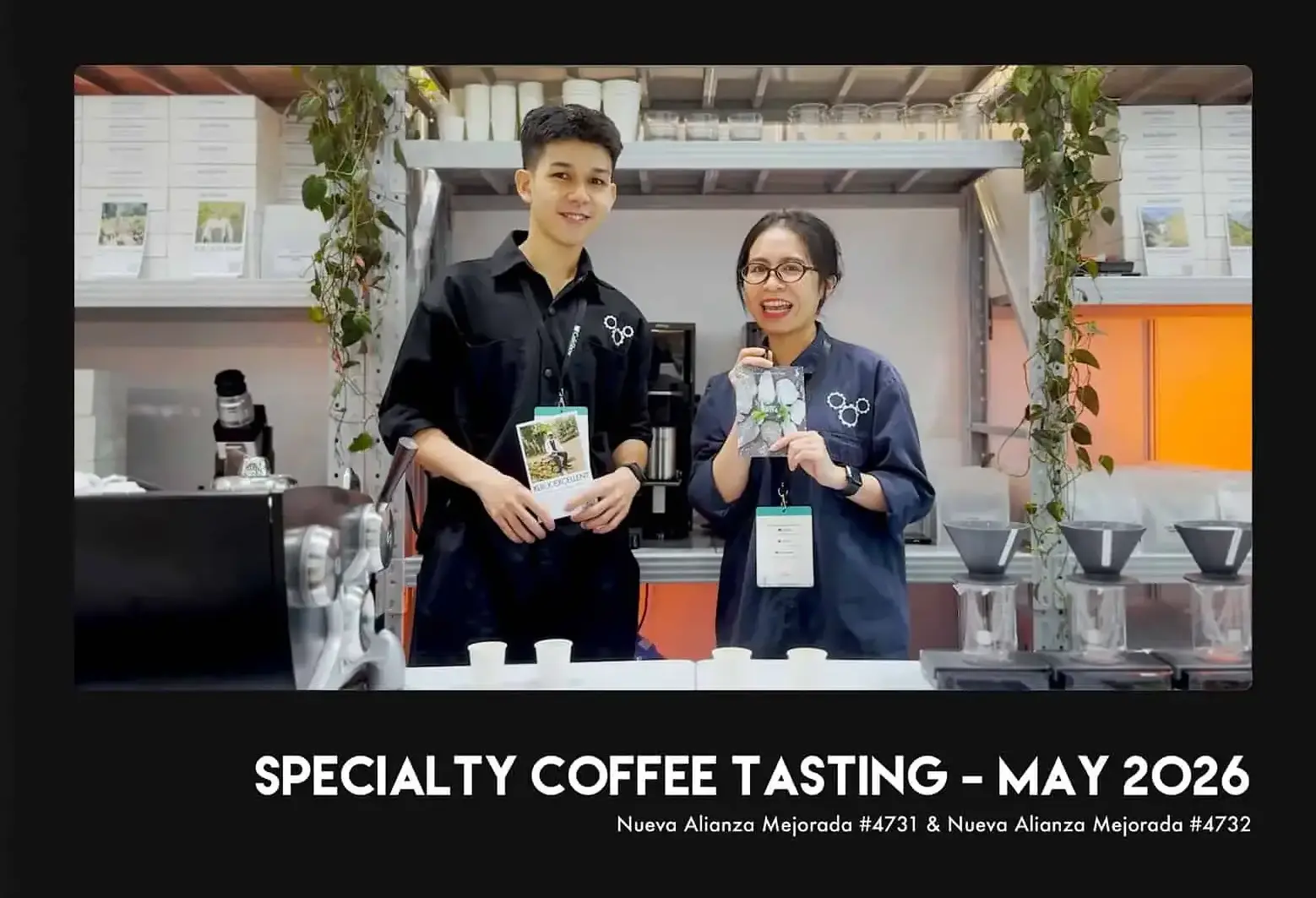
Unveiling May Discovery Subscription: Nueva Alianza Mejorada #4731 & Nueva Alianza Mejorada #4732
The Discovery Subscription is a silent dialogue, a place where the soul of the connoisseur finds a harmonious beat with distant lands. Like a transparent lens, we become storytellers, meticulously peeling back layers of cultural sediment, the breath of the soil, and the human philosophies hidden within every coffee bean.
May arrives with brilliant streaks of golden sunlight, a time when we long to hide beneath the lush, dew-drenched canopies of Santa Teresa. Amidst the silence of the Andes, when compassion touches Mother Earth, what will we hear? Perhaps it is a sweet response that nature reserves solely for souls who know how to wait patiently.

- Taste the Origin
Nueva Alianza Pacamara #4733 – The essence of Cusco with elegant jasmine notes
Nueva Alianza Pacamara #4733 is a testament to the miraculous terroir and dedicated cultivation of the renowned Cusco region. The combination of the characteristic Pacamara bean size and ideal altitude has forged a flavor profile of immense sophistication and depth. From the very first moment, this lot captivates with its elegant jasmine notes, radiating a gentle, pure fragrance akin to a flower blooming in the morning dew.

- Taste the Origin
Nueva Alianza Orange Gesha #4737 – An expedition of recessive genetic traits into the sensory realm
In a world of authenticity, Nueva Alianza Orange Gesha #4737 represents the proud emergence of rare biological traits often obscured by nature’s universality. Carrying a recessive genetic code, Lot #4737 embarks on an “expedition” into the connoisseur’s mind, where record-breaking fructose concentrations are released to perfectly fill every sensory gap with absolute smoothness and purity.
Through washed processing and extremely-light roasting, vibrant citrus nuances and ethereal floral notes, once hidden deep within the genetic structure, now manifest with power, transforming the tasting experience into a journey of ontological completion, where the rarity of recessive genes finally reigns supreme in flavor.

Specialty Coffee in Vietnam
BRAND VALUE
YOU SHOULD HAVE KNOWN
XLIII Coffee has been aiming to become a big, impactful company with social responsibilities,
have access to high-quality raw materials and convey the complete original values of coffee to our customer
