
Why is green coffee still traded between producing countries?
Most coffee producing countries want to boost exports to large consuming countries and increase international demand. But green coffee still traded between producing countries. Some countries export after meeting certain needs of the domestic market. However, there are some countries that cannot meet domestic demand but still export coffee to other countries and import to make up for the shortage. This has led to discussions about the cause for decades. Explore with XLIII Coffee!
In fact, the green coffee market is traded between producing countries
José Dauster Sette – Executive Director of the International Coffee Organization (ICO) said that from 2015 to 2018, the world exported an average of about 121 million 60kg bags per year. This quantity includes green, roasted and instant Arabica and Robusta coffees. Of which, about 8.5 million bags are traded between producing countries, accounting for about 7% of total export turnover. It is estimated that about 74% of total coffee exports from Vietnam, Brazil and Indonesia went to other producing countries during this period. Coffee producing country Honduras also exported 460,000 bags of coffee to other producing countries such as Mexico, Peru, India and Colombia.

According to Jose, green coffee trade between producing countries mainly focuses on instant coffee for processing reasons and Robusta coffee for price and quality reasons. When dividing coffee trade between producing countries into different segments, the ratio is quite different from overall trade. In total, instant coffee accounts for 21% of exports, compared to 8% of global exports.u.
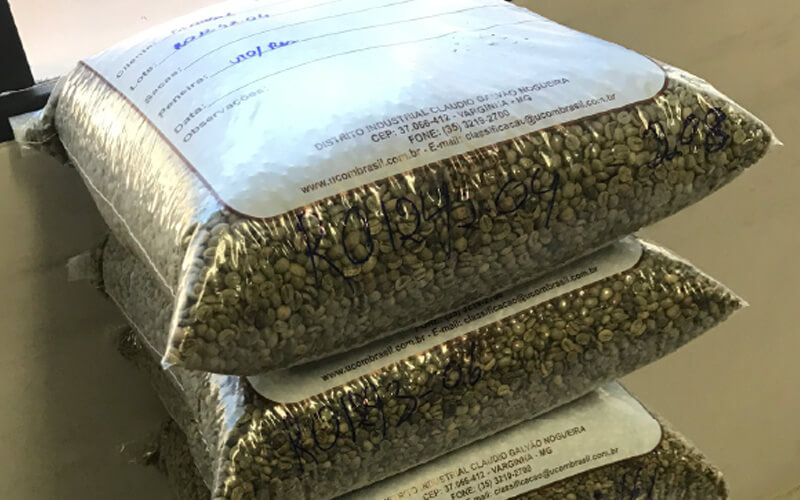
The reason why green coffee beans are traded between producing countries
Joao Mattos – Latin American Coffee Production and Market Coordinator at CLAC Comercio Justo said that there are two reasons why producing countries have to import coffee. First, rotating imports and exports between producing countries helps meet domestic demand and provide supply for the instant coffee industry. Second, input coffee prices are often much cheaper due to lower quality.
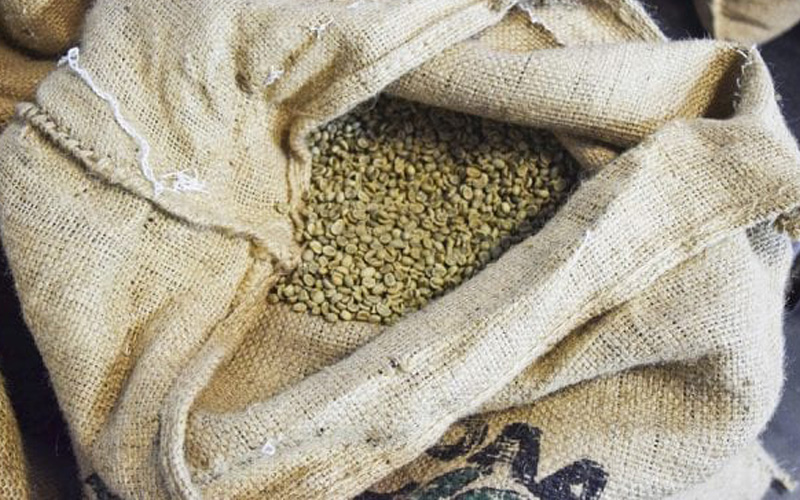
José – CEO of ICO also shares the same opinion as Joao Mattos. He also said that the price of imported coffee is often cheap because it is difficult to trace its origin. Therefore, it is unclear how much of it is used for instant coffee and how much is used to produce blended coffee. Furthermore, countries import Robusta coffee because it is ideal for making instant coffee. A bag of Robusta coffee produces more instant coffee than a bag of Arabica coffee.

In real life, Mexico is the ninth largest coffee producer in the world. According to ICO data, its production figures have been around 4 million bags since 2017. However, from 2015 to 2018, the country’s average annual green coffee imports were the highest. three for producing countries, reaching 715,000 bags. These coffee beans come mainly from Brazil, Vietnam and Honduras. Mexico does not just import to satisfy the domestic market. Some imports are actually used for processing and re-exported as instant coffee, primarily to Central America.
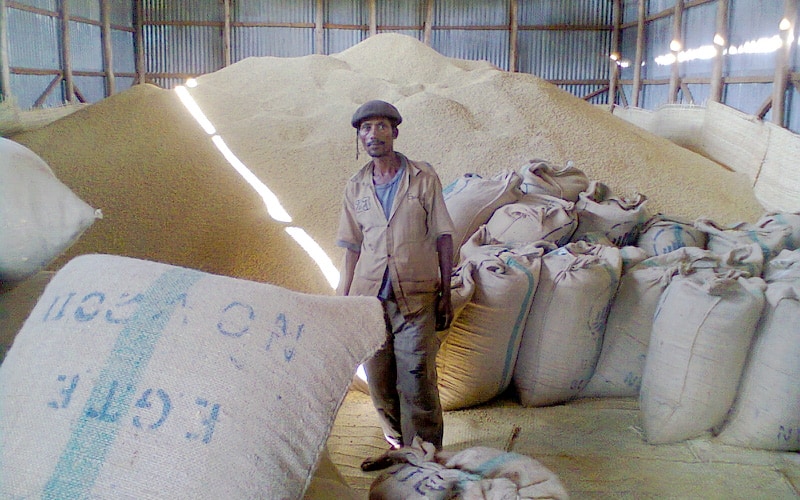
Conflicts in buying and selling green coffee beans between producing countries
Some people oppose transactions between producing countries. Because they think it strengthens trade relations, increases cash flow to trading countries while adding value to lower quality coffee. Many people are also concerned that this could reduce the value of coffee in the domestic market.

However, many people believe that this exchange of goods can motivate coffee producing countries to improve quality to get higher prices and be more popular. Most producing countries have very small purchasing power and cannot maintain a large market for high-quality coffee, José said. Over time, increased exports accompanied by marketing programs for high-quality coffee increased consumption, leading to periods of differentiation with the emergence of specialty coffee.
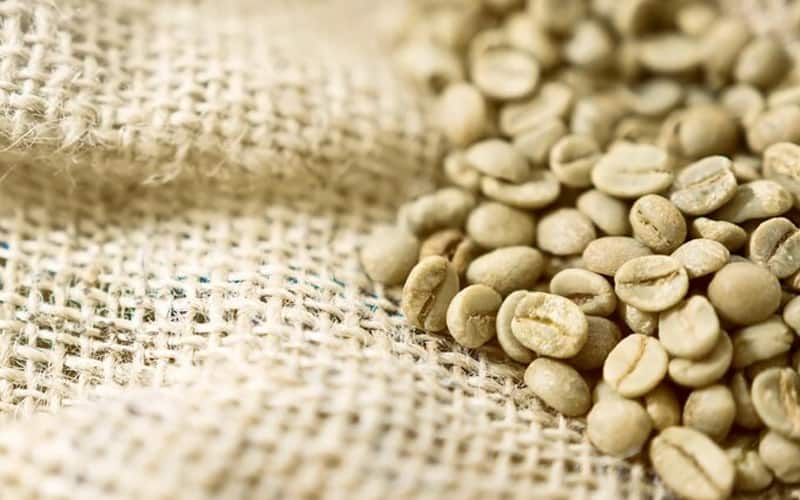
Trading green coffee beans between producing countries is a way for farmers in producing countries to access potential markets and get better coffee prices. This also helps meet the demand for instant coffee and domestic and foreign consumption. At the same time, cooperative transactions can also promote domestic consumers’ demand for high-quality coffee, contributing to maintaining and developing a healthy economy. However, the problem is how producing countries can increase consumer demand for high-quality coffee, thereby encouraging farmers to improve quality. This is the story of the entire industry and requires investment and promotion efforts from stakeholders about coffee quality and connecting relationships between producers and consumers.

As a business pursuing a sustainable coffee journey, XLIII Coffee always strives to bring quality specialty coffee beans that are not only delicious but also contain the unique values of original coffee. The production and supply process of products is always publicized, introducing customers in detail with the most truthful information about varieties, growing areas, manufacturers, and transportation routes to bring consumers closer. with supply chain facts. From there, when receiving a cup of coffee, everyone can fully understand the values behind that coffee farmers and workers convey. If you want to experience the poetic journey of the notes and truths of specialty coffee, visit XLIII Coffee!
Don’t forget to follow XLIII Coffee’s Journal channel to read useful information.
Articles you may be interested in:
– Drinking 4 cups of coffee a day can reduce physical weakness in old age
– What is pour over coffee? The foundation and future of pour over in the new era

Bài viết mới

- Taste the Origin
Nueva Alianza Pacamara #4733 – The essence of Cusco with elegant jasmine notes
Nueva Alianza Pacamara #4733 is a testament to the miraculous terroir and dedicated cultivation of the renowned Cusco region. The combination of the characteristic Pacamara bean size and ideal altitude has forged a flavor profile of immense sophistication and depth. From the very first moment, this lot captivates with its elegant jasmine notes, radiating a gentle, pure fragrance akin to a flower blooming in the morning dew.

- Taste the Origin
Nueva Alianza Orange Gesha #4737 – An expedition of recessive genetic traits into the sensory realm
In a world of authenticity, Nueva Alianza Orange Gesha #4737 represents the proud emergence of rare biological traits often obscured by nature’s universality. Carrying a recessive genetic code, Lot #4737 embarks on an “expedition” into the connoisseur’s mind, where record-breaking fructose concentrations are released to perfectly fill every sensory gap with absolute smoothness and purity.
Through washed processing and extremely-light roasting, vibrant citrus nuances and ethereal floral notes, once hidden deep within the genetic structure, now manifest with power, transforming the tasting experience into a journey of ontological completion, where the rarity of recessive genes finally reigns supreme in flavor.

- Taste the Origin
Nueva Alianza Maragogipe #4735 – The “Giant” at the center of attention
Amidst a world of countless specialty coffee beans, Nueva Alianza Maragogipe #4735 emerges as a symbol of grandeur, instantly commanding attention with its distinct appearance. Affectionately dubbed the “Giant” for its impressively mutated “Elephant Bean” size, lot #4735 from Nueva Alianza stands as a testament to nature’s wonders in the Cusco region. Yet, its true allure extends far beyond its imposing exterior; hidden within these colossal beans lies a gentle “soul” blooming with pure floral and crystalline fruit notes.

Nueva Alianza Sidra #4736 – The sweetness born from the resilience of the Andes
Unlike the airy aromatic layers so often encountered, a cup of Nueva Alianza Sidra #4736 takes command of the palate through a distinctly physical sense of “weight” the creamy richness of Blueberry Yogurt and the dense, syrupy sweetness of a spoonful of Berry Jam. This shimmering, viscous body, achieved through the traditional Natural process, is the compressed result of the harsh cold currents that sweep across the Andes at 1,820 meters above sea level. At a deeper level, the sheer weight carried within this cup becomes a beautiful metaphor for the iron discipline and resilience of producer Dwight Aguilar Masías a man who has spent his entire life holding his ground, protecting an inherited landscape against the brutal upheavals of time and circumstance.

- Taste the Origin
Ziriguidum #2 – A Proud Rhythm from the Heart of the Cerrado Savanna
In the native language of Brazil, Ziriguidum is an onomatopoeia capturing the powerful, frenetic rhythm of Samba percussion. Yet, as the namesake for the Ziriguidum #2 – Masterpieces Auction 2025 lot, this rhythm takes on a quieter, more profound meaning. It perfectly encapsulates a beautiful natural paradox: the flourishing of the fragile, caffeine-deficient Laurina variety amidst the harsh, arid expanse of the Cerrado savanna.
Rejecting all artificial fermentation techniques, producer Daterra Coffee preserves this pure genetic code through a meticulous Natural process, guided only by the primal sun. To taste Ziriguidum #2 is not merely to experience a sparkling flavor profile; it is an exploration of nature’s resilience, ecological restoration, and the absolute pinnacle of artisanal craft.

- Taste the Origin
Big Tree Estate PB #2516 – A Healing Symphony of the Western Rift Valley
Originating from the majestic Western Rift Valley, Big Tree Estate PB #2516 is an emotional symphony, offering a healing melody to souls seeking tranquility. Crafted from rounded Peaberry beans – the convergence of the highlands’ essence and vital energy, this coffee lot delivers a deep, sweet purity interwoven with pristine aromas and a persistent aftertaste. Behind every cup lies a commitment to the “medical ethics” spirit, manifested through kindness from sustainable cultivation to meticulous processing, honoring both health and the original value of the coffee bean.

Specialty Coffee in Vietnam
BRAND VALUE
YOU SHOULD HAVE KNOWN
XLIII Coffee has been aiming to become a big, impactful company with social responsibilities,
have access to high-quality raw materials and convey the complete original values of coffee to our customer
