
Coffea charrieriana: The World’s First Naturally Caffeine-Free Coffee
Coffea charrieriana, the world’s first naturally caffeine-free coffee species, was discovered in the mountainous forests of Cameroon in the 1990s, bringing a fresh perspective to the coffee industry. Renowned not only for its delicate flavor but also its zero-caffeine trait, this species is an ideal choice for coffee lovers who wish to avoid the health impacts of caffeine.
I. The Mysterious Origin of Coffea charrieriana
Coffea charrieriana possesses a completely distinct characteristic: while it boasts the flavor profile and biological structure of a true coffee plant, its beans contain absolutely zero caffeine. Because of this unique anomaly, the history of this species has been shrouded in mystery, spanning from the moment it was first collected to its official recognition.
What is Coffea charrieriana?
In terms of biological classification, Coffea charrieriana belongs to:
- Genus: Coffea
- Family: Rubiaceae
The Coffea genus currently includes about 120 species, mainly distributed across tropical regions of Africa and Asia. However, the world practically knows and uses only the two most common species: Coffea arabica and Coffea canephora (Robusta), which account for up to 99% of global coffee production.
Within this vast picture, Coffea charrieriana is a small yet unique piece of the puzzle. The general morphology of the plant bears the familiar characteristics of the Coffea family, from leaf shape and flower clusters to seed structure, but it is the biochemical difference, specifically its inability to synthesize caffeine, that has established the species’ special status.
Natural Distribution Characteristics

The origin of Coffea charrieriana is tied to the humid forests of the Bakossi National Park in Western Cameroon.
Image credits: Global National Parks.
This plant thrives on steep, rocky slopes, where the climate is hot and humid year-round, characterized by typical rainforest vegetation. Its altitude of distribution ranges from 160 to 300 meters – a relatively low number compared to many other Coffea species that thrive in highland environments.
However, this isolated habitat makes Coffea charrieriana extremely vulnerable. Logging, expansion of oil palm plantations, and deforestation are severely threatening the species’ only known habitat. The fragmentation and reduction of the forest not only diminish the population but also push the species into a critically endangered status.
25 Years from Deep Forest to Scientific Spotlight
The discovery story of Coffea charrieriana spans over two decades, beginning in 1983 when French researcher André Charrier collected the first samples in Cameroon. However, it wasn’t until 1985 that cuttings were fully assembled along with more than 70 other Coffea species from the Bakossi reserve. At that time, scientists simply noted that the plant had some unusual morphological features but lacked sufficient data for classification.
It wasn’t until 1997 that the specimens were transferred to a research institute, where they began to be analyzed more thoroughly, from leaf morphology and seed structure to chemical composition. The most astonishing result at the time was the finding that the seeds were completely caffeine-free. This rare trait immediately attracted the interest of geneticists and botanists.

Image credits: Alchetron.
Yet, it was not until 2008, following a series of in-depth studies on its morphology and genetic characteristics, that Coffea charrieriana was officially announced as a new species in the scientific paper “A new caffeine-free coffee from Cameroon”. The species was named in honor of André Charrier, who made significant contributions to coffee genetics and breeding worldwide.
II. Natural Characteristics of This Exceptional Coffee Species
Amidst the cloud-covered mountains of Western Cameroon, where warm streams from the rainforest weave through rocky crevices, Coffea charrieriana carved out its own niche within the rich tropical ecosystem. This plant is not a mighty, dominating entity like the great trees of the rainforest; it is more humble, existing as a shrub or small tree, yet concealing a resilient vitality in the challenging terrain.
Morphological Characteristics
Coffea charrieriana emerges as a unique natural masterpiece, carrying morphological traits distinct from common coffee species. From the plant’s habit to its floral structure, each characteristic tells a story of evolution and adaptation within the Cameroon rainforest environment. This morphological diversity creates the species’ unique beauty and reflects its incredible survival capacity against the challenges of nature.
|
Characteristics |
Scientific Description |
|
Growth habit |
Shrub or small tree, flexible in form. |
|
Height |
Shrub: 1 – 1.5m; Small tree: 5 – 10m tall, canopy 5 – 7m wide. |
|
Leaves |
Elliptical, thin, smooth; hairless; 4 – 8 cm long, 2.2 – 3.5 cm wide; fewer main veins than many other Coffea species. |
|
Flowers |
White, 5 petals; stalkless (sessile); stamens and style conspicuously exserted; typical morphology of the Coffea genus. |
|
Cherry |
Red, fleshy, berry-like; about 9 – 10 mm long; soft pulp. |
|
Coffee beans |
2 seeds per fruit; elliptical, smooth, about 5 mm long; completely caffeine-free. |
The seemingly simple morphological features of Coffea charrieriana are actually the result of millions of years of evolution and natural selection. Every detail, from the slender, sparsely veined leaves that optimize photosynthesis in the low light conditions under the canopy, to the simple yet effective floral structure for pollination, demonstrates perfect adaptation to its habitat.
In particular, the bright red color of the fruit is not just a splash of color but a crucial survival tool, attracting animals for seed dispersal. The harmonious combination of these traits has created a truly one-of-a-kind coffee species, worthy of being called a treasure of Cameroonian nature.
Growth Characteristics
The biggest factors influencing the species’ growth include humidity, soil, light, and competitive ability within the understory of the rainforest.
- High shade tolerance: The species is adapted to diffused light environments beneath the dense forest canopy, where direct sunlight rarely penetrates.
- Moisture-loving but not waterlogging-tolerant: The roots of Coffea charrieriana thrive in loose, humus-rich, organic soil. High humidity is ideal, but the plant is easily damaged if the soil remains waterlogged for too long.
- Medium growth rate: In natural conditions, the plant takes many years to reach its maximum height, as most of its energy is dedicated to survival in the lower forest layer rather than rapid development.


Image credits: Coffee Dictionary, Il caffe espresso italiano.
Habitat in Cameroon
To understand Coffea charrieriana, one must clearly visualize its birthplace: the Bakossi National Park and surrounding rainforest areas of Cameroon – a part of the Central African tropical rainforest belt.
- Humid Tropical Rainforest Ecosystem: High humidity almost year-round, abundant rainfall, with little variation in temperature and humidity between seasons.
- Steep and Rocky Terrain: The species prefers to grow on steep, rocky hillsides, where the soil is thin but loose and drains quickly
- Low to Medium Elevation: The plant is mainly distributed at an altitude of 160-300 meters, much lower than traditional coffee growing regions.
- Dense Vegetation: The upper forest canopy provides diffuse light conditions, while maintaining humidity and reducing temperature fluctuations.
Image credits: Global National Parks.


III. The Miraculous Genome: The Secret to its Naturally Caffeine-Free Trait
When scientists first analyzed the beans of Coffea charrieriana, they were astonished by one fact: this coffee species contains no caffeine at all. What was even more intriguing was that despite carrying all the necessary genes to synthesize caffeine, C. charrieriana “refuses” to produce the substance. This paradox launched a journey to explore the miraculous genome of this Cameroonian endemic species, helping to decipher a unique biochemical mechanism never before seen in the coffee family.
When the Genome Tells a Different Story
Biochemical analysis suggests that the reason Coffea charrieriana is caffeine-free stems from a genetic mutation in the caffeine biosynthesis pathway. Although the gene sequence dictating the ability to produce caffeine remains intact, the process of creating the necessary proteins in the biosynthetic pathway encounters a “processing error.” This minor but significant flaw prevents the plant from completing caffeine synthesis, resulting in its seeds being completely devoid of the stimulant familiar in other Coffea species.

Image credits: Espresso Barista.
Interestingly, this caffeine-deficient trait is similar to many coffee species in Madagascar, where up to 30 out of 47 Coffea species are recorded to contain very little or no caffeine. C. charrieriana becomes the second species on the African continent to exhibit this trait, after C. pseudozanguebariae from Kenya.
Genetic comparisons show that C. charrieriana carries ancestral traits of West and Central African coffee species, while also having morphological similarities with the Psilanthus genus – a genus once separated from Coffea due to its low-caffeine characteristic. This suggests that the species’ evolutionary history lies on a distinct and ancient branch, with subtle but meaningful genetic changes.
Theobromine – The Silent “Substitute” in the Coffee Bean
If it doesn’t produce caffeine, what do the seeds of Coffea charrieriana contain?
The answer has further intrigued researchers: theobromine, a substance chemically similar to caffeine and commonly known as the main component responsible for the flavor profile of cocoa. The appearance of theobromine replacing caffeine not only hints at the species’ specific branching biochemical pathway but also opens the door for scientists to gain a deeper understanding of the mechanism of caffeine formation in the Coffea family as a whole.

Research title: “Synthesis of caffeine from theobromine: Bringing back an old experiment in a new setting”.
Notably, compared to other coffee plants, C. charrieriana also shows significantly lower levels of certain fatty acids, clearly reflecting genetic and biochemical differences. Genome studies have even found that this plant possesses the largest chloroplast genome ever recorded in the Coffea family – a sign of evolutionary isolation spanning millions of years.
IV. Commercial Potential and the Natural Decaf 'Revolution'
Against the backdrop of a global coffee market strongly shifting towards being “more natural, healthier, and more transparent”, the emergence of Coffea charrieriana seems perfectly timed. This rare trait has placed C. charrieriana at the center of discussions about the future of decaf coffee, even being considered the foundation for a potential industry “revolution.”
Opportunities from the “Natural Decaf” Demand
For many years, modern technology for decaffeination has been considered safe and retains almost all the coffee flavor. However, along with the culinary trend towards natural origin, a segment of consumers is increasingly wary of chemical processing methods, even if they are proven harmless. This skepticism creates a gap in the market: people who want to drink coffee but avoid caffeine are seeking a product that is “purely natural” from the start.
It is in this context that Coffea charrieriana becomes a vivid testament to the possibility of providing 100% naturally decaf coffee. From beans that have never encountered a processing procedure, consumers can enjoy a true cup of coffee without worrying about caffeine or industrial intervention.
Decaffito and Breeding Prospects
The potential of C. charrieriana is not only in using its beans directly but also in its ability to become a valuable genetic source for breeding. Plant biologists have recognized that this species can be used to cross-breed with commercial coffee varieties to create a new generation of low- or zero-caffeine coffee.

Image credits: Caffe Decaffeinato.
Furthermore, developers in Brazil are currently researching and commercializing coffee beans from C. charrieriana under the name “Decaffito”, anticipated to be one of the first naturally decaf coffee lines available on the market. If successful, Decaffito could become a pioneering product, opening up an entirely new market for naturally caffeine-free coffee.
Not limited to coffee beans, the leaves of this species have also been found to contain valuable antioxidant compounds, which can be utilized in food, functional beverages, and medicinal materials – a highly promising economic direction alongside the traditional coffee market.
Unavoidable Challenges
Despite its vast potential, the commercialization path for Coffea charrieriana still faces numerous hurdles. Currently, the production volume of this species is extremely limited. Only a few farms, such as Coffea Diversa Farm in Costa Rica, are conducting experimental cultivation. Additionally, political and economic instability in Cameroon makes the expansion of growing regions difficult.
Moreover, sensory evaluations from those who have tasted Charrier coffee indicate that its flavor structure is thinner than Arabica’s, often leaning towards a light and delicate, almost tea-like, sensation. This is an intriguing characteristic but also a challenge, as the high-end coffee market is accustomed to the body, sweetness, and complexity of Arabica.

Image credits: Il caffe espresso italiano.
“Will Charrier coffee be competitive enough, or will it serve as a specialty coffee line reserved for customers who appreciate elegance and subtlety?”
That remains a question that only time can answer.
A Conservation Alarm Bell
From an ecological perspective, Coffea charrieriana faces an even more serious threat than commercial issues: its conservation status is classified as “Critically Endangered” (CR – IUCN 3.1). Deforestation, logging, and agricultural expansion in Cameroon directly threaten the species’ natural habitat. Without timely conservation and propagation programs, the future of this plant and the entire natural decaf coffee market could be severely impacted.
In summary,
A promising enigma!
The future of Coffea charrieriana still holds many unknowns. It could become the catalyst for a global natural decaf revolution, or simply exist as a rare specialty item, reserved for connoisseurs who appreciate unusual coffee varieties. Either way, the emergence of this peculiar coffee species shows how much of the coffee world remains undiscovered. From its unique genome to its unprecedented commercial potential, Coffea charrieriana continues to prove that nature always holds surprises for us to seek out.
V. FAQs
1. What is Coffea charrieriana?
It is an endemic coffee species from Cameroon, belonging to the Rubiaceae family, famous for its seeds being completely naturally caffeine-free.
2. What makes Coffea charrieriana naturally caffeine-free?
Due to a genetic mutation that disrupts the caffeine synthesis process. The plant has the genes to create caffeine, but the protein creation process is faulty, preventing caffeine from being produced.
3. Is Charrieriana Decaf? How is it different from regular Decaf coffee?
Yes, but in the sense of 100% natural decaf. Unlike regular decaf, which must undergo processing to remove caffeine, C. charrieriana inherently does not produce caffeine from the start, thus requiring no chemical or technological intervention.
4. What is the environmental impact of cultivating Charrier coffee?
It is positive for conservation if cultivated sustainably, but the species is currently in a Critically Endangered (CR) status. Proper cultivation can help reduce pressure on natural forests and contribute to the preservation of this valuable gene pool.
5. Why is the discovery of Coffea charrieriana important to science?
Because it opens opportunities for developing naturally decaf coffee, helps to deepen understanding of the genetic mechanism for caffeine creation, aids in breeding new varieties, and contributes to evolutionary research within the Coffea family.

Bài viết mới

- Taste the Origin
Nigussie Nare – Murago Outgrowers #03028: Cultivated from the Values of Sustainable Reciprocity
Nestled beneath the shade trees of Sidama, Bensa, the Nigussie Nare – Murago Outgrowers #03028 coffee lot serves as a living testament to the values of sustainable reciprocity. This symbiosis begins with the intimate bond between a rich indigenous ecosystem and the smallholder farmers of the Murago region. Each harvested bean is the culmination of a virtuous cycle: a stable environment produces exceptional bean quality, and sustainable economic growth, in turn, continues to protect the verdant canopy of the great forest.

- Taste the Origin
Rift Valley Coffee Caucus #03757 – A Testament to Western Kenya’s Collective Spirit
Turning our gaze to the Great Rift Valley of East Africa, the fertile volcanic landscapes are witnessing an inspiring transformation. Moving away from fierce, survival-driven competition, smallholder farmers in Western Kenya have chosen to join forces, forging a resilient and unified network. The Rift Valley Coffee Caucus #03757 lot stands as the ultimate testament to this remarkable collective synergy.

- Breaking News
Airworks Coffee & XLIII Coffee – A “handshake” that brings original flavors across borders
XLIII Coffee, alongside our key wholesale partner Airworks Coffee, officially announces the latest release of specialty coffee lots for the North American market. This event reaffirms our commitment to bringing original flavors across all geographical barriers to coffee enthusiasts.
Early access (for Subscribers of Airworks): 10:00 AM (PST) | Wednesday, April 29, 2026
General access: 10:00 AM (PST) | Friday, May 1, 2026
We invite our Customers and Partners to visit (airworkscoffee.com) for detailed information and to prepare for this special release!
- Taste the Origin
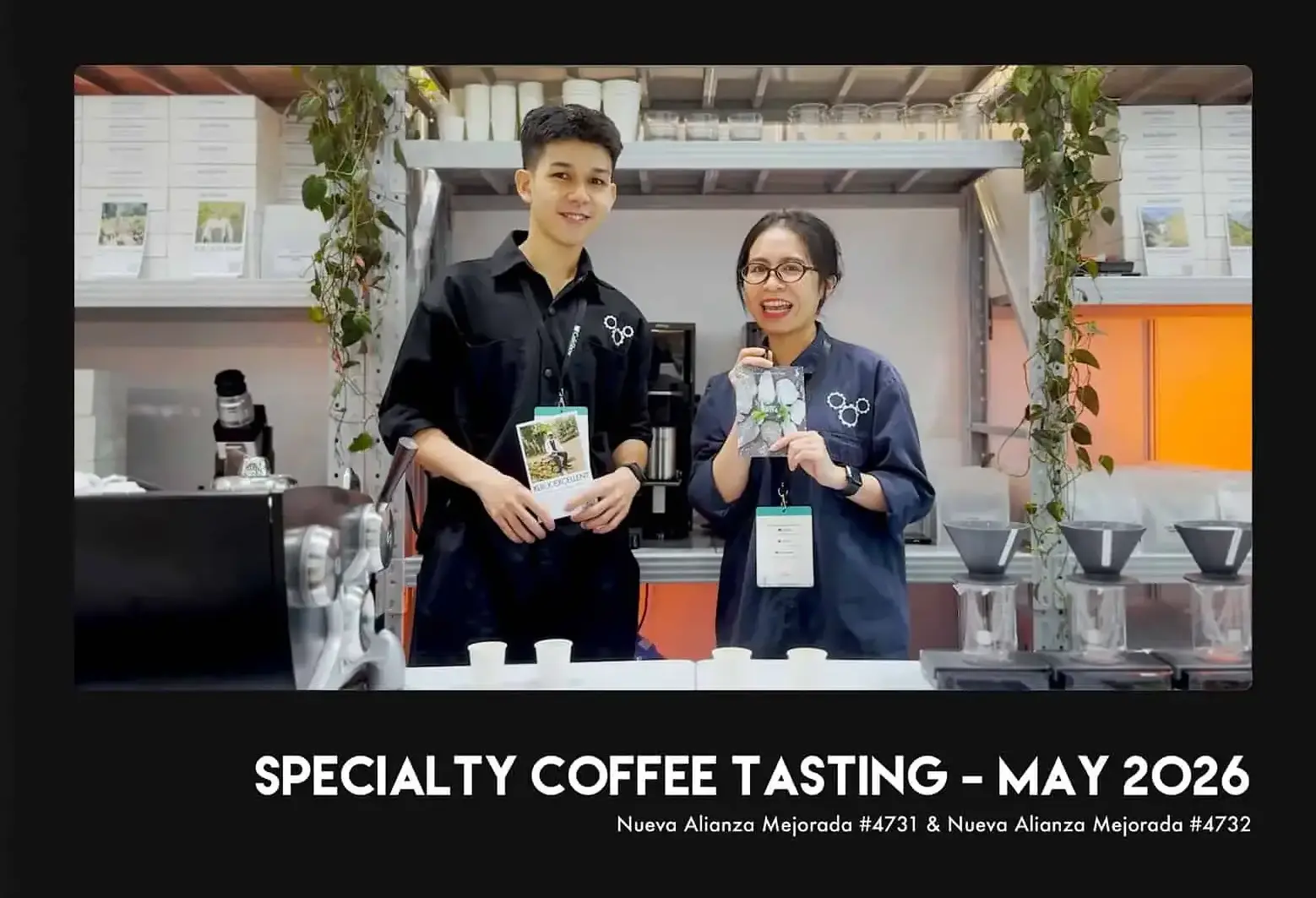
Unveiling May Discovery Subscription: Nueva Alianza Mejorada #4731 & Nueva Alianza Mejorada #4732
The Discovery Subscription is a silent dialogue, a place where the soul of the connoisseur finds a harmonious beat with distant lands. Like a transparent lens, we become storytellers, meticulously peeling back layers of cultural sediment, the breath of the soil, and the human philosophies hidden within every coffee bean.
May arrives with brilliant streaks of golden sunlight, a time when we long to hide beneath the lush, dew-drenched canopies of Santa Teresa. Amidst the silence of the Andes, when compassion touches Mother Earth, what will we hear? Perhaps it is a sweet response that nature reserves solely for souls who know how to wait patiently.

- Taste the Origin
Nueva Alianza Pacamara #4733 – The essence of Cusco with elegant jasmine notes
Nueva Alianza Pacamara #4733 is a testament to the miraculous terroir and dedicated cultivation of the renowned Cusco region. The combination of the characteristic Pacamara bean size and ideal altitude has forged a flavor profile of immense sophistication and depth. From the very first moment, this lot captivates with its elegant jasmine notes, radiating a gentle, pure fragrance akin to a flower blooming in the morning dew.

- Taste the Origin
Nueva Alianza Orange Gesha #4737 – An expedition of recessive genetic traits into the sensory realm
In a world of authenticity, Nueva Alianza Orange Gesha #4737 represents the proud emergence of rare biological traits often obscured by nature’s universality. Carrying a recessive genetic code, Lot #4737 embarks on an “expedition” into the connoisseur’s mind, where record-breaking fructose concentrations are released to perfectly fill every sensory gap with absolute smoothness and purity.
Through washed processing and extremely-light roasting, vibrant citrus nuances and ethereal floral notes, once hidden deep within the genetic structure, now manifest with power, transforming the tasting experience into a journey of ontological completion, where the rarity of recessive genes finally reigns supreme in flavor.

Specialty Coffee in Vietnam
BRAND VALUE
YOU SHOULD HAVE KNOWN
XLIII Coffee has been aiming to become a big, impactful company with social responsibilities,
have access to high-quality raw materials and convey the complete original values of coffee to our customer
