
Coffea kivuensis – The Unique Wild Coffee of the Lake Kivu Basin
Coffea kivuensis is a rare wild coffee species naturally growing in the Lake Kivu basin, a region renowned for its diverse ecosystems and unique climate in Central Africa. With its pristine beauty and untapped potential, Coffea kivuensis has become a focal point for researchers and coffee enthusiasts seeking the world’s most distinctive coffee varieties.
I. Biological Origin of Coffea kivuensis

Belonging to the Coffea genus, kivuensis is one of the few wild coffee species that has maintained genetic purity, largely unaffected by domestication processes like Arabica or Robusta. The species was first described by botanist Lebrun in 1932, marking a significant milestone in documenting the diversity of the Coffea genus in Africa.
The origin of Coffea kivuensis is closely linked to the pristine forests of the Kivu region in Central Africa, an area renowned for volcanic terrain, rich vegetation, and unique tropical rainforest ecosystems. This region is not only the cradle of many wild coffee species but also considered a biodiversity hotspot for the entire Coffea genus. Its naturally humid environment, fertile basaltic soils, and characteristic highlands have contributed to the unique biological traits of Coffea kivuensis.
The species’ formation and persistence over thousands of years of natural evolution indicate that C. kivuensis is not a product of hybridization or cultivation, but rather the result of strict natural selection, carrying physiological and genetic traits shaped by the African montane forest ecosystem.
Image credits: Royal Botanic Garden, Kew.
II. Ecological Space and Natural Distribution
Like many wild coffee species, Coffea kivuensis has a relatively narrow distribution, primarily concentrated in the Kivu region of the Democratic Republic of Congo (DRC). This area is covered by tropical montane forests with cool year-round temperatures and consistently high humidity.
Field surveys show that the species thrives at altitudes between 1,900 and 2,100 meters above sea level, a height not commonly associated with other wild Coffea species. This ecological niche contributes to its unique biological characteristics, including adaptation to lower temperatures, reduced light intensity, and slower growth rates in dense forest environments.

The natural scenery surrounding the Lake Kivu area, DRC.
Image credits: Rikolto in West Africa.
The habitat of Coffea kivuensis highlights clear ecological limits: it does not occur in lowland tropical forests, savannas, or dry woodlands. Instead, it is almost exclusively associated with evergreen montane forests, where dense canopy cover maintains a stable cool and humid microclimate. This ecological specialization makes C. kivuensis valuable for research while also increasing its vulnerability to environmental changes such as deforestation or climate change.
Recent conservation studies indicate that its narrow distribution elevates its status as a rare genetic resource with significant potential for breeding programs aimed at developing more resilient coffee varieties. Although it is not commercially cultivated, Coffea kivuensis continues to play a quiet yet crucial role in both ecosystem function and coffee genetics research, serving as a reminder of the biodiversity wealth of Central African montane forests.
III. Morphological Features and Identification
Observing Coffea kivuensis in its natural habitat reveals a coffee species that feels familiar yet distinctly wild and pristine. The plant grows as small shrubs or clusters beneath the forest canopy, where sunlight filters softly. The stems are slender, moderately tall, and branches are evenly distributed, giving it the compact form typical of many montane Coffea species.
Leaves are dark green, thick, and slightly glossy, with prominent veins visible when light passes through – an adaptation to low-light environments. The leaf edges are smooth, with a lanceolate to slightly oval shape, giving a sturdy yet delicate appearance.
The flowers and fruits are key identification features. Flowers are small, pure white, clustered at leaf axils, and emit a light fragrance typical of the Rubiaceae family. Flowering is brief, and under the cool, humid montane forest conditions, blooms often fall sooner than those of domesticated coffee species.


Image credits: Sweet Maria’s Coffee.
Fruits are smaller than Arabica, round or slightly elongated, and turn deep red when ripe. Inside, each fruit contains two typical coffee seeds, which are small and firm. These traits make Coffea kivuensis less suitable for commercial production but highly valuable for research due to its largely untapped genetic diversity.
Overall, the morphology of Coffea kivuensis conveys the sense of a wild coffee species shaped by the harsh demands of montane forests: understated, elegant, and naturally refined. Its physical traits not only facilitate species identification but also reflect its long evolutionary journey within a pristine forest environment.
IV. Value for Research and Breeding
The presence of Coffea kivuensis holds significance beyond botany, forming a vital part of the genetic resources used in scientific research. As a wild species with a narrow distribution, it possesses ancient genetic traits largely unaffected by hybridization. In research programs focused on coffee improvement, particularly in response to climate change, emerging diseases, and declining biodiversity – wild species like kivuensis act as a “natural bank” of adaptive traits potentially lost in commercial varieties.
At research centers such as Yangambi in Congo and various international gene banks, Coffea kivuensis is conserved as a valuable specimen. Scientists collect data on morphology, physiology, adaptability, and genetics to compare with cultivated coffee varieties and identify traits for breeding. Its ability to thrive at high altitudes, in cooler environments, and under naturally challenging conditions could lead to the development of more resilient coffee cultivars.

Image credits: Sweet Maria’s Coffee.
Although Coffea kivuensis does not currently offer commercial flavor profiles, its hidden biological characteristics are considered strategic resources for the global coffee industry.
In short,
In the face of climate change threatening agricultural systems worldwide, conserving and studying wild coffee species like Coffea kivuensis is increasingly critical. The species not only contributes scientific knowledge about evolution and ecological distribution but also helps safeguard the future of the coffee sector. In many ways, Coffea kivuensis serves as a living archive – silent, elusive, yet containing invaluable insights for persistent scientific inquiry.
The collected images of Coffea kivuensis are for illustrative purposes only, due to the species’ limited occurrence in the wild.
V. FAQs
1. Where is Coffea kivuensis found, and at what altitude?
Coffea kivuensis is a wild coffee species primarily found in the Kivu region of the Democratic Republic of Congo, thriving at 1,900 – 2,100 meters above sea level in montane forests with cool temperatures and high humidity.
2. How can Coffea kivuensis be identified?
It has thick, dark green, glossy leaves with prominent veins; small white flowers clustered at leaf axils; and small red fruits containing two firm seeds.
3. How resistant is Coffea kivuensis to pests and climate change?
As a wild species, it possesses genetic traits that provide natural resistance to certain pests and greater adaptability to environmental changes than domesticated coffee varieties.
4. Which research centers are conserving this species?
It is conserved at research centers and international gene banks, notably the Yangambi Research Center in the Democratic Republic of Congo, where scientists preserve specimens and study its genetics and adaptability.
5. Why is conserving Coffea kivuensis important for the coffee industry?
Conservation is strategic: its original gene pool offers traits for breeding resilient coffee varieties, helps fight pests, adapts to climate change, and deepens understanding of coffee evolution, biodiversity, and ecology.

Bài viết mới

- Taste the Origin
Nigussie Nare – Murago Outgrowers #03028: Cultivated from the Values of Sustainable Reciprocity
Nestled beneath the shade trees of Sidama, Bensa, the Nigussie Nare – Murago Outgrowers #03028 coffee lot serves as a living testament to the values of sustainable reciprocity. This symbiosis begins with the intimate bond between a rich indigenous ecosystem and the smallholder farmers of the Murago region. Each harvested bean is the culmination of a virtuous cycle: a stable environment produces exceptional bean quality, and sustainable economic growth, in turn, continues to protect the verdant canopy of the great forest.

- Taste the Origin
Rift Valley Coffee Caucus #03757 – A Testament to Western Kenya’s Collective Spirit
Turning our gaze to the Great Rift Valley of East Africa, the fertile volcanic landscapes are witnessing an inspiring transformation. Moving away from fierce, survival-driven competition, smallholder farmers in Western Kenya have chosen to join forces, forging a resilient and unified network. The Rift Valley Coffee Caucus #03757 lot stands as the ultimate testament to this remarkable collective synergy.

- Breaking News
Airworks Coffee & XLIII Coffee – A “handshake” that brings original flavors across borders
XLIII Coffee, alongside our key wholesale partner Airworks Coffee, officially announces the latest release of specialty coffee lots for the North American market. This event reaffirms our commitment to bringing original flavors across all geographical barriers to coffee enthusiasts.
Early access (for Subscribers of Airworks): 10:00 AM (PST) | Wednesday, April 29, 2026
General access: 10:00 AM (PST) | Friday, May 1, 2026
We invite our Customers and Partners to visit (airworkscoffee.com) for detailed information and to prepare for this special release!
- Taste the Origin
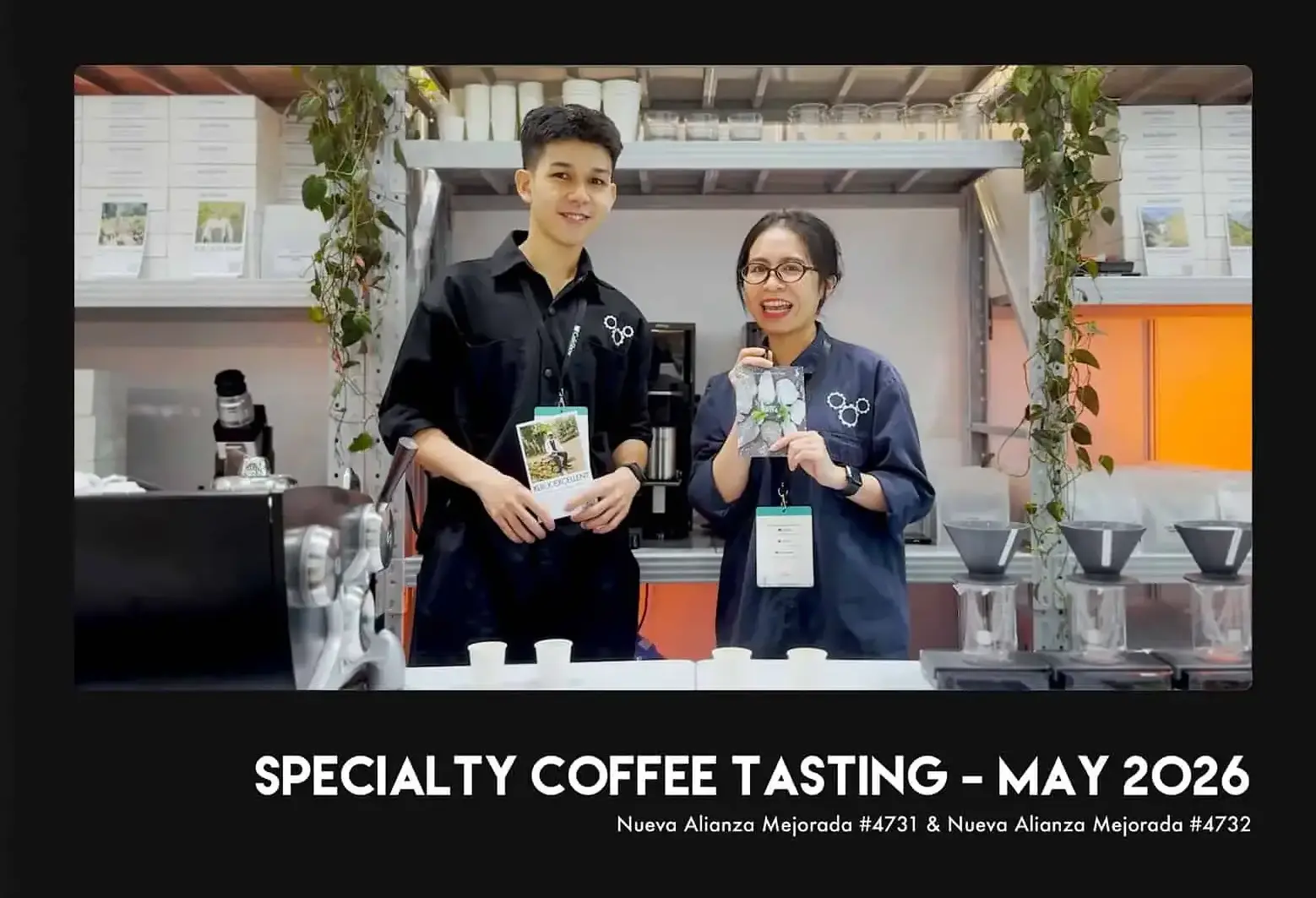
Unveiling May Discovery Subscription: Nueva Alianza Mejorada #4731 & Nueva Alianza Mejorada #4732
The Discovery Subscription is a silent dialogue, a place where the soul of the connoisseur finds a harmonious beat with distant lands. Like a transparent lens, we become storytellers, meticulously peeling back layers of cultural sediment, the breath of the soil, and the human philosophies hidden within every coffee bean.
May arrives with brilliant streaks of golden sunlight, a time when we long to hide beneath the lush, dew-drenched canopies of Santa Teresa. Amidst the silence of the Andes, when compassion touches Mother Earth, what will we hear? Perhaps it is a sweet response that nature reserves solely for souls who know how to wait patiently.

- Taste the Origin
Nueva Alianza Pacamara #4733 – The essence of Cusco with elegant jasmine notes
Nueva Alianza Pacamara #4733 is a testament to the miraculous terroir and dedicated cultivation of the renowned Cusco region. The combination of the characteristic Pacamara bean size and ideal altitude has forged a flavor profile of immense sophistication and depth. From the very first moment, this lot captivates with its elegant jasmine notes, radiating a gentle, pure fragrance akin to a flower blooming in the morning dew.

- Taste the Origin
Nueva Alianza Orange Gesha #4737 – An expedition of recessive genetic traits into the sensory realm
In a world of authenticity, Nueva Alianza Orange Gesha #4737 represents the proud emergence of rare biological traits often obscured by nature’s universality. Carrying a recessive genetic code, Lot #4737 embarks on an “expedition” into the connoisseur’s mind, where record-breaking fructose concentrations are released to perfectly fill every sensory gap with absolute smoothness and purity.
Through washed processing and extremely-light roasting, vibrant citrus nuances and ethereal floral notes, once hidden deep within the genetic structure, now manifest with power, transforming the tasting experience into a journey of ontological completion, where the rarity of recessive genes finally reigns supreme in flavor.

Specialty Coffee in Vietnam
BRAND VALUE
YOU SHOULD HAVE KNOWN
XLIII Coffee has been aiming to become a big, impactful company with social responsibilities,
have access to high-quality raw materials and convey the complete original values of coffee to our customer
