
Defense Genetics Strategy: Harnessing Disease-Resistant Genes from Coffea racemosa for Arabica
Currently, hybridization between Coffea arabica and Coffea racemosa is attracting the attention of research groups worldwide. This approach is considered a promising strategy to enhance disease resistance in Arabica by exploiting and transferring natural resistance genes from C. racemosa.

Study 1
Resistance to Bacterial Halo Blight in Arabica Lines Derived from Genotype C1195‑5‑6‑2 (published 2018)
Researchers at the Instituto Agronômico do Paraná (IAPAR), Brazil, conducted this study to evaluate the resistance of Coffea arabica lines derived from genotype C1195‑5‑6‑2 to bacterial halo blight, aiming to identify hybrids with potential for improved natural resistance and use in sustainable coffee breeding programs.
Field experiments were carried out using a randomized block design, comparing 18 derived lines with susceptible control varieties such as Catuaí Vermelho IAC 81 and Mundo Novo IAC 376‑4. Disease severity was assessed based on leaf symptoms. Results showed that approximately 10 derived lines exhibited significant resistance compared to the susceptible varieties, demonstrating the effectiveness of transferring genes from C. racemosa.
Study 2
Source Line IAC 1195 (Arabica Carrying C. racemosa Genes) and Its Derived Hybrids in Brazilian Breeding Programs (published 2019)
Building on the research of valuable gene resources from C. racemosa, the IAPAR team, in collaboration with Universidade Estadual de Londrina (UEL), Brazil, conducted further trials to evaluate the resistance of the source line IAC 1195 – Arabica carrying genes from C. racemosa and its derived hybrids against red mite (Oligonychus ilicis).
In greenhouse trials with a completely randomized design, each genotype was replicated 12 times, and the proportion of leaf area damaged by red mites was assessed. Notably, the F4 hybrid IAPAR H0113‑40‑26‑10 (derived from IAC 1195) showed high resistance, with significantly lower leaf damage compared to pure Arabica lines.

Racemosa coffee cherry (left) & Arabica coffee cherry (right)
Study 3
Characterization and Resistance of Coffea arabica × Coffea racemosa Hybrids to Coffee Leaf Miner (Leucoptera coffeella) (published 2024)
This study, conducted by a Brazilian research team, aimed to exploit natural resistance genes from C. racemosa to improve the ability to prevent leaf borer (Leucoptera coffeella) disease of Arabica – a high-value coffee species that is particularly susceptible to pests.
The experimental procedure included controlled hybridization and laboratory trials using two approaches: dual‑choice tests to assess plant attractiveness to the pest and no‑choice tests to evaluate larval development, survival, and leaf damage. Results indicated that the hybrids did not significantly deter pest selection but exhibited resistance through antibiosis, with reduced larval development, lower survival rates, and decreased leaf damage compared to pure Arabica.
In conclusion,
Taken together, these three studies demonstrate that exploiting natural resistance genes from Coffea racemosa holds great potential for developing Arabica lines with higher resilience against multiple pests and diseases. These hybrids not only show superior resistance but also maintain stable agronomic traits, essential for preserving bean quality.
For the specialty coffee sector, these findings have long-term strategic significance: they help reduce losses from pests, minimize the use of agrochemicals, and ensure stability in both yield and quality. Continued research and application of wild genetic resources like C. racemosa promise the development of sustainable Arabica varieties that retain distinctive flavor profiles, increase economic value in the specialty market, and contribute to environmentally friendly, climate-adaptive coffee production.
*Scientific Reference:
1. Andreazi, F. et al., 2018. Resistance to bacterial halo blight in Arabica coffee lines derivative from the genotype C1195‑5‑6‑2 under natural infection conditions. Ciência e Agrotecnologia.
2. Carducci, T.C., Andreazi, F. & IAPAR & UEL Research Teams, 2019. Resistance to red mite in Coffea arabica genotype introgressed with Coffea racemosa genes. Crop Breeding and Applied Biotechnology.
3. Andreazi, F. & Carducci, T.C., 2024. Characterization and levels of resistance in Coffea arabica × Coffea racemosa hybrids to Leucoptera coffeella. Journal of Pest Science.

Bài viết mới

- Taste the Origin
Nigussie Nare – Murago Outgrowers #03028: Cultivated from the Values of Sustainable Reciprocity
Nestled beneath the shade trees of Sidama, Bensa, the Nigussie Nare – Murago Outgrowers #03028 coffee lot serves as a living testament to the values of sustainable reciprocity. This symbiosis begins with the intimate bond between a rich indigenous ecosystem and the smallholder farmers of the Murago region. Each harvested bean is the culmination of a virtuous cycle: a stable environment produces exceptional bean quality, and sustainable economic growth, in turn, continues to protect the verdant canopy of the great forest.

- Taste the Origin
Rift Valley Coffee Caucus #03757 – A Testament to Western Kenya’s Collective Spirit
Turning our gaze to the Great Rift Valley of East Africa, the fertile volcanic landscapes are witnessing an inspiring transformation. Moving away from fierce, survival-driven competition, smallholder farmers in Western Kenya have chosen to join forces, forging a resilient and unified network. The Rift Valley Coffee Caucus #03757 lot stands as the ultimate testament to this remarkable collective synergy.

- Breaking News
Airworks Coffee & XLIII Coffee – A “handshake” that brings original flavors across borders
XLIII Coffee, alongside our key wholesale partner Airworks Coffee, officially announces the latest release of specialty coffee lots for the North American market. This event reaffirms our commitment to bringing original flavors across all geographical barriers to coffee enthusiasts.
Early access (for Subscribers of Airworks): 10:00 AM (PST) | Wednesday, April 29, 2026
General access: 10:00 AM (PST) | Friday, May 1, 2026
We invite our Customers and Partners to visit (airworkscoffee.com) for detailed information and to prepare for this special release!
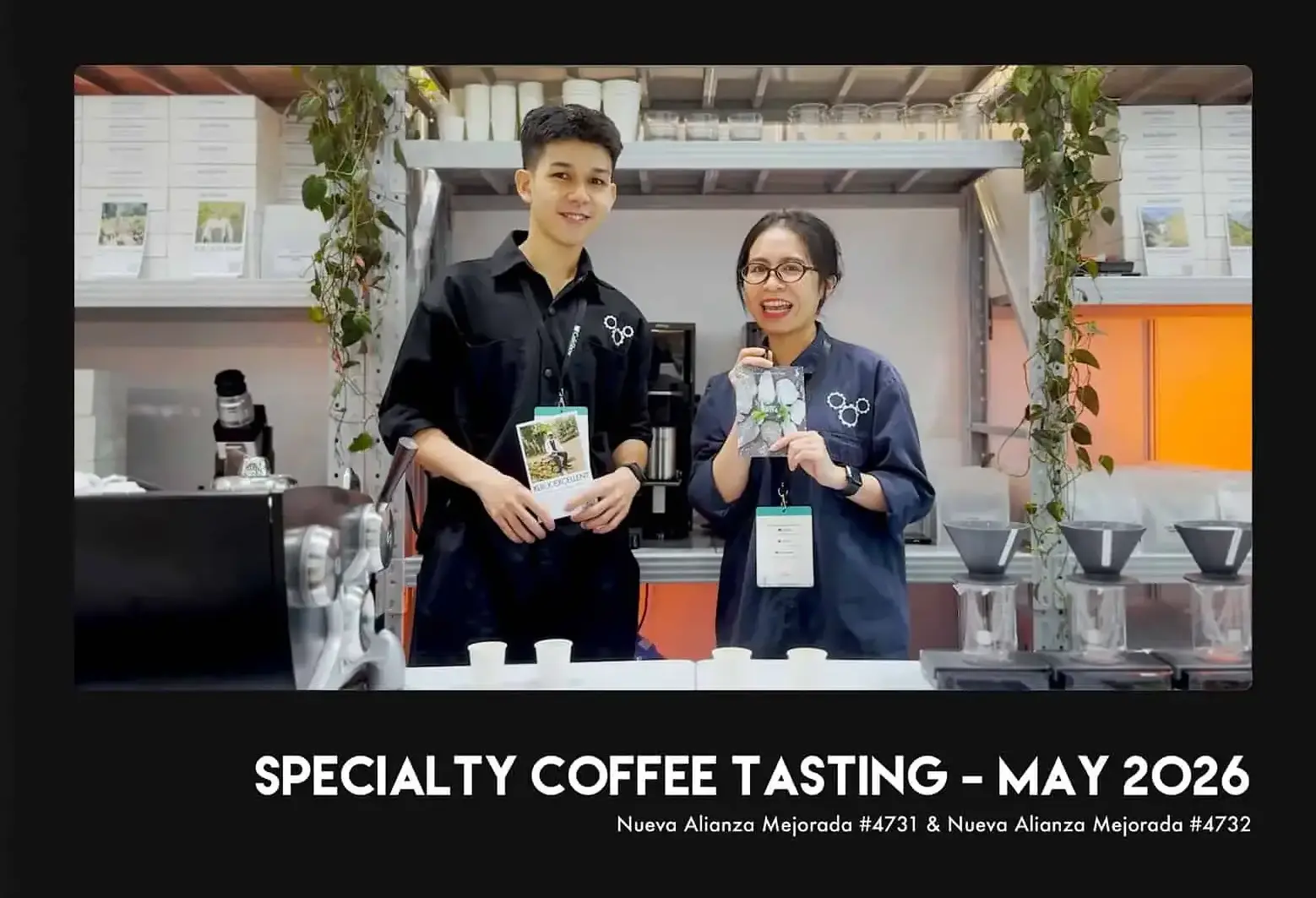
- Taste the Origin
Unveiling May Discovery Subscription: Nueva Alianza Mejorada #4731 & Nueva Alianza Mejorada #4732
The Discovery Subscription is a silent dialogue, a place where the soul of the connoisseur finds a harmonious beat with distant lands. Like a transparent lens, we become storytellers, meticulously peeling back layers of cultural sediment, the breath of the soil, and the human philosophies hidden within every coffee bean.
May arrives with brilliant streaks of golden sunlight, a time when we long to hide beneath the lush, dew-drenched canopies of Santa Teresa. Amidst the silence of the Andes, when compassion touches Mother Earth, what will we hear? Perhaps it is a sweet response that nature reserves solely for souls who know how to wait patiently.

- Taste the Origin
Nueva Alianza Pacamara #4733 – The essence of Cusco with elegant jasmine notes
Nueva Alianza Pacamara #4733 is a testament to the miraculous terroir and dedicated cultivation of the renowned Cusco region. The combination of the characteristic Pacamara bean size and ideal altitude has forged a flavor profile of immense sophistication and depth. From the very first moment, this lot captivates with its elegant jasmine notes, radiating a gentle, pure fragrance akin to a flower blooming in the morning dew.

- Taste the Origin
Nueva Alianza Orange Gesha #4737 – An expedition of recessive genetic traits into the sensory realm
In a world of authenticity, Nueva Alianza Orange Gesha #4737 represents the proud emergence of rare biological traits often obscured by nature’s universality. Carrying a recessive genetic code, Lot #4737 embarks on an “expedition” into the connoisseur’s mind, where record-breaking fructose concentrations are released to perfectly fill every sensory gap with absolute smoothness and purity.
Through washed processing and extremely-light roasting, vibrant citrus nuances and ethereal floral notes, once hidden deep within the genetic structure, now manifest with power, transforming the tasting experience into a journey of ontological completion, where the rarity of recessive genes finally reigns supreme in flavor.

Specialty Coffee in Vietnam
BRAND VALUE
YOU SHOULD HAVE KNOWN
XLIII Coffee has been aiming to become a big, impactful company with social responsibilities,
have access to high-quality raw materials and convey the complete original values of coffee to our customer
