
Modern Specialty coffee processing technology leaves a unique flavor mark
In today’s constantly evolving landscape, specialty coffee processing technology is also transforming, with numerous advancements in production techniques. The rare flavors of specialty coffee are being fully explored, much like a proud peacock displaying its vibrant tail, captivating the hearts of many coffee enthusiasts with its pure notes.
Significant advancements in Specialty coffee processing
Years ago, specialty coffee production heavily relied on manual labor and natural conditions. Farmers would manually handle all stages from planting and harvesting to fermenting, roasting, and grinding. However, to achieve consistency and minimize risks from external factors, experts have researched and applied scientific and technical methods to coffee production.
Specialty coffee drying Technology
Freshly harvested coffee cherries, which contain a relatively high moisture content (around 60%), would ferment or be attacked by mold over time. The drying process reduces the moisture content to 10-12%. Besides traditional sun drying, many farms now use modern drying technologies to shorten the time while preserving the coffee beans’ characteristics.
 The drying process reduces the moisture content in the beans to 10-12%.
– Freeze drying
Freeze drying removes water from coffee beans by freezing them and then reducing the surrounding pressure so the water sublimates without passing through the liquid state. The beans remain stable, lightweight, and full of flavor after drying.
The freeze-drying process involves three critical stages:
+ Freezing: The temperature is rapidly lowered to about -40°C to solidify the water content in the beans. Water molecules within the coffee bean cells form ice crystals, preserving the delicate flavor and aroma.
+ Primary drying: The frozen beans are placed in a vacuum chamber to lower atmospheric pressure and raise the temperature in a controlled manner. As the pressure drops, the ice crystals within the beans turn directly into gas, removing most of the moisture.
+ Secondary drying: In this stage, the temperature is increased to meticulously remove the remaining moisture. Farmers achieve the desired moisture level and prevent reabsorption during storage, protecting the beans from microbial growth and oxidation, which degrade quality and shelf life.
 Freeze drying removes water from coffee beans by freezing them and then reducing the surrounding pressure so the water sublimates without going through the liquid state.
– Fluid bed drying
Fluid bed drying uses hot air to dry coffee quickly and uniformly. This technique employs a strong airflow to suspend and move the beans freely in the roasting chamber, ensuring even roasting and faster drying compared to traditional methods. However, it requires careful temperature control to avoid burning the beans.
The fluid bed drying process includes:
+ Fluidization: Gas, typically air, passes through a layer of solid particles from below. As the airflow increases, the particles lift and suspend in the air stream, resembling a fluid-like state.
+ Generating hot air: The drying process starts by heating the air to the desired temperature using a heater or heat exchanger. The hot air is then directed into the lower chamber of the dryer via ducting equipped with dampers.
+ Heat transfer and moisture removal: In the fluidized state, the particles are surrounded by hot, dry air, facilitating efficient heat transfer and evaporation. The air transfers its thermal energy to the particles, evaporating moisture into the air.
+ Drying: The lower section can be divided into separate zones, each with different drying temperatures or fluidization rates. This allows higher temperatures at the feed end, where the product is wetter, and lower temperatures in subsequent stages as the particle surfaces dry.
+ Cooling: After drying, controlled cool air is introduced in the final stage to cool the dried material.
 Fluid bed drying uses hot air to dry coffee quickly and evenly.
Controlled fermentation
Uncontrolled fermentation can ruin the quality and flavor of specialty coffee. Lactic fermentation, an anaerobic fermentation method pioneered by La Palma y El Tucán in Colombia, creates an ideal environment for lactobacillus bacteria (LAB), enhancing the coffee’s flavor profile.
After pulping, coffee beans are sealed in containers to remove or significantly reduce oxygen. Anaerobic lactic acid bacteria, like Leuconostoc mesenteroides, rapidly grow and react with sugars in the mucilage, converting them to lactic acid. Producers control enzyme reactions by monitoring parameters such as temperature and pH, protecting the fermentation process from external negative impacts. This process converts up to 90% of glucose and fructose, giving the beans a unique flavor profile.
Enhancing coffee quality management
Beyond producing high-quality beans through scientific and technical advancements, the specialty coffee industry also needs to maintain stringent quality control.
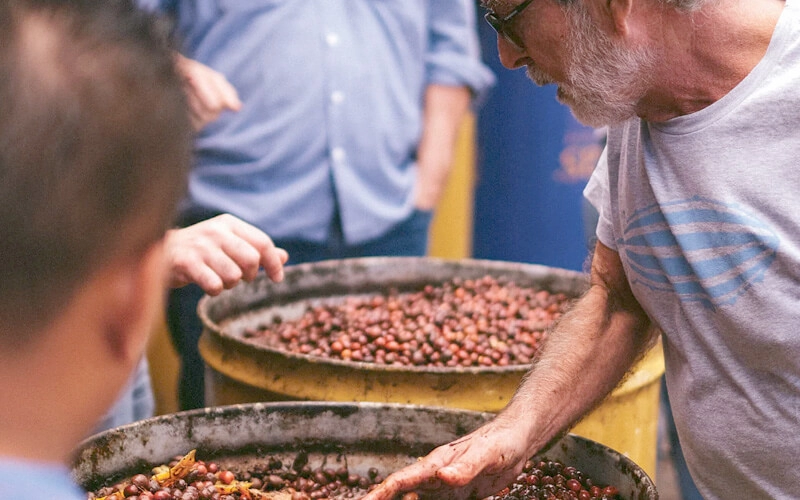 The fermentation process can ruin the quality and flavor of specialty coffee if parameters are not tightly controlled.
– ProfilePrint – AI analysis of green coffee characteristics
ProfilePrint can analyze the attributes of green coffee beans, such as flavor profile, moisture content, and bean density, using molecular markers linked to the sensory properties of roasted coffee. This platform simplifies the quality assessment process and improves consistency across coffee batches. Small-scale producers also benefit from easy access to product information.
 ProfilePrint can analyze the characteristics of green coffee beans, such as configuration, flavor, moisture, and bean density, by using molecular markers in green coffee to link with the sensory attributes of roasted coffee.
– Blockchain – A digital ledger for excellent traceability
Blockchain technology ensures product quality from origin to consumer, enhancing transparency and accountability among producers. This solution is beneficial for the responsible specialty coffee industry. Coffee data is securely recorded and stored on blockchain chains, allowing all participants in the specialty coffee supply chain to closely monitor and verify. Hash codes and matching hash codes in the blockchain structure prevent unauthorized access, ensuring optimal accuracy and information security.
 With hash codes and matching hash codes in the blockchain structure, this technology can maximally prevent intrusion and attacks from other systems, ensuring optimal accuracy and information security.
The development of Specialty coffee processing technology enhances quality and flavor in every bean
Handcrafted coffee, meticulously produced by human hands, has always carried a captivating, enchanting charm. However, human labor alone cannot always meet the growing demands of the coffee industry, especially when there is a need to increase both production volume and product quality.
Advanced processing technology produces high-quality Specialty coffee batches
By improving processes from harvesting to roasting, modern coffee processing technology significantly enhances the quality of coffee beans. No longer overly dependent on unpredictable and volatile weather conditions, specialty coffee processing stages are now controlled by human hands, ensuring stability and consistency in each product.
– Drying coffee beans
The traditional method of drying coffee beans on raised beds is still in use today. However, this method is fraught with weather-related risks. Depending on sunlight intensity and weather fluctuations, farmers must adjust drying times and frequently turn the beans to prevent mold growth. To mitigate these challenges, producers have adopted drying chambers and thermal drying to reduce the beans’ natural moisture content. This ensures even drying, giving farmers peace of mind during the process.
– Fermentation
 Modern coffee processing technology has significantly enhanced the quality of coffee beans.
Fermentation is influenced by various factors, making it prone to losing control. This concern has been partially resolved through controlled fermentation technology. Farmers can create a more ideal fermentation environment for the beans, minimizing the impact of external factors on the transformation of glucose and fructose.
– Roasting
A coffee roaster is akin to an artist, needing to understand the bean’s profile to select the right temperature, time, and roasting curve to ensure the compounds react sufficiently without altering the bean’s essence. The advent of modern roasting machines has enabled roasters to easily monitor and track metrics to produce consistently high-quality roasts.
– Storage
 The advent of modern roasting machines has made it easier for roasters to observe and monitor metrics to produce consistent, high-quality roasts.
During long transport and extended storage periods, high-quality coffee beans can deteriorate, lose quality, or even spoil. However, the storage of specialty coffee today goes beyond traditional jute bags, incorporating environmentally friendly, recyclable materials, such as those used in the GrainPro project. This not only maintains the beans’ freshness but also preserves their noble aroma notes.
Specialty coffee processing technology maximizes pure flavor notes
The vibrant, original flavor notes are a proud highlight inherent in each specialty coffee bean. These flavor seeds are formed from the elements of earth, wind, and water in the growing region, gradually maturing and crystallizing through appropriate processing methods. Producers cannot always optimize and enhance this rustic beauty to make it as radiant as a butterfly. Modern coffee processing technology was developed to assist in achieving this goal.
From planting and preliminary processing to roasting and brewing, technology can be applied to monitor, control, and adjust parameters in real-time, allowing the flavor layers to confidently unfold uniquely. This is evident in advanced drying technologies, such as freeze drying and fluid bed drying, which help preserve the maximum aroma and nutrients in coffee beans even during long storage periods. The sudden freezing and pressure reduction in freeze drying ensures that the coffee beans dry without passing through a liquid phase—a stage vulnerable to oxidation, bacteria, and mold, thereby preserving the core intrinsic value of the beans.
 From planting and preliminary processing to roasting and brewing, technology can be applied to monitor, control, and adjust parameters in real-time, allowing flavor layers to confidently unfold in their unique ways.
Moreover, effective management of the fermentation process with the proper development of beneficial bacteria allows consumers to distinctly experience the coffee’s flavor. For instance, lactobacillus bacteria (LAB) thrive in the lactic fermentation method used at Granja Esperanza farm. This method allows producers to closely control external factors that might alter the coffee bean’s distinctive flavor, such as temperature and pH levels. Thus, each flavor note, deeply embedded in the coffee bean, is preserved, waiting to be elevated by the roaster’s skilled hands.
Following the quest for original flavor notes, XLIII Coffee chooses to use an ultra-light roast for its green coffee batches to ensure their authenticity. The beans are removed after the first crack, where chemical reactions have only occurred enough to highlight the pure notes within the bean’s core. The rich acids are preserved, developing robustly into soaring notes that captivate the user’s mind.
 XLIII Coffee chooses to use an ultra-light roast for its green coffee batches to ensure their authenticity.
The potential for Specialty coffee processing technology development
With the significant benefits that advanced specialty coffee processing technology brings to the entire industry, we can confidently look forward to a future where these technologies are widely and uniformly applied.
Challenges in applying modern coffee processing technology
Specialty coffee often originates from countries facing many difficulties, such as those in East Africa. Farmers there have limited access to technology due to inadequate living and working conditions. The concept of applying science and technology to coffee production is not yet widespread. For them, maintaining their livelihood and fighting for fair rights are immediate concerns that need addressing.
 Operational costs are also a reason why modern coffee processing technology has not been adopted on some farms.
Additionally, operational costs are another reason why modern coffee processing technology has not been widely adopted on some farms. To implement these technologies, producers need to prepare appropriate infrastructure and train skilled and experienced personnel. These requirements place a heavy burden on small and medium-sized enterprises.
Overcoming obstacles, technology continues to improve, yielding practical Results
Human and financial challenges cannot be completely resolved in a short time, but they cannot halt the progress of processing technology. This is essential for the coffee industry to keep pace with the development of the times. Experts continually research and find ways to improve technology and techniques to enhance the overall industry’s quality and increase feasibility for most stakeholders.
 Experts continually research and find ways to improve technology and techniques to enhance the overall industry’s quality and increase feasibility for most stakeholders.
Granja Esperanza farm, striving to produce excellent coffee batches, has adopted anaerobic fermentation technology to minimize external impacts on the process. Additionally, many farms in East Africa have utilized thermal drying techniques to increase consistency and make quality management easier.
Conclusion
Specialty coffee is no longer confined to growing regions; it has spread its wings across continents. Advanced specialty coffee processing technologies are effective methods for scaling development and maintaining the premium quality that defines this high-value coffee. Overcoming difficulties requires the collective effort of all stakeholders in the supply chain to widely apply modern technology throughout the industry.
Related questions
Question 1: What role does specialty coffee processing technology play in enhancing coffee flavor?
Modern processing technology fully explores the flavors of specialty coffee, ensures consistency, and minimizes risks from external factors, thereby enhancing the quality and taste of the coffee.
Question 2: How does controlled fermentation technology benefit the specialty coffee processing?
Controlled fermentation technology allows for the regulation of parameters such as temperature and pH, preventing negative environmental impacts and improving coffee flavor. This creates optimal conditions for beneficial bacteria to develop strong flavor profiles.
Question 3: What are the challenges of applying modern coffee processing technology in East African countries?
East African countries face poor working conditions, and farmers’ lives are not well secured, limiting their technological awareness and access. Additionally, farms lack the financial capacity to cover the costs of implementing advanced technologies.
Question 4: How has specialty coffee processing technology developed in recent years?
In recent years, specialty coffee processing technology has seen numerous technical advancements, including the use of modern drying methods, the application of controlled fermentation technology, and the use of artificial intelligence to improve coffee quality.
Question 5: What benefits does fluid bed drying have compared to traditional drying methods?
Compared to traditional drying, fluid bed drying uses a strong hot air stream to dry coffee quickly and evenly, saving time and ensuring that the coffee beans are evenly roasted without burning.

Bài viết mới

- Taste the Origin
Rift Valley Coffee Caucus #03757 – A Testament to Western Kenya’s Collective Spirit
Turning our gaze to the Great Rift Valley of East Africa, the fertile volcanic landscapes are witnessing an inspiring transformation. Moving away from fierce, survival-driven competition, smallholder farmers in Western Kenya have chosen to join forces, forging a resilient and unified network. The Rift Valley Coffee Caucus #03757 lot stands as the ultimate testament to this remarkable collective synergy.

- Breaking News
Airworks Coffee & XLIII Coffee – A “handshake” that brings original flavors across borders
XLIII Coffee, alongside our key wholesale partner Airworks Coffee, officially announces the latest release of specialty coffee lots for the North American market. This event reaffirms our commitment to bringing original flavors across all geographical barriers to coffee enthusiasts.
Early access (for Subscribers of Airworks): 10:00 AM (PST) | Wednesday, April 29, 2026
General access: 10:00 AM (PST) | Friday, May 1, 2026
We invite our Customers and Partners to visit (airworkscoffee.com) for detailed information and to prepare for this special release!
- Taste the Origin
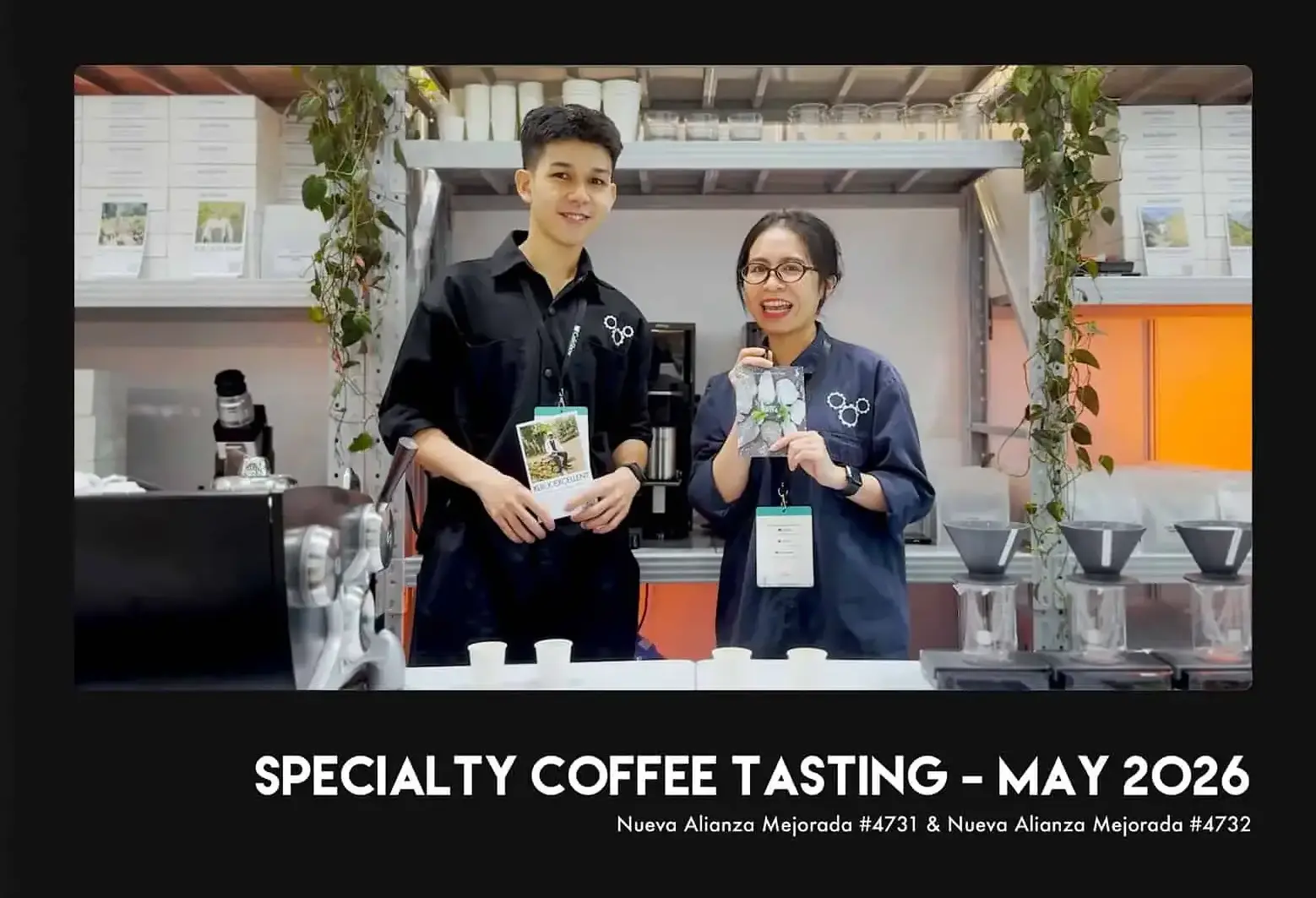
Unveiling May Discovery Subscription: Nueva Alianza Mejorada #4731 & Nueva Alianza Mejorada #4732
The Discovery Subscription is a silent dialogue, a place where the soul of the connoisseur finds a harmonious beat with distant lands. Like a transparent lens, we become storytellers, meticulously peeling back layers of cultural sediment, the breath of the soil, and the human philosophies hidden within every coffee bean.
May arrives with brilliant streaks of golden sunlight, a time when we long to hide beneath the lush, dew-drenched canopies of Santa Teresa. Amidst the silence of the Andes, when compassion touches Mother Earth, what will we hear? Perhaps it is a sweet response that nature reserves solely for souls who know how to wait patiently.

- Taste the Origin
Nueva Alianza Pacamara #4733 – The essence of Cusco with elegant jasmine notes
Nueva Alianza Pacamara #4733 is a testament to the miraculous terroir and dedicated cultivation of the renowned Cusco region. The combination of the characteristic Pacamara bean size and ideal altitude has forged a flavor profile of immense sophistication and depth. From the very first moment, this lot captivates with its elegant jasmine notes, radiating a gentle, pure fragrance akin to a flower blooming in the morning dew.

- Taste the Origin
Nueva Alianza Orange Gesha #4737 – An expedition of recessive genetic traits into the sensory realm
In a world of authenticity, Nueva Alianza Orange Gesha #4737 represents the proud emergence of rare biological traits often obscured by nature’s universality. Carrying a recessive genetic code, Lot #4737 embarks on an “expedition” into the connoisseur’s mind, where record-breaking fructose concentrations are released to perfectly fill every sensory gap with absolute smoothness and purity.
Through washed processing and extremely-light roasting, vibrant citrus nuances and ethereal floral notes, once hidden deep within the genetic structure, now manifest with power, transforming the tasting experience into a journey of ontological completion, where the rarity of recessive genes finally reigns supreme in flavor.

- Taste the Origin
Nueva Alianza Maragogipe #4735 – The “Giant” at the center of attention
Amidst a world of countless specialty coffee beans, Nueva Alianza Maragogipe #4735 emerges as a symbol of grandeur, instantly commanding attention with its distinct appearance. Affectionately dubbed the “Giant” for its impressively mutated “Elephant Bean” size, lot #4735 from Nueva Alianza stands as a testament to nature’s wonders in the Cusco region. Yet, its true allure extends far beyond its imposing exterior; hidden within these colossal beans lies a gentle “soul” blooming with pure floral and crystalline fruit notes.

Specialty Coffee in Vietnam
BRAND VALUE
YOU SHOULD HAVE KNOWN
XLIII Coffee has been aiming to become a big, impactful company with social responsibilities,
have access to high-quality raw materials and convey the complete original values of coffee to our customer
