
Ombligon Varietal: The “Navel” at the Center of Coffee’s New Era
Emerging from the verdant volcanic slopes of Huila, Colombia, Ombligon has ascended rapidly from an agronomic curiosity to a centerpiece of World Barista Championship (WBC) routines and a coveted fixture on the menus of elite roasters from London to Kuala Lumpur. Distinguished by a peculiar morphological trait – a navel-like protrusion at the base of the bean – and a flavor profile that marries the structural intensity of high-altitude Arabica with the confectionery sweetness of modern processing, Ombligon represents the apex of the current trend toward “fruit-forward” and “tactile-rich” coffees.
I. Botanical Taxonomy and the Genetic Enigma
The scientific classification of coffee varieties is often fraught with ambiguity – a result of centuries of undocumented exchange, misidentification, and natural cross-breeding. Ombligon is a prime example of this taxonomic confusion, existing in a space of anecdotal consensus rather than genetic certainty.
Nomenclature via Morphological Diagnostics
The name is purely descriptive. The Spanish term Ombligón is an augmentative of ombligo, meaning “belly button” or “navel.” Local farmers in Huila bestowed this name after noticing a distinct phenotypic trait on the cherries: a pronounced, circular nodule or indentation at the distal end of the fruit, where the flower’s style once attached to the ovary.

In typical Arabica varieties like Caturra or Castillo, this area is usually a small, flat dot. In Ombligon, the tissue forms a visible “outie” belly button, a trait conserved in the parchment and often discernible even in the green bean. This morphological marker serves as a crucial diagnostic tool during harvest and sorting, allowing producers to segregate Ombligon cherries from other varieties in the same lot.
Beyond the fruit, the Ombligon tree exhibits a specific architecture. Agronomic reports from producers such as Nestor Lasso and Juan Pablo Campos describe the plant as having:
- Broad Leaves: Similar to the Caturra varietal, suggesting a potential lineage link or convergent evolution for photosynthetic efficiency in cloud forest environments.
- Vertical Branching: Branches tend to grow with a vertical inclination, allowing for higher planting density.
- High Cherry Density: The internodal distance (space between fruit clusters) is relatively short, leading to dense clusters. This translates to high yield potential—a critical economic factor for farmers.
Three Hypotheses on Phylogenetics
The exact genetic parentage of Ombligon is a subject of debate among agronomists, exporters, and geneticists. With no definitive DNA sequencing publicly available to resolve its lineage, three primary hypotheses have emerged:
- The Transplated Ethiopian Landrace
The most prevalent theory, championed by exporters like Lohas Beans and producers at Finca El Diviso, posits that Ombligon is an Ethiopian Landrace (often referred to as “Heirloom” in the industry). This hypothesis suggests that seeds from Ethiopia’s genetically diverse forests were introduced to Colombia – possibly decades ago via research stations or private collections – and planted in Huila.
Primarily sensory. Ombligon’s cup profile often exhibits floral complexity (jasmine, rose) and an acidity structure mimicking high-quality washed Ethiopian coffees. Furthermore, the elongated bean shape is reminiscent of certain Ethiopian Longberry types.
If true, Ombligon represents a successful adaptation of East African genetics to the Andean terroir, creating a “landrace” specific to Colombia.
- Spontaneous Mutation (Pacamara/Bourbon)
An alternative theory suggests Ombligon is a natural mutation of varieties already established in the Americas.
The large bean size and tree vigor lead some to suspect a relationship with Pacamara. However, Pacamara is notoriously susceptible to Coffee Leaf Rust (Hemileia vastatrix), whereas Ombligon exhibits significant resistance.
Some agronomists believe it may be a mutation of Bourbon or even the rust-resistant Castillo, developing the unique cherry shape as a random phenotypic expression. The rust resistance strongly supports a link to a hardy parent or a vigorous mutation.
- The Papayo Equivalency
Growing anecdotal evidence suggests a link between Ombligon and another rare Huila varietal: Papayo (named for the cherry’s resemblance to a papaya). Both share the “belly button” morphology, high sugar content, and origins in the Acevedo/Pitalito regions. Some experts argue they are effectively the same genotype expressed differently due to microclimate (phenotypic plasticity), or perhaps distinct selections from the same genetic introduction. However, sensory distinctions exist: Papayo often leans toward herbal and papaya notes, while Ombligon is renowned for red fruit and berry profiles.

Agronomic Performance and Resistance
One of Ombligon’s most critical aspects is its agronomic viability. Unlike the Geisha varietal, which is notoriously low-yielding, fragile, and demanding, Ombligon is described by farmers as “robust.”
It shows resistance to Hemileia vastatrix, a massive economic advantage that reduces fungicide use and ensures crop stability.
Reports suggest a strong root system capable of efficient nutrient uptake, contributing to plant health and high sugar production in the cherries.
Cherries ripen evenly and are easy to pick, facilitating the labor-intensive selective harvesting required for specialty coffee.
II. Terroir: The Huila Incubator
The identity of Ombligon is inextricably linked to the terroir of the Huila Department in Colombia. This region is widely regarded as the vanguard of Colombian specialty coffee, specifically the municipalities of Pitalito and Acevedo.
Geographically, Huila sits in the Magdalena River valley, flanked by the Central and Eastern Cordilleras of the Andes. This topography creates a unique “climatic funnel.” Warm, moist air from the Amazon basin travels up the valley and is trapped by the mountains, creating consistent cloud cover and stable precipitation.
- Altitude & Thermodynamics: Ombligon is typically cultivated at elevations ranging from 1,650 to 1,950 meters above sea level (masl). At these altitudes, the diurnal temperature range is significant. Days are warm enough for photosynthesis, but nights are cool (often dipping below 15°C). This temperature drop slows the plant’s cellular respiration at night. Instead of burning sugars for energy, the plant stores them in the seed. This accumulation of complex polysaccharides is the fuel for the intense sweetness and heavy body found in the Ombligon cup.
- Soil Composition: The soils in Pitalito and Acevedo are predominantly volcanic, rich in nitrogen and organic matter. This nutrient density is essential for supporting the high yields of the Ombligon tree. However, it is a “heavy feeder,” requiring precise nutritional planning to prevent chlorosis (yellowing of leaves) and maintain bean density.


III. Processing: Unlocking the Ombligon "Fruit Bomb"
The Ombligon varietal’s high sugar content makes it an ideal candidate for aggressive, modern processing techniques. The flavor profile known to consumers is often a hybrid of the bean’s genetics and the processing method.
The Thermal Shock Process
Popularized by producers like Finca El Diviso, this method is designed to maximize aromatic retention:
- Anaerobic Fermentation: Cherries are sealed in airtight tanks. The oxygen-deprived environment encourages lactic acid bacteria and yeast to convert sugars into lactic acid, ethanol, and fruity esters.
- Heat Application: Beans are washed with hot water (approx. 50°C-70°C). This expands the cellular pores of the bean, allowing aromatic compounds from the fermentation “juice” to penetrate deeper.
- Cold Shock: Immediately after, beans are washed with cold water to rapidly constrict pores, “locking in” the volatile compounds.
- The Result: A coffee with exaggerated sweetness, heavy body, and intense fruit notes that remain stable over time.
Co-Fermentation and Inoculation
In more radical approaches – such as those by Deiro Garcia, a former microbiologist – the fermentation environment is manipulated with additives.
- Substrates: Adding fermented fruit pulp (like watermelon or blackberry) provides specific precursors for yeast to synthesize into flavor compounds.
- Yeast: Inoculating with specific wine or baking yeasts ensures a dominant strain controls fermentation, preventing spoilage and targeting specific profiles (e.g., malic acidity or floral esters).
IV. Decoding the Sensory Architecture
What does Ombligon taste like? Sensory data from roasters and reviews paints a consistent picture of a high-impact, polarizing, and deeply sweet coffee.
- The Spectrum: The profile is dominated by the Red and Purple sectors of the coffee flavor wheel. Primary notes include red cherry, raspberry, blackberry, plum, and red grapes.
- Confectionery: This is an Ombligon hallmark. Descriptors often include “Cherry Cola,” “Gummy Bears,” “Bubblegum,” “Cotton Candy,” and “Dr. Pepper.” This suggests the presence of distinct aldehydes and esters generated during the anaerobic phase.
- Tropical: Particularly in yeast-inoculated lots, notes of mango, passionfruit, guava, and watermelon emerge.
- Floral: Beneath the fruit, an “Ethiopian-like” floral character (jasmine, rose) is often detected, supporting the landrace hypothesis.
- Tactile (Mouthfeel): Ombligon is prized for its texture. Unlike the tea-like, delicate body of a washed Gesha, Ombligon possesses a syrupy, silky, and coating mouthfeel. This heaviness makes it exceptional for espresso, providing a rich tactile experience that persists even in milk.


V. mbligon and the Future of Specialty Coffee
The rise of Ombligon represents a structural solution to the internal contradictions of the modern specialty coffee industry: the tension between Exotic Flavor and Agronomic Sustainability.
For over a decade, Panama Gesha has been “King.” But Gesha is a fragile monarch: low-yielding, weak-rooted, and climate-sensitive. Ombligon is emerging as the perfect counterweight.
- Agronomically: Ombligon wins on rust resistance and high yield. For farmers, it carries significantly less financial risk than Gesha.
- Commercially: It offers a “luxury” flavor profile sufficient for high-end menus, but at a lower production cost due to higher yields.
Ombligon won’t “kill” Gesha, but it will democratize the luxury coffee experience. It is becoming the go-to choice for roasters wanting to offer top-tier (90+ point) flavor experiences at a price point more accessible than auction-lot Geshas.
Furthermore, the current era is dominated by heavy-handed processing (Thermal Shock, Co-fermentation). These methods require raw material with high sugar content (Brix) to fuel fermentation. Ombligon, with its superior sugar accumulation and dense bean structure, is the perfect “hardware” to run this complex processing “software.”
It will likely remain a favorite of “Experimental” producers because it acts like a sponge, absorbing and amplifying the fermentation notes craved by the Asian market (Malaysia, China, Vietnam).

However, risks remain. The overuse of aggressive processing is sparking debate about “true flavor.” If the market pivots back to “Purist” trends (clean, washed coffees), will Ombligon survive? The answer is YES. Clean washed lots from producers like Jhon Rodriguez prove that even without added yeast or fruit, the varietal itself possesses intrinsic floral complexity and natural sweetness. This ensures its longevity beyond passing trends.
Conclusion
The journey of the Ombligon varietal – from an obscure mutation in the volcanic soils of Huila to center stage at the World Barista Championship – is a vivid testament to the evolution of specialty coffee. It is the convergence of three great currents: Adaptive Genetics, the Processing Revolution, and New Consumer Tastes.
In Malaysia and Southeast Asia, Ombligon has graduated from “experiment” to a new benchmark for luxury. For roasters and competitors, it is no longer just an alternative to Gesha, but a strategic weapon in its own right.
As its genetic origins are eventually clarified by science and farming protocols are standardized, we can expect Ombligon to transform from a “phenomenon” into a “pillar” of the Colombian and global specialty coffee industry. Ombligon, true to its name, is the new “navel”—the focal point where the energy and attention of the coffee world converge for this decade.
Sources and images referenced include Perfect Daily Grind, Create Coffee Roasters, Reprise Roaster, Friedhats, Little Fish, Lohas Beans, and other reputable industry sources.

Bài viết mới

- Taste the Origin
Nigussie Nare – Murago Outgrowers #03028: Cultivated from the Values of Sustainable Reciprocity
Nestled beneath the shade trees of Sidama, Bensa, the Nigussie Nare – Murago Outgrowers #03028 coffee lot serves as a living testament to the values of sustainable reciprocity. This symbiosis begins with the intimate bond between a rich indigenous ecosystem and the smallholder farmers of the Murago region. Each harvested bean is the culmination of a virtuous cycle: a stable environment produces exceptional bean quality, and sustainable economic growth, in turn, continues to protect the verdant canopy of the great forest.

- Taste the Origin
Rift Valley Coffee Caucus #03757 – A Testament to Western Kenya’s Collective Spirit
Turning our gaze to the Great Rift Valley of East Africa, the fertile volcanic landscapes are witnessing an inspiring transformation. Moving away from fierce, survival-driven competition, smallholder farmers in Western Kenya have chosen to join forces, forging a resilient and unified network. The Rift Valley Coffee Caucus #03757 lot stands as the ultimate testament to this remarkable collective synergy.

- Breaking News
Airworks Coffee & XLIII Coffee – A “handshake” that brings original flavors across borders
XLIII Coffee, alongside our key wholesale partner Airworks Coffee, officially announces the latest release of specialty coffee lots for the North American market. This event reaffirms our commitment to bringing original flavors across all geographical barriers to coffee enthusiasts.
Early access (for Subscribers of Airworks): 10:00 AM (PST) | Wednesday, April 29, 2026
General access: 10:00 AM (PST) | Friday, May 1, 2026
We invite our Customers and Partners to visit (airworkscoffee.com) for detailed information and to prepare for this special release!
- Taste the Origin
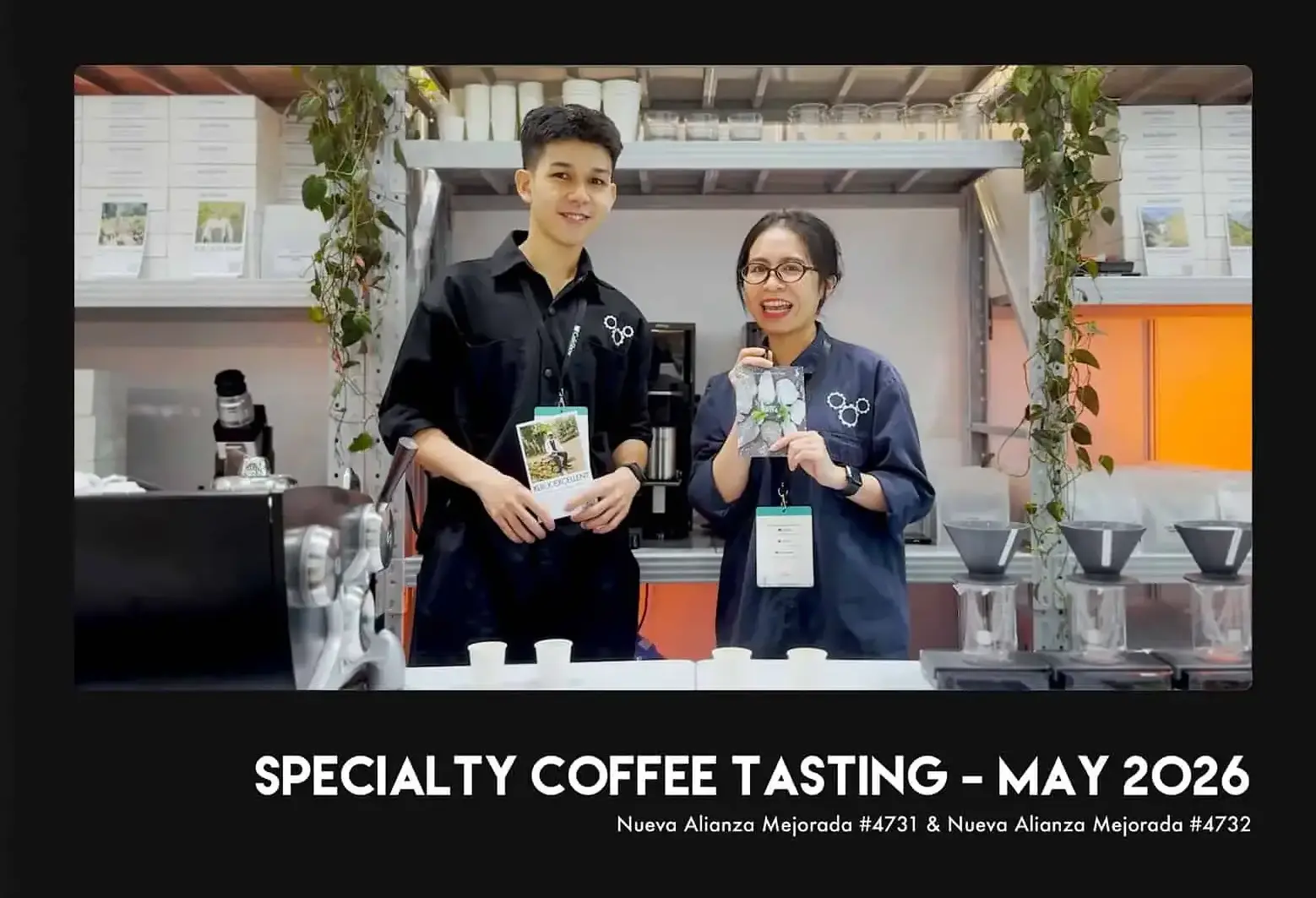
Unveiling May Discovery Subscription: Nueva Alianza Mejorada #4731 & Nueva Alianza Mejorada #4732
The Discovery Subscription is a silent dialogue, a place where the soul of the connoisseur finds a harmonious beat with distant lands. Like a transparent lens, we become storytellers, meticulously peeling back layers of cultural sediment, the breath of the soil, and the human philosophies hidden within every coffee bean.
May arrives with brilliant streaks of golden sunlight, a time when we long to hide beneath the lush, dew-drenched canopies of Santa Teresa. Amidst the silence of the Andes, when compassion touches Mother Earth, what will we hear? Perhaps it is a sweet response that nature reserves solely for souls who know how to wait patiently.

- Taste the Origin
Nueva Alianza Pacamara #4733 – The essence of Cusco with elegant jasmine notes
Nueva Alianza Pacamara #4733 is a testament to the miraculous terroir and dedicated cultivation of the renowned Cusco region. The combination of the characteristic Pacamara bean size and ideal altitude has forged a flavor profile of immense sophistication and depth. From the very first moment, this lot captivates with its elegant jasmine notes, radiating a gentle, pure fragrance akin to a flower blooming in the morning dew.

- Taste the Origin
Nueva Alianza Orange Gesha #4737 – An expedition of recessive genetic traits into the sensory realm
In a world of authenticity, Nueva Alianza Orange Gesha #4737 represents the proud emergence of rare biological traits often obscured by nature’s universality. Carrying a recessive genetic code, Lot #4737 embarks on an “expedition” into the connoisseur’s mind, where record-breaking fructose concentrations are released to perfectly fill every sensory gap with absolute smoothness and purity.
Through washed processing and extremely-light roasting, vibrant citrus nuances and ethereal floral notes, once hidden deep within the genetic structure, now manifest with power, transforming the tasting experience into a journey of ontological completion, where the rarity of recessive genes finally reigns supreme in flavor.

Specialty Coffee in Vietnam
BRAND VALUE
YOU SHOULD HAVE KNOWN
XLIII Coffee has been aiming to become a big, impactful company with social responsibilities,
have access to high-quality raw materials and convey the complete original values of coffee to our customer
