
The unpredictable dangers of climate change to coffee trees
Climate change is one of the biggest challenges facing the coffee industry. According to climate.gov, the 2022 surface temperature is already 1.55 °F (0.86 °C) hotter than the 20th century average of 57.0 °F (13.9 °C). leading to the change of seasons, increasing the risk of drought and disease for coffee trees. This will affect the yield, quality and income of coffee farmers around the world. Join XLIII Coffee to learn more deeply about the unpredictable dangers of climate change to coffee trees, as well as solutions that can help the coffee industry adapt and develop sustainably in the future!
Climate change reduces the production and quality of coffee trees
Coffee is a demanding crop that requires suitable climatic, soil and environmental conditions. According to a new NOAA study, Arabica coffee is very sensitive to climate. Average annual temperatures higher than 73 degrees Fahrenheit can reduce the yield and quality of plants. In particular, when the ambient temperature is higher than 86 degrees F, coffee plants can be stunted, susceptible to disease and exhausted.
Therefore, when climate change occurs on a large scale, coffee trees cannot grow as usual. Some coffee plantations become arid due to lack of rain, high temperature and low humidity, causing coffee plants to be stressed, photosynthesis is impaired and the growth cycle is shortened. Plants do not have enough time to metabolize nutrients, resulting in small fruits, low seed density, and inherent flavor quality. Some other regions have more rain, creating conditions for coffee trees to flower and pick many times a year, but also increasing labor costs for farmers. In addition, climate change entails erratic, seemingly unpredictable weather. It is difficult for farmers to control the maturation time, harvesting coffee causes heavy losses in output as well as quality.

Climate change increases the destructive power of pests and diseases
Climate change is responsible for the rapid spread of rust. This is a fungal disease that infects the leaves of the Arabica coffee tree, causing the leaves to turn yellow, fall off and lead to the death of the plant. This disease is considered one of the biggest threats to the world coffee industry, as it can cause severe damage to the yield and quality of coffee beans. Foliar rust is most prevalent in warm, humid conditions, so climate change is a major factor in its widespread spread.
Not only rust disease, climate change is also one of the main causes leading to the development and spread of pests and diseases that damage coffee trees. According to studies by the United Nations Intergovernmental Panel on Climate Change (IPPC) and the World Bank (WB), many new pest problems have emerged and caused heavy losses to agricultural production. diseases such as yellow dwarf disease, leaf curl, black-striped dwarf, brown planthopper, coffee leafworm… In addition, unusual weather such as unseasonal rain, severe cold, harmful cold, and hot sun also cause difficulties. for pest management and control. Therefore, dealing with pests in the future will be more complicated and expensive.

What is the solution to the threat of climate change in coffee farming?
Agroforestry is an effective farming method that helps producers cope with the unpredictable changes of global warming or pest infestation. Because farming practices in agroforestry not only help prevent the invasion of pests but also protect biodiversity and natural resources. In addition, it can also reduce the impact of climate change by creating buffer zones. However, the downside of this approach is that productivity can be reduced. Therefore, the adaptation of farmers to agroforestry will depend on the conditions of each country and market. For example, agroforestry may be more suitable for countries like Panama, where premium coffee quality is emphasized, than for mass coffee-producing countries like Brazil. so the solution is not only at the global level but also at the local level.
In addition, farmers can choose coffee varieties suitable to the climate and soil conditions of each region. Disease-resistant, drought-resistant and high-yielding coffee varieties can help reduce risks and increase economic returns for farmers. Apply effective water management measures, such as economical irrigation, rainwater collection, wastewater reuse and water protection. Providing enough water for coffee plants can improve the growth, tolerance and quality of coffee beans. Use organic farming methods, such as composting, intercropping, and the use of disease and pest control organisms, to reduce reliance on toxic chemicals, reduce environmental pollution, and increase adaptation of coffee plants. Join sustainability certification programs, such as UTZ, Rainforest Alliance, Fairtrade and Organic, for technical, financial and marketing support for coffee products. These programs also promote environmentally and socially friendly farming principles that contribute to mitigating the effects of climate change.
Climate change is one of the biggest challenges facing the coffee industry worldwide. Farmers who are straining, investing in sustainable farming methods to cope with tough problems from high temperatures, droughts, floods and pests must ensure stable yields and quality of coffee. So let’s join XLIII Coffee in using sustainable coffee products to support farmers!
Articles you may be interested in
– Finca Soledad Mejorada – Coffee lot of Finca Soledad . cloud farm
– Taste of Cerro Azul #0350 – Masterpiece of Cafe Granja La Esperanza
– Gesha Village Estates Farm – Where Gesha varieties confidently exude flavor

Bài viết mới

- Taste the Origin
Nigussie Nare – Murago Outgrowers #03028: Cultivated from the Values of Sustainable Reciprocity
Nestled beneath the shade trees of Sidama, Bensa, the Nigussie Nare – Murago Outgrowers #03028 coffee lot serves as a living testament to the values of sustainable reciprocity. This symbiosis begins with the intimate bond between a rich indigenous ecosystem and the smallholder farmers of the Murago region. Each harvested bean is the culmination of a virtuous cycle: a stable environment produces exceptional bean quality, and sustainable economic growth, in turn, continues to protect the verdant canopy of the great forest.

- Taste the Origin
Rift Valley Coffee Caucus #03757 – A Testament to Western Kenya’s Collective Spirit
Turning our gaze to the Great Rift Valley of East Africa, the fertile volcanic landscapes are witnessing an inspiring transformation. Moving away from fierce, survival-driven competition, smallholder farmers in Western Kenya have chosen to join forces, forging a resilient and unified network. The Rift Valley Coffee Caucus #03757 lot stands as the ultimate testament to this remarkable collective synergy.

- Breaking News
Airworks Coffee & XLIII Coffee – A “handshake” that brings original flavors across borders
XLIII Coffee, alongside our key wholesale partner Airworks Coffee, officially announces the latest release of specialty coffee lots for the North American market. This event reaffirms our commitment to bringing original flavors across all geographical barriers to coffee enthusiasts.
Early access (for Subscribers of Airworks): 10:00 AM (PST) | Wednesday, April 29, 2026
General access: 10:00 AM (PST) | Friday, May 1, 2026
We invite our Customers and Partners to visit (airworkscoffee.com) for detailed information and to prepare for this special release!
- Taste the Origin
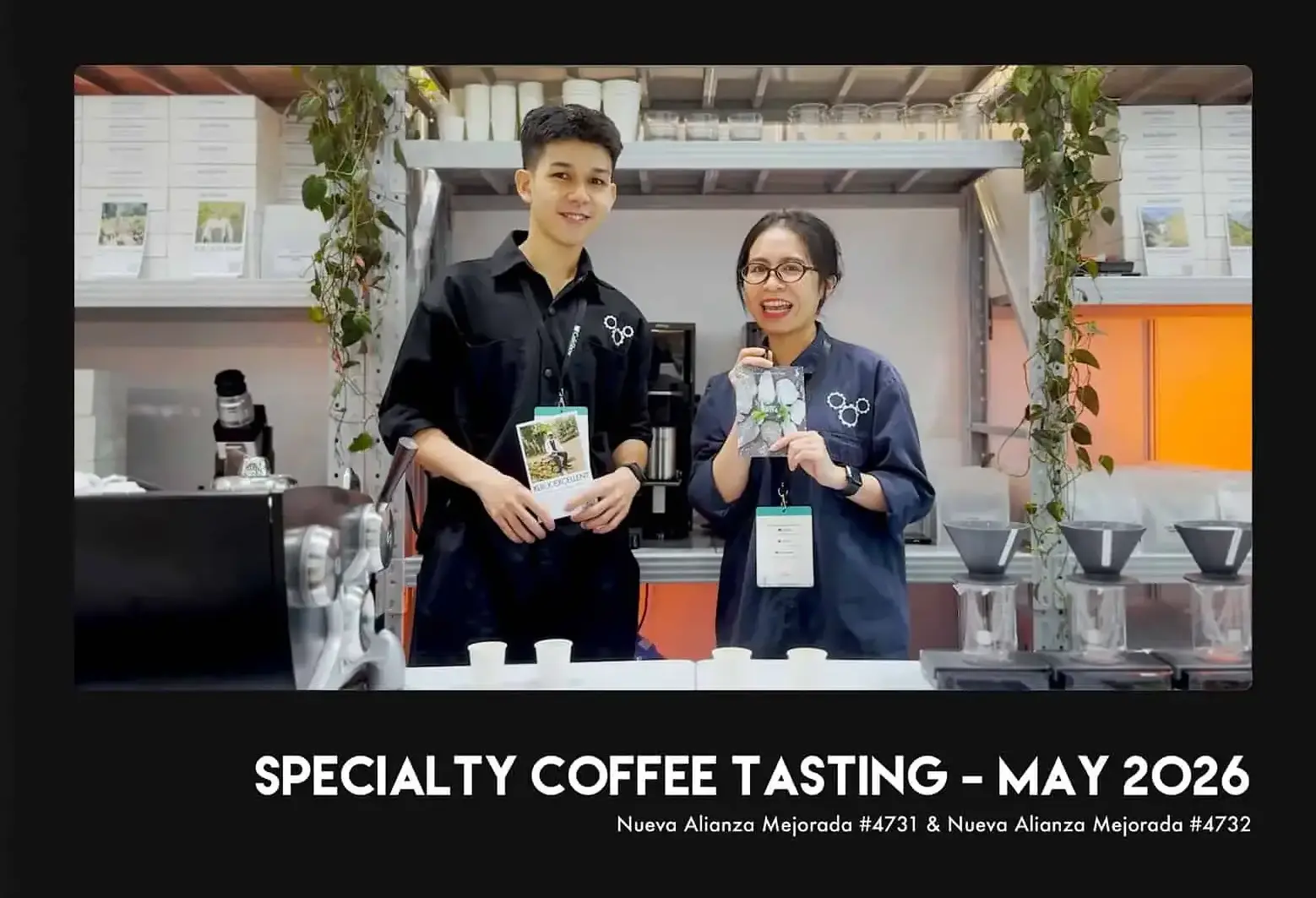
Unveiling May Discovery Subscription: Nueva Alianza Mejorada #4731 & Nueva Alianza Mejorada #4732
The Discovery Subscription is a silent dialogue, a place where the soul of the connoisseur finds a harmonious beat with distant lands. Like a transparent lens, we become storytellers, meticulously peeling back layers of cultural sediment, the breath of the soil, and the human philosophies hidden within every coffee bean.
May arrives with brilliant streaks of golden sunlight, a time when we long to hide beneath the lush, dew-drenched canopies of Santa Teresa. Amidst the silence of the Andes, when compassion touches Mother Earth, what will we hear? Perhaps it is a sweet response that nature reserves solely for souls who know how to wait patiently.

- Taste the Origin
Nueva Alianza Pacamara #4733 – The essence of Cusco with elegant jasmine notes
Nueva Alianza Pacamara #4733 is a testament to the miraculous terroir and dedicated cultivation of the renowned Cusco region. The combination of the characteristic Pacamara bean size and ideal altitude has forged a flavor profile of immense sophistication and depth. From the very first moment, this lot captivates with its elegant jasmine notes, radiating a gentle, pure fragrance akin to a flower blooming in the morning dew.

- Taste the Origin
Nueva Alianza Orange Gesha #4737 – An expedition of recessive genetic traits into the sensory realm
In a world of authenticity, Nueva Alianza Orange Gesha #4737 represents the proud emergence of rare biological traits often obscured by nature’s universality. Carrying a recessive genetic code, Lot #4737 embarks on an “expedition” into the connoisseur’s mind, where record-breaking fructose concentrations are released to perfectly fill every sensory gap with absolute smoothness and purity.
Through washed processing and extremely-light roasting, vibrant citrus nuances and ethereal floral notes, once hidden deep within the genetic structure, now manifest with power, transforming the tasting experience into a journey of ontological completion, where the rarity of recessive genes finally reigns supreme in flavor.

Specialty Coffee in Vietnam
BRAND VALUE
YOU SHOULD HAVE KNOWN
XLIII Coffee has been aiming to become a big, impactful company with social responsibilities,
have access to high-quality raw materials and convey the complete original values of coffee to our customer
