
What is Coffee Gustation? The Art of Flavor Fusion
What makes the coffee experience truly unique is its taste—our ability to perceive a rich variety of flavors in every cup. Exploring coffee gustation not only deepens our understanding of this beloved drink but also opens up new avenues of culture, art, and appreciation with each sip.
I. What is Coffee Gustation?
In simple terms, gustation refers to the sensation of taste. While the concept of “coffee gustation” is not officially defined by experts, we can infer its meaning based on common understanding. Specifically, coffee gustation refers to the perception of the flavors and aromas experienced when drinking a cup of coffee.

Cross-section of a Taste Bud with Cells for Flavor Perception
II. Basic Elements of Coffee Taste
The taste of coffee is perceived by receptors on the tongue, influenced by factors such as temperature, grind size, and brewing method. The primary flavors include sweetness, acidity, bitterness, saltiness, and umami. These five basic tastes contribute to coffee’s complexity and balance.
- Sweetness: The sweetness in coffee comes from natural sugars, particularly sucrose. This is mainly detected at the front of the tongue when sugar molecules interact with sweet receptors.
- Acidity: Acidity in coffee, often compared to the tang of citrus fruits like oranges or green apples, is a hallmark of high-quality specialty coffee. It’s sensed by acid-sensitive receptors on the sides of the tongue.
- Bitterness: Bitterness, the most prominent characteristic of coffee, mainly stems from caffeine and polyphenols. It’s detected at the back of the tongue and plays a crucial role in balancing the overall flavor profile.
- Saltiness: Though rare and subtle, saltiness in coffee can be due to minerals in the soil where coffee is grown. It can enhance the overall complexity by balancing sweetness and bitterness.
- Umami: Umami rarely stands out in coffee, but when present, it lends a rich, savory depth, often attributed to the presence of glutamic acid.

The taste of coffee is perceived by receptors on the tongue, which work in combination with factors such as temperature, the grind size of the beans, and the brewing method.
III. Factors Influencing Coffee Taste
Coffee’s taste is influenced by various factors beyond just the type of bean, such as the environment where it’s grown, the processing method, the roasting level, and the brewing technique.
Terroir
Just as with wine, coffee’s terroir—the unique combination of climate, altitude, and soil—imparts distinct flavors. Coffee grown at higher altitudes tends to develop more pronounced sweetness and acidity, while lower-altitude coffee often has a fuller, creamier body. For example, Colombian coffee, grown at elevations above 1,800 meters, is known for its bright acidity and complex flavor profile, often blending citrus and caramel notes.
Coffee Varietals:
The specific variety of coffee also plays a significant role in its flavor. Arabica and Robusta are the two main species, with Arabica typically offering more sweetness and acidity, while Robusta delivers stronger bitterness and higher caffeine content.
Processing Method
The post-harvest processing method directly affects the final taste of coffee.
- Washed Process: This method highlights the coffee’s natural acidity and clarity.
- Natural Process: The beans dry inside the fruit, leading to more interaction with natural sugars, which results in a sweeter, fuller-bodied flavor.
- Honey Process: A hybrid of the two, this method retains some sweetness while balancing acidity.

Coffee taste is not only influenced by the type of beans but also by various factors ranging from the growing environment to the processing, roasting, and brewing methods.
Roasting Level
Roasting is crucial in developing coffee’s flavor. Different roasting levels—light, medium, and dark—bring out different characteristics.
- Light Roast: Preserves the bean’s original flavors, often emphasizing acidity and fruity notes.
- Medium Roast: Balances sweetness, acidity, and flavors like caramel and chocolate.
- Dark Roast: Reduces acidity, increasing bitterness with smoky and woody undertones.
Brewing Method
How the coffee is brewed also shapes its taste.
- Pour-over: This method results in a clean, bright cup with subtle sweetness.
- Espresso: Produces a bold, concentrated coffee with intense flavors.
- Cold Brew: Brewed slowly with cold water, it yields a sweet, smooth cup with low acidity.
IV. Gustation in Coffee Appreciation
Taste plays a central role in coffee enjoyment, deeply influencing how we experience and evaluate each cup. More than just the perception of basic flavors like sweet, sour, or bitter, taste serves as a bridge connecting flavor with emotion.
- Evaluating Coffee Quality: Taste helps assess coffee quality by analyzing the balance between acidity, sweetness, bitterness, and the aftertaste. Specialty coffee is often praised for its refined balance, while commercial coffee tends to lack this depth.
- Distinguishing Different Beans: Taste enables us to differentiate between single-origin coffees and blends, helping drinkers choose a coffee that matches their personal preferences.
- Connecting Emotion with Flavor: Taste is not just a sensory experience but also an emotional one. A morning coffee with light acidity might evoke feelings of freshness, while a dark-roast coffee with chocolatey notes may bring warmth and comfort.
- Shaping Production and Brewing Techniques: Taste is not only important for coffee drinkers but also for producers and baristas, helping them refine their methods. Adjusting roasting times, brewing temperatures, or coffee-to-water ratios can all enhance the flavor profile of an espresso or pour-over.

Taste plays a central role in shaping the coffee experience, deeply affecting how each cup is enjoyed and evaluated in terms of quality.
Conclusion
The experience of tasting coffee is an ongoing journey of exploration and learning. Every sip, with its blend of sweetness, acidity, bitterness, saltiness, and umami, reveals a complex world of flavors. Understanding the role of taste helps us appreciate coffee more deeply, from its origin to how it’s roasted and brewed.
At XLIII Coffee, our high-quality specialty coffees stand out with their original, fresh flavor profiles. Each cup takes you on a sensory journey, awakening all five senses for an authentic and vivid coffee experience.
V. FAQs
Question 1: What is coffee gustation?
Coffee gustation refers to the perception of the various flavors and aromas experienced when drinking a cup of coffee. It includes the interaction of basic tastes such as sweetness, acidity, bitterness, saltiness, and umami.
Question 2: What basic flavors make up the taste of coffee?
Coffee gustation includes five basic flavors: sweetness, acidity, bitterness, saltiness, and umami.
Question 3: What factors affect the taste of coffee?
Coffee taste is influenced by many factors such as the growing environment (terroir), coffee varietals, post-harvest processing methods, and roasting levels.
Question 4: What characterizes the acidity in coffee?
Acidity in coffee provides a bright, fresh sensation, often resembling citrus fruits like oranges or green apples, and is an important factor in the depth of specialty coffee.
Question 5: Where does bitterness in coffee come from?
Bitterness in coffee primarily comes from caffeine, quinine, and polyphenolic compounds. It is more pronounced in dark-roasted coffees and should be balanced with other flavors to avoid overwhelming the overall profile.

Bài viết mới

- Taste the Origin
Nigussie Nare – Murago Outgrowers #03028: Cultivated from the Values of Sustainable Reciprocity
Nestled beneath the shade trees of Sidama, Bensa, the Nigussie Nare – Murago Outgrowers #03028 coffee lot serves as a living testament to the values of sustainable reciprocity. This symbiosis begins with the intimate bond between a rich indigenous ecosystem and the smallholder farmers of the Murago region. Each harvested bean is the culmination of a virtuous cycle: a stable environment produces exceptional bean quality, and sustainable economic growth, in turn, continues to protect the verdant canopy of the great forest.

- Taste the Origin
Rift Valley Coffee Caucus #03757 – A Testament to Western Kenya’s Collective Spirit
Turning our gaze to the Great Rift Valley of East Africa, the fertile volcanic landscapes are witnessing an inspiring transformation. Moving away from fierce, survival-driven competition, smallholder farmers in Western Kenya have chosen to join forces, forging a resilient and unified network. The Rift Valley Coffee Caucus #03757 lot stands as the ultimate testament to this remarkable collective synergy.

- Breaking News
Airworks Coffee & XLIII Coffee – A “handshake” that brings original flavors across borders
XLIII Coffee, alongside our key wholesale partner Airworks Coffee, officially announces the latest release of specialty coffee lots for the North American market. This event reaffirms our commitment to bringing original flavors across all geographical barriers to coffee enthusiasts.
Early access (for Subscribers of Airworks): 10:00 AM (PST) | Wednesday, April 29, 2026
General access: 10:00 AM (PST) | Friday, May 1, 2026
We invite our Customers and Partners to visit (airworkscoffee.com) for detailed information and to prepare for this special release!
- Taste the Origin
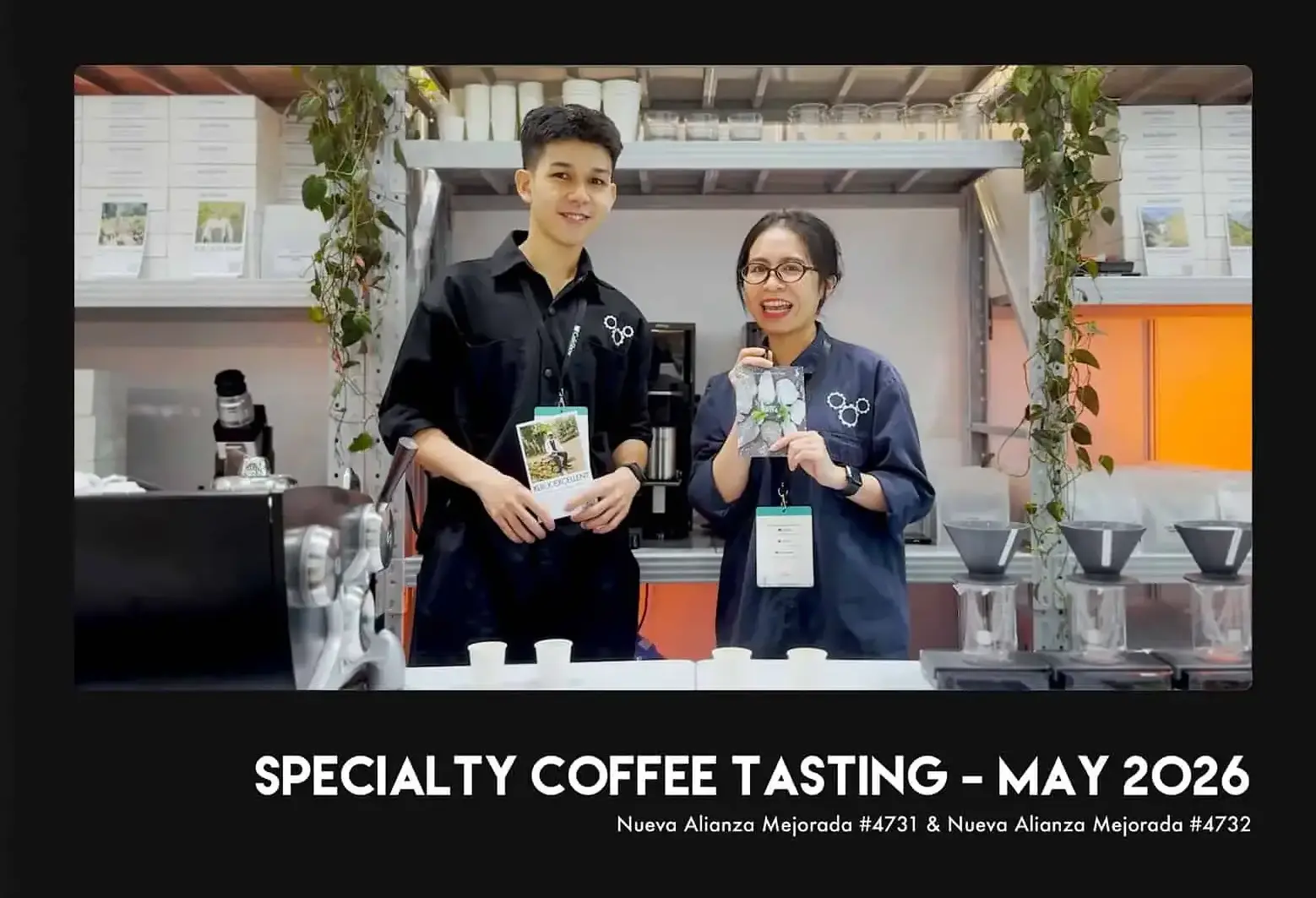
Unveiling May Discovery Subscription: Nueva Alianza Mejorada #4731 & Nueva Alianza Mejorada #4732
The Discovery Subscription is a silent dialogue, a place where the soul of the connoisseur finds a harmonious beat with distant lands. Like a transparent lens, we become storytellers, meticulously peeling back layers of cultural sediment, the breath of the soil, and the human philosophies hidden within every coffee bean.
May arrives with brilliant streaks of golden sunlight, a time when we long to hide beneath the lush, dew-drenched canopies of Santa Teresa. Amidst the silence of the Andes, when compassion touches Mother Earth, what will we hear? Perhaps it is a sweet response that nature reserves solely for souls who know how to wait patiently.

- Taste the Origin
Nueva Alianza Pacamara #4733 – The essence of Cusco with elegant jasmine notes
Nueva Alianza Pacamara #4733 is a testament to the miraculous terroir and dedicated cultivation of the renowned Cusco region. The combination of the characteristic Pacamara bean size and ideal altitude has forged a flavor profile of immense sophistication and depth. From the very first moment, this lot captivates with its elegant jasmine notes, radiating a gentle, pure fragrance akin to a flower blooming in the morning dew.

- Taste the Origin
Nueva Alianza Orange Gesha #4737 – An expedition of recessive genetic traits into the sensory realm
In a world of authenticity, Nueva Alianza Orange Gesha #4737 represents the proud emergence of rare biological traits often obscured by nature’s universality. Carrying a recessive genetic code, Lot #4737 embarks on an “expedition” into the connoisseur’s mind, where record-breaking fructose concentrations are released to perfectly fill every sensory gap with absolute smoothness and purity.
Through washed processing and extremely-light roasting, vibrant citrus nuances and ethereal floral notes, once hidden deep within the genetic structure, now manifest with power, transforming the tasting experience into a journey of ontological completion, where the rarity of recessive genes finally reigns supreme in flavor.

Specialty Coffee in Vietnam
BRAND VALUE
YOU SHOULD HAVE KNOWN
XLIII Coffee has been aiming to become a big, impactful company with social responsibilities,
have access to high-quality raw materials and convey the complete original values of coffee to our customer
