
Where is climate change pushing the Coffee Belt?
The coffee belt is gradually shifting to higher altitudes and cooler climates, while many traditional growing regions are at risk of becoming unsuitable for cultivation. Changes in temperature, rainfall, and ecosystems are severely disrupting the delicate conditions required for coffee to thrive. So, what lies ahead for the coffee belt in an era of increasing climate uncertainty?
I. The critical role of the Coffee Belt
The “Coffee Belt” is a term beloved by coffee enthusiasts, referring to the world’s prime coffee-growing regions. It lies along the equator, spanning from 25°N to 30°S latitude, forming a belt around the globe that covers the Tropics of Cancer and Capricorn.

Coffee Belt Map – The World’s Prime Growing Regions
This belt is home to the majority of Arabica and Robusta coffee production. It also serves as the operational hub of the global coffee industry and a lifeline for tens of millions of farmers across more than 40 developing countries. These countries not only produce most of the world’s coffee but also rely on its export as a pillar of their economy. However, rising temperatures, erratic rainfall, and declining biodiversity are making many of these areas increasingly unsuitable for coffee farming. As a result, millions of farmers’ livelihoods are threatened, and the global coffee supply chain faces growing instability. Without timely adaptation, the global coffee map may be permanently redrawn.
II. Is the Coffee Belt breaking apart due to climate change?
Recent data from key producing regions within the coffee belt clearly show how climate change is directly impacting both the yield and quality of coffee worldwide. Being a crop highly sensitive to environmental conditions, coffee depends heavily on stable factors such as temperature, rainfall, and soil moisture. Even small shifts in average temperatures or rainfall cycles can disrupt coffee’s growth stages and create favorable conditions for pests and diseases like the rust disease and the coffee borer beetle.

Coffee pod borer larvae feeding on coffee beans. Photo courtesy of the Hawaii Department of Agriculture.
Prominent coffee-producing areas like Vietnam’s Central Highlands and Brazil’s Minas Gerais are already experiencing significant climate shifts, forcing farmers to adjust their crop calendars, adopt new farming models, or move cultivation to higher altitudes to maintain optimal conditions.

The severity of the climate change countries face.
While research into drought- and pest-resistant coffee varieties is advancing, climate scientists warn that up to 50% of current coffee-growing land could become unsuitable within the next 30 years if temperature trends persist. These shifts pose serious risks not only to farmers’ incomes but also to the resilience of the entire coffee supply chain.
III. The challenges faced by coffee farmers in a changing climate?
Climate change is not merely an environmental issue, it’s a major challenge for coffee growers. Farmers are being hit by rising production costs, erratic seasons, and increasing risks. As the climate grows more unpredictable, they are forced to invest more in adaptive measures.

When a coffee tree dies, it means more than just a lost harvest, also mean lost income, lost livelihoods, and a disrupted local supply chain.
For many coffee farmers, small changes in weather can trigger a chain reaction of crises:
- Rising production costs:
Irregular rain and higher temperatures lead to reduced yields and encourage the spread of pests. In Vietnam’s Central Highlands, farmers spend tens of millions of dong per hectare on pesticides, drip irrigation, and drought-resistant seedlings. These costs often go beyond their initial planning and, for smallholders, mark the fine line between continuing or abandoning coffee. - Unpredictable crop cycles:
Erratic weather leads to unpredictable harvests. In Colombia, untimely rains cause coffee cherries to drop prematurely or flowers to bloom unevenly, disrupting the harvest and reducing yields. Without knowing when to plant or pick, farmers gamble with an entire year’s income. - Loss of livelihoods and labor migration:
When coffee income can no longer cover expenses, many farmers turn to other crops or leave agriculture entirely. In Vietnam’s Lâm Đồng province, former coffee farmers now work in factories, leaving behind not only their dreams but also their hard-earned expertise and agricultural heritage. - Increased environmental pressure:
The search for new farmland is driving deforestation across Africa and Southeast Asia. As coffee moves to higher altitudes where climates remain viable, the cost is often biodiversity loss, soil erosion, and ecological imbalance. In trying to adapt, we may inadvertently fuel another cycle of environmental degradation.
These challenges highlight the urgent need to restructure the coffee value chain with climate resilience at its core—centered around farmers and sustainable practices.
IV. Solutions to protect the Coffee Belt
Faced with increasingly volatile climates, preserving the coffee belt calls for more than academic warnings, it requires action that is targeted, long-term, and systemic. One key solution is to accelerate the development of coffee varieties that can thrive under harsher climate conditions. Breeding programs now focus on traits such as drought tolerance, pest resistance, and the ability to grow at higher altitudes areas projected to become the new frontier for coffee cultivation.

Breeding drought-tolerant varieties shows great promise.World Coffee Research is leading efforts to develop F1 Hybrid varieties that can withstand extreme conditions. Varieties like F1 Hybrid Coffee a cross between Sarchimor and Sudan Rume, have shown remarkable drought resistance while preserving excellent cup quality.
In addition, regenerative agriculture and intercropping systems are gaining traction. These methods enhance biodiversity, rebuild soil health, reduce erosion, and support natural water and nutrient cycles. Such practices help farmers achieve sustainable yields while promoting ecological balance in a destabilized environment.

Farmers use biochar to improve soil quality, reduce carbon emissions, and build resilience to climate stress.
The rise of the specialty coffee movement is also reshaping the global value chain placing emphasis on quality, transparency, and sustainability over sheer volume. Rather than chasing quantity, today’s trends encourage farmers to adopt organic practices, refine their processing techniques, and embrace transparency foundational values that produce truly meaningful coffee. XLIII COFFEE is one such brand committed to this philosophy. Through direct trade coffee with farms like Finca Rosenheim (Peru), XLIII pays fair prices—up to $9.45/kg for high-quality beans—reflecting the true value of growers’ labor and craftsmanship.
At the same time, XLIII COFFEE champions environmental responsibility through responsible coffee packaging, chemical-free farming practices, and full supply chain transparency. Every coffee it curates is chosen not just for flavor but also for fairness, sustainability, and the harmony between people and nature. We believe coffee is more than a beverage—it’s a way to build a kinder, more responsible future for agriculture.

These positive changes show that the specialty coffee sector isn’t just about exceptional quality it can also drive real improvements in environmental health and social equity.
By placing people, planet, and quality at the heart of its development strategy, models like the XLIII COFFEE brand not only help enhance product value but also support sustainable livelihoods for farmers through the creation of more stable and fair markets, contributing to the creation of a more viable future for the coffee belt, where value is measured not just in tons of output, but also in ecological recovery and social justice.
Conclusion:
The coffee belt is at a tipping point – where the choices made today will determine the industry’s existence in the decades to come. This is no longer just a farmer’s story, but a matter of survival for the entire global value chain. Without sustainable restructuring, from varieties, farming models to consumer behavior, what will be lost is not only coffee but also the livelihoods of millions of people and the stability of an industry worth hundreds of billions of dollars. On the contrary, every timely action from consumer choice to corporate commitment can contribute to keeping the coffee belt as a source of quality, fairness and hope for the future. Coffee only truly has a future when the entire value chain moves towards sustainability.
The above images are collected from various sources.
V. Related questions
Question 1: How exactly does climate change affect coffee quality?
Changes in temperature, rainfall, and soil moisture directly impact the plant’s growth and flavor development. Unstable conditions cause biological stress, reducing bean quality, flavor consistency, and increasing pest vulnerability.
Question 2: Which regions are most affected within the coffee belt?
Major growing areas such as Vietnam’s Central Highlands, Brazil’s Minas Gerais, and Central American Arabica regions are experiencing significant shifts in weather. These areas are now being forced to adjust farming models or relocate to higher ground.
Question 3: How can consumers help protect the coffee belt from climate change?
Choosing coffee from brands that commit to sustainability, transparency, and fair pay—like XLIII COFFEE—is one of the most practical ways to help. Responsible consumer behavior fuels the industry’s transformation.
Question 4: What role does specialty coffee play in climate resilience?
Specialty coffee prioritizes quality over volume, reducing pressure on land and resources. It also strengthens links between farmers and roasters, encouraging investment in eco-friendly farming.
Question 5: What is XLIII COFFEE doing to support the coffee belt?
XLIII COFFEE partners directly with organic farms, invests in eco-packaging, and ensures full supply chain transparency. The brand pays fairly and motivates farmers to maintain sustainable practices—one harvest at a time.

Bài viết mới
- Find the Origin
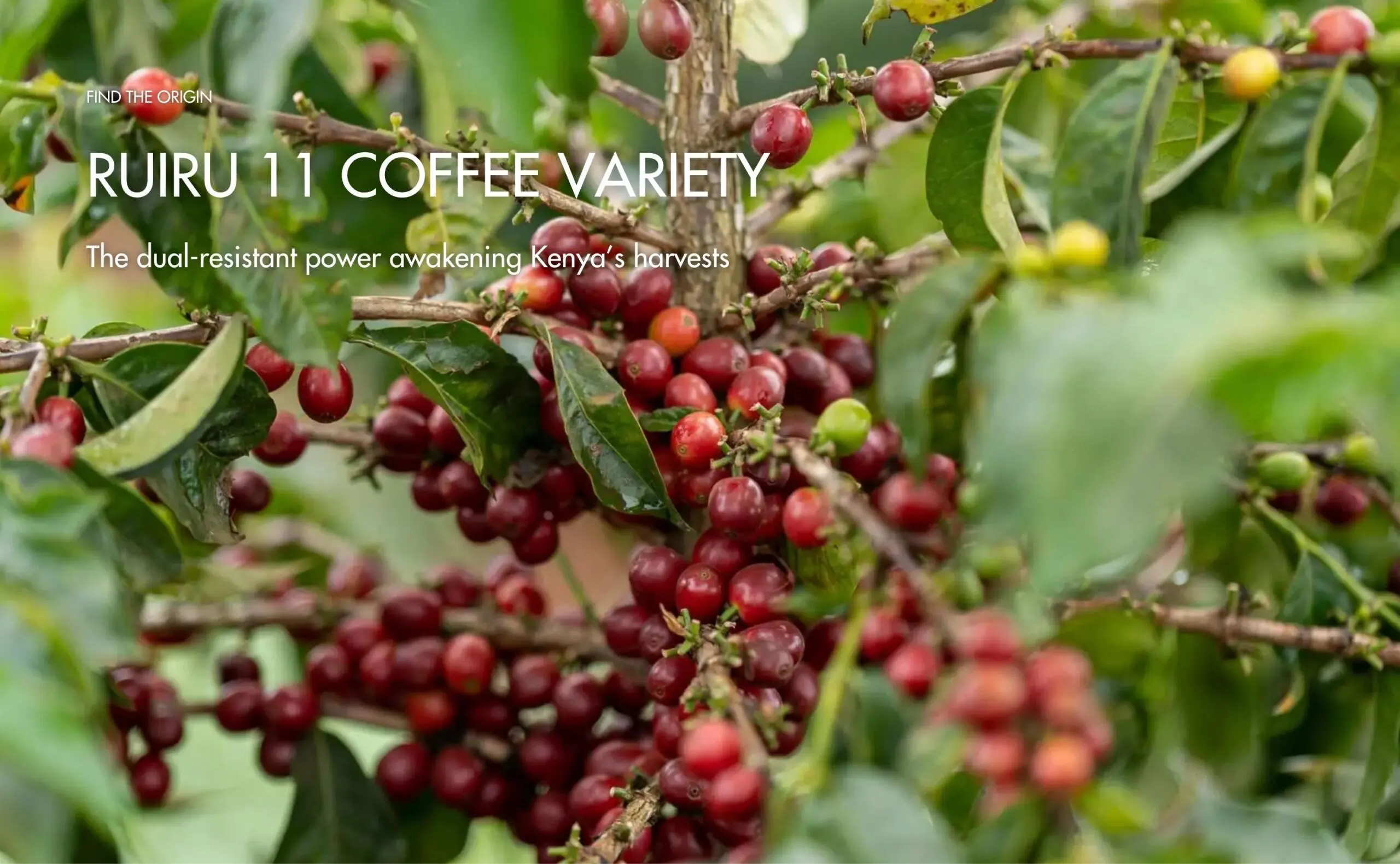
Ruiru 11 coffee variety – The dual-resistant power awakening Kenya’s harvests
Born from the ashes of a devastating pandemic, Ruiru 11 is a resilient response of indigenous wisdom to the trials of nature. Carrying a complex genetic code from 66 sibling isolines, this humbly statured coffee variety possesses superb “dual-resistance” against the twin shadows of Coffee Berry Disease and Coffee Leaf Rust. Overcoming early prejudices and the paradox of trade-offs between yield and flavor, Ruiru 11 has been weaving through nurseries, awakening dormant harvests across highland hillsides, and igniting a proud flame of self-reliance for Kenyan coffee.

- Taste the Origin
Sudan Rume #00313 by CGLE – The origin legend beneath the Eucalyptus canopy
From a wild coffee lineage discovered in the Rume Mountains in the 1940s to the enduring conservation efforts of Café Granja La Esperanza, Sudan Rume #00313 by CGLE invites drinkers on a sensory pilgrimage to the birthplace of the Arabica world. It is a rare biological legacy preserved through unwavering dedication, integrity, and deep reverence for history.
- Taste the Origin
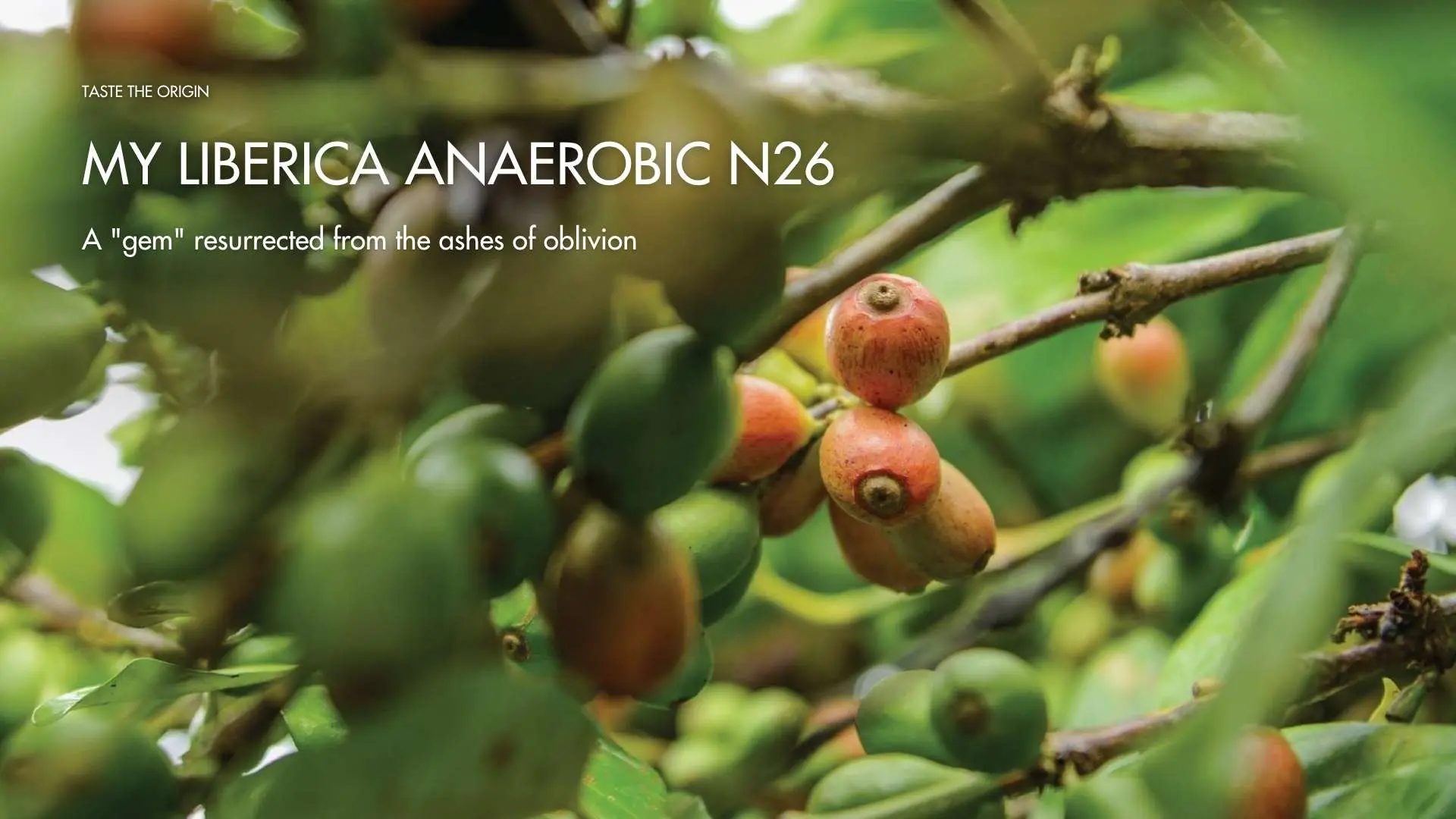
My Liberica Anaerobic N26 – A “gem” resurrected from the ashes of oblivion
The journey of My Liberica Anaerobic N26 is the triumph of a forgotten species, awakened by the depth of understanding, patience, and faith in its original essence. From the heavy clay layers of Kulai to 26 days of transformation in absolute darkness, each step contributes to unlocking layers of flavor that the world once thought could not exist in Liberica. More than just a cup of coffee, My Liberica Anaerobic N26 is a powerful declaration that all great values begin with the courage to delve into their essence, and then rise to a unique voice that resonates throughout the world.


- Taste the Origin
Finca Soledad Mejorado Tyoxy & Fincas Putushio Mejorado – The red thread of the Jijón family
The simultaneous arrival of Finca Soledad Mejorado Tyoxy and Fincas Putushio Mejorado at XLIII Coffee paints a remarkable portrait of the adaptability of the Mejorado variety within Ecuador’s specialty coffee landscape. Nurtured by a shared family philosophy and a commitment to principled cultivation, these two processed lots represent both a breakthrough in microbial innovation and the remarkable return of an exceptional flavor profile.

- Taste the Origin
Finca La Palestina Gesha #5482 – A new chapter in the legend from Cajamarca
From the renowned Cajamarca region, Finca La Palestina Gesha #5482 returns after a period of absence with a proud and fresh appearance. Nurtured in ideal altitude conditions and the cool climate characteristic of the Andes, each coffee bean slowly accumulates subtle flavor nuances before being perfected using the Washed method to maximize the purity of the Gesha variety. Under a carefully refined extremely-light roast profile, this batch of coffee reveals layers of white jasmine, ripe citrus, and sweet golden apricot aromas, interwoven in an elegant and rich flavor structure.

Specialty Coffee in Vietnam
BRAND VALUE
YOU SHOULD HAVE KNOWN
XLIII Coffee has been aiming to become a big, impactful company with social responsibilities,
have access to high-quality raw materials and convey the complete original values of coffee to our customer
