
Coffee roasting companies – New standards and processes
Coffee roasting companies are not simply places where coffee beans are processed; it plays a crucial role in enhancing the quality and value of the product. Defined by their ability to select premium raw materials and precisely control the roasting process, these companies help unlock the unique flavor potential of each coffee type. As a key link in the coffee supply chain, roasting companies connect farmers with consumers, ensuring product quality and building consumer trust by meeting the growing demand for rich and distinctive coffee flavors.
I. Understanding the coffee roasting process
Operating a coffee roasting company requires not only technical expertise but also meticulous attention to detail in each stage, from sourcing, roasting, to testing and storage. This ensures that every cup of coffee delivers the best possible flavor experience to the consumer.
Coffee sourcing
The sourcing process for coffee at roasting companies goes beyond just purchasing raw materials; it involves a strict selection process. Roasters often work directly with farmers or cooperatives, carefully inspecting farming conditions, harvest methods, and bean processing techniques. Important criteria include the altitude of the growing region, drying and fermentation methods, and the harvest time. Only beans that meet quality and flavor standards are chosen.
Roasting
At roasting companies, coffee roasting is carried out by experts with deep knowledge and experience. Roasting involves more than simply heating beans; it requires a series of controlled and carefully monitored steps:
- Selecting the roast profile: This term refers to the precise time and temperature settings for each specific coffee. Depending on the bean’s structure, variety, and flavor requirements, the roasters experiment and choose the most suitable parameters to meet their goals.
- Controlling the roasting process: The temperature, time, and cooling speed are continuously adjusted. Modern roasting machines allow precise temperature measurement at every stage, ensuring the beans undergo the desired chemical transformations to produce the preferred flavor. Machines with capacities ranging from 5kg to 60kg are used to ensure consistency.
Brewing and testing
Brewing and tasting are vital steps to evaluate the success of the roasting process. Professional tasters often use the “cupping” method to assess the quality and flavor of finely ground coffee, examining factors such as aroma, sweetness, acidity, and aftertaste. Large specialty coffee suppliers usually employ certified tasters (Q-graders) to ensure they have the skills to detect subtle characteristics in each coffee sample. Tasting dozens of samples per day, they adjust roasting methods or decide which coffees to bring to market.
Packaging and storage
Proper packaging is essential to preserving coffee’s freshness. Coffee bags are often equipped with one-way valves to release CO2 without letting in oxygen, extending the coffee’s shelf life. Sustainable trends have led many companies to use eco-friendly packaging materials like recyclable or biodegradable GrainPro bags. After packaging, coffee is stored in temperature-controlled environments (15-25°C), with humidity below 60% and no direct exposure to light. This helps maintain freshness for several weeks or months, depending on when the coffee was roasted.

The operation of a coffee roasting company requires not only high technical skills but also meticulous attention to each stage, from sourcing, roasting, testing, to storage.
II. Types of coffee roasting companies
Based on scale and product type, coffee roasting companies can be categorized into different models, each with its own strengths and weaknesses depending on the market and target customer.
Small-scale Roasters
These are typically small, family-owned businesses or startups with a focus on quality. They may have a single roasting machine with a capacity of 5kg to 30kg per batch and emphasize each coffee batch’s unique characteristics.
- Characteristics: Small-scale roasters often serve local markets or sell directly through small stores and online. They can customize the roasting process to meet specific customer preferences, such as adjusting roast levels for individual coffee shops or consumers.
- Advantages:
– Production flexibility: Small roasters can easily experiment with different roast profiles to match each type of coffee and customer preference.
– Focus on quality: With smaller production volumes, they can spend more time ensuring each batch is perfectly roasted.
– Flavor customization: They can tailor each batch to customer requests, increasing satisfaction and creating personalized experiences.
- Disadvantages:
– Limited output: Small roasters may only produce 50-300kg of coffee per week, compared to the tons produced daily by large companies.
– Price competition: Small roasters may struggle to compete on price with larger companies due to higher production costs for smaller volumes.
Large-scale roasters
- Characteristics: These companies operate on an industrial scale, capable of producing tons of coffee daily. They are usually part of global supply chains, distributing widely across large markets.
- Advantages:
– High volume production: Suitable for retail and export markets.
– Wide distribution: Products are available nationally and internationally, making them easily accessible to consumers.
– Product variety: From specialty coffee to everyday blends, they cater to a broad range of customer preferences.
- Disadvantages:
– Lack of uniqueness: Mass production may result in less distinctive coffee flavors compared to small-scale roasters.
– Limited customization: Large companies may not be able to offer personalized products for individual customers or small coffee shops.
Specialty Coffee roasters
Specialty coffee roasters focus on roasting high-quality beans that meet the demands of coffee connoisseurs. These companies often use high-end roasting equipment and manual processes, dedicating time to experimenting with temperature and roast profiles to bring out the best in each batch.
Example: XLIII Coffee, known for its expertise in specialty coffee roasting, sources beans from renowned regions like Ethiopia and Colombia. Using advanced light roasting techniques, they emphasize bright acidity and vibrant flavor notes, ensuring that the coffee’s original characteristics are preserved.
III. The Role of roasting companies in developing Vietnam’s coffee industry
Coffee roasting companies play a crucial role in developing Vietnam’s coffee industry through three key areas:
Preserving and enhancing local coffee flavors: Roasters contribute to the growth of native coffee varieties, adding value to Vietnamese coffee on the global stage.
Collaborating with farmers: Roasters work closely with farmers to improve cultivation, harvesting, and processing methods, raising the quality of raw beans. Training programs and technical support enable farmers to adopt more sustainable practices like UTZ or 4C standards.
Example: Bosgaurus Coffee Roaster collaborates with farms in the Central Highlands to promote environmentally friendly farming practices and enhance the quality of coffee beans.
Product diversification: Roasters help create new coffee products to meet diverse market demands. By blending beans from different regions or adding natural flavors, they create unique offerings for consumers.

Roasting companies play a key role in developing new coffee products to meet the diverse demands of the market.
IV. Trends in the coffee roasting industry
With increasing consumer interest in quality and environmental protection, the coffee roasting industry in Vietnam is expected to evolve in line with global trends, focusing on sustainability, personalization, and technological integration.
Sustainable coffee
Sustainability will be a major trend, with more companies incorporating clean energy and eco-friendly production methods. The use of solar power or renewable energy in roasting, alongside recyclable or biodegradable packaging, will become standard. Roasters will also prioritize partnerships with farms that practice sustainable cultivation.
Personalized products
Consumers are increasingly seeking products tailored to their personal tastes. Roasters will offer more options for customers to customize their coffee, from roast levels to bean blends. Seasonal coffee products will also gain popularity, allowing customers to enjoy fresh, region-specific flavors throughout the year.
Technology integration ‘
Automation and smart management systems will become key to controlling the roasting process and ensuring quality. Technologies like blockchain will enable full traceability of coffee beans, and market demand forecasting will optimize production and distribution.
Conclusion
Coffee roasting companies are vital to enhancing the quality and value of specialty coffee. They serve as a bridge between farmers and consumers, while also fostering sustainable development within the coffee industry. As trends move toward sustainability, personalization, and technological innovation, roasting companies will continue to elevate product quality and contribute to the global growth of the coffee industry.
V. FAQs
1. What role do coffee roasting companies play in the coffee supply chain?
Roasting companies are a key link in the supply chain, connecting farmers with consumers while enhancing the quality and value of coffee products.
2. What does the coffee sourcing process involve at roasting companies?
The sourcing process involves:
Working directly with farmers or cooperatives.
Inspecting farming conditions, harvest methods, and bean processing techniques.
Selecting beans that meet quality and flavor standards.
3. How is coffee roasted at professional roasting companies?
Roasting is carried out by experienced experts who select roast profiles, and control temperature, time, and cooling speed to ensure the beans’ chemical transformations produce the desired flavor.
4. Why is brewing and testing coffee important in the production process?
Brewing and testing help evaluate the outcome of the roasting process, checking for aroma, sweetness, acidity, and aftertaste, allowing roasters to fine-tune their methods or select appropriate beans for the market.
5. How do coffee roasting companies contribute to the development of Vietnam’s coffee industry?
Roasting companies contribute by preserving local coffee flavors, collaborating with farmers to improve quality, and diversifying products to meet the evolving demands of the coffee market.

Bài viết mới

- Taste the Origin
Rift Valley Coffee Caucus #03757 – A Testament to Western Kenya’s Collective Spirit
Turning our gaze to the Great Rift Valley of East Africa, the fertile volcanic landscapes are witnessing an inspiring transformation. Moving away from fierce, survival-driven competition, smallholder farmers in Western Kenya have chosen to join forces, forging a resilient and unified network. The Rift Valley Coffee Caucus #03757 lot stands as the ultimate testament to this remarkable collective synergy.

- Breaking News
Airworks Coffee & XLIII Coffee – A “handshake” that brings original flavors across borders
XLIII Coffee, alongside our key wholesale partner Airworks Coffee, officially announces the latest release of specialty coffee lots for the North American market. This event reaffirms our commitment to bringing original flavors across all geographical barriers to coffee enthusiasts.
Early access (for Subscribers of Airworks): 10:00 AM (PST) | Wednesday, April 29, 2026
General access: 10:00 AM (PST) | Friday, May 1, 2026
We invite our Customers and Partners to visit (airworkscoffee.com) for detailed information and to prepare for this special release!
- Taste the Origin
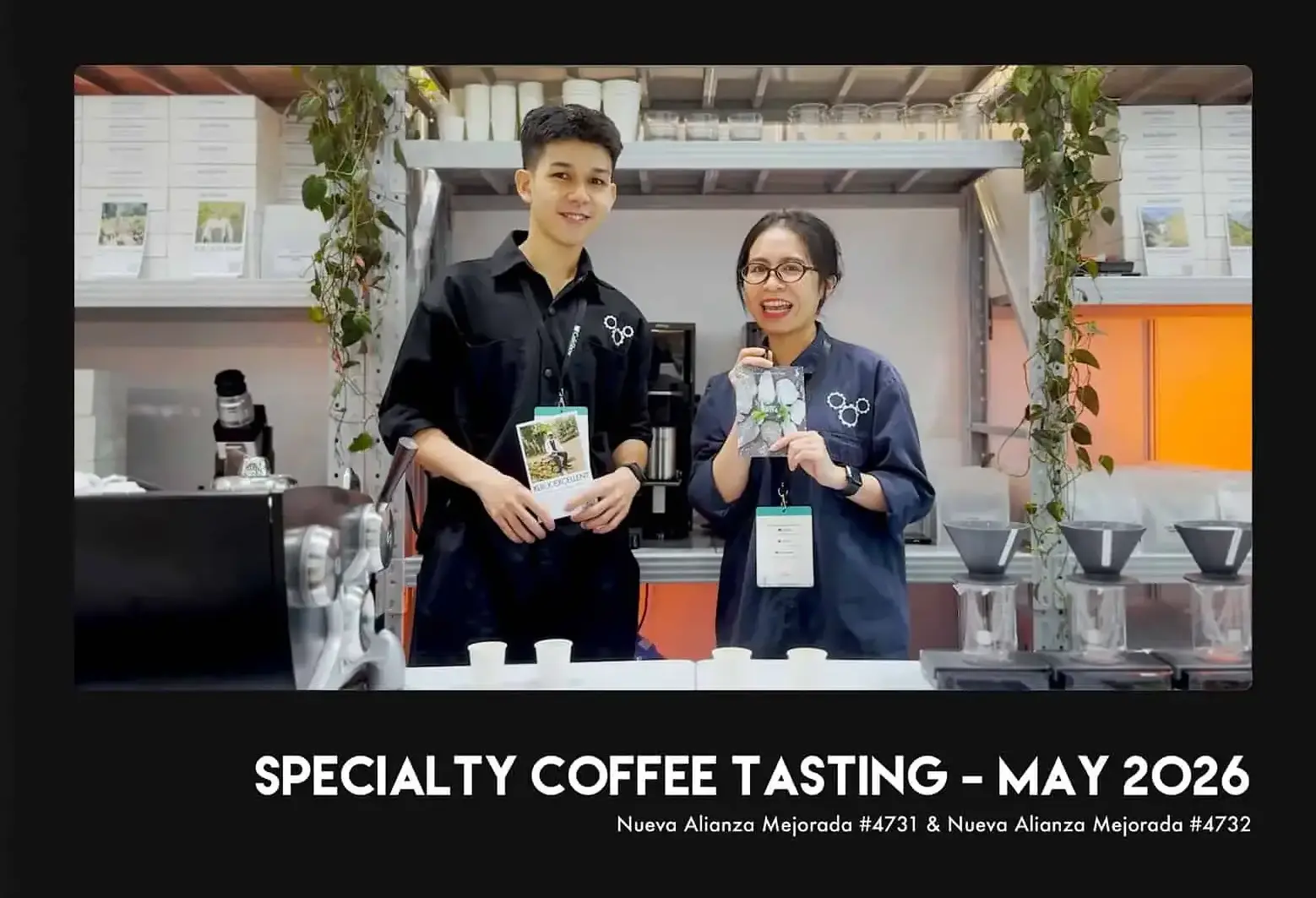
Unveiling May Discovery Subscription: Nueva Alianza Mejorada #4731 & Nueva Alianza Mejorada #4732
The Discovery Subscription is a silent dialogue, a place where the soul of the connoisseur finds a harmonious beat with distant lands. Like a transparent lens, we become storytellers, meticulously peeling back layers of cultural sediment, the breath of the soil, and the human philosophies hidden within every coffee bean.
May arrives with brilliant streaks of golden sunlight, a time when we long to hide beneath the lush, dew-drenched canopies of Santa Teresa. Amidst the silence of the Andes, when compassion touches Mother Earth, what will we hear? Perhaps it is a sweet response that nature reserves solely for souls who know how to wait patiently.

- Taste the Origin
Nueva Alianza Pacamara #4733 – The essence of Cusco with elegant jasmine notes
Nueva Alianza Pacamara #4733 is a testament to the miraculous terroir and dedicated cultivation of the renowned Cusco region. The combination of the characteristic Pacamara bean size and ideal altitude has forged a flavor profile of immense sophistication and depth. From the very first moment, this lot captivates with its elegant jasmine notes, radiating a gentle, pure fragrance akin to a flower blooming in the morning dew.

- Taste the Origin
Nueva Alianza Orange Gesha #4737 – An expedition of recessive genetic traits into the sensory realm
In a world of authenticity, Nueva Alianza Orange Gesha #4737 represents the proud emergence of rare biological traits often obscured by nature’s universality. Carrying a recessive genetic code, Lot #4737 embarks on an “expedition” into the connoisseur’s mind, where record-breaking fructose concentrations are released to perfectly fill every sensory gap with absolute smoothness and purity.
Through washed processing and extremely-light roasting, vibrant citrus nuances and ethereal floral notes, once hidden deep within the genetic structure, now manifest with power, transforming the tasting experience into a journey of ontological completion, where the rarity of recessive genes finally reigns supreme in flavor.

- Taste the Origin
Nueva Alianza Maragogipe #4735 – The “Giant” at the center of attention
Amidst a world of countless specialty coffee beans, Nueva Alianza Maragogipe #4735 emerges as a symbol of grandeur, instantly commanding attention with its distinct appearance. Affectionately dubbed the “Giant” for its impressively mutated “Elephant Bean” size, lot #4735 from Nueva Alianza stands as a testament to nature’s wonders in the Cusco region. Yet, its true allure extends far beyond its imposing exterior; hidden within these colossal beans lies a gentle “soul” blooming with pure floral and crystalline fruit notes.

Specialty Coffee in Vietnam
BRAND VALUE
YOU SHOULD HAVE KNOWN
XLIII Coffee has been aiming to become a big, impactful company with social responsibilities,
have access to high-quality raw materials and convey the complete original values of coffee to our customer
