
Standardized Specialty Coffee Roastery: Evaluation Criteria for Businesses and Coffee Connoisseurs
A standardized Specialty coffee roastery is not evaluated merely by a few good batches, but must be viewed as a complete production system. From the selection and storage of green beans, the roasting technology in operation, to the ability to control quality and maintain consistency between batches, all reflect the true competence of a professional roastery.
Table of Contents
- I. What is a Specialty Coffee Roastery? Factors Reflecting a Roastery’s Competence
- II. Three Technical Pillars of a Standardized Specialty Coffee Roastery System
- III. Common Risks and Mistakes When Choosing a Specialty Coffee Roastery
- IV. XLIII Coffee - A Reliable Specialty Coffee Roastery Partner
- V. Related questions
I. What is a Specialty Coffee Roastery? Factors Reflecting a Roastery’s Competence
When mentioning a “Specialty coffee roastery”, many often simply imagine a place where coffee is roasted before reaching the consumer. However, within the context of the Specialty coffee industry, the concept of a roastery carries a much broader and more complex meaning. A true roastery does not just perform the act of roasting; it operates as a specialized production system where quality is formed through processes, technology, and people, rather than depending on momentary inspiration.
Unlike small-scale manual roasting models, a Specialty coffee roastery is built to ensure stability, repeatability, and quality control. This is particularly important for businesses and shop owners, who require flavor consistency to maintain the customer experience as well as for coffee connoisseurs, who care about the precision in every roast profile.
How does a Specialty coffee roastery differ from conventional roasting?
The core difference between a Specialty coffee roastery and conventional roasting lies not in using more expensive beans, but in the approach to quality. In a roastery, every stage is standardized with clear objectives: highlighting the natural characteristics of the coffee beans while maintaining consistency between batches.

If conventional roasting can accept flavor fluctuations between roasts, a Specialty coffee roastery views that as a risk. Controlling heat, time, the Rate of Rise (RoR), and chemical reactions during the roasting process aims both to create “a great batch” and to accurately replicate that batch many times under different conditions.
Factors reflecting the true competence of a Specialty coffee roastery
The competence of a Specialty coffee roastery cannot be evaluated solely by the final product, but requires a look at the entire operational system behind it. The following factors are often considered the foundation for determining whether a roastery meets Specialty standards:
-
Raw material sourcing and green bean approach

A competent Specialty coffee roastery always begins with the intentional selection of green coffee beans. This includes a deep understanding of origin, seasonality, variety, processing methods, and physical indicators such as moisture content or bean density.
Equally important is how green beans are stored under controlled temperature and humidity to stabilize quality before roasting. Managing materials by lot and season helps the roastery maintain transparency and proactivity in production.
-
Roasting technology and process control

The roaster is just a tool; true competence lies in how the roasting company utilizes that tool. A standardized Specialty coffee roasting company needs a system to track and record roasting data, allowing for precise control over heat, airflow, and the rate of rise. The ability to develop and refine roast profiles for each coffee line reflects technical proficiency and a serious investment in quality.
-
Quality control process (QC)

Quality control is the clear differentiator between professional roasteries and intuitive roasting models. In standardized Specialty coffee roasting companies, every batch is evaluated through cupping, compared against the standard profile, and deviations are recorded. The QC process, therefore, does not stop at detecting defects but also helps the roastery understand the impact of every small change in the roasting process, thereby improving and maintaining quality systematically.
-
People and the role of the head roaster

Despite advancing technology, humans remain at the heart of the Specialty coffee roastery. The head roaster is not just a machine operator but someone with a deep understanding of raw materials, thermal reactions, and flavor goals. The roastery’s competence is partly reflected in how the company builds profiles, trains its team, and maintains quality standards throughout the entire production process.
II. Three Technical Pillars of a Standardized Specialty Coffee Roastery System
In the Specialty coffee industry, quality is not the result of a single moment, but the result of a series of consistent technical decisions. A standardized roastery system cannot rely on individual intuition or experience alone, it must be built on clear, measurable, controllable, and repeatable pillars. The following three pillars are considered the core technical foundations that determine the true competence of a Specialty coffee roastery.
Green Bean Sourcing & Storage
A question often asked in the roasting world is:
“Can a good roast profile save a batch of poor-quality green beans?”
The answer, according to most roasting experts and Specialty Coffee Association (SCA) training materials, is no.
Roasting does not create quality, it only reveals or clarifies what already exists within the green beans. Therefore, in a standardized Specialty coffee roastery, the approach and management of green beans are considered the paramount foundation. The roastery’s competence is shown in how they understand and work with raw materials.

Core elements in green bean sourcing and preservation include:
-
Traceability and Transparency
Green beans in a Specialty Coffee roastery must have full information regarding the farm, growing region, harvest season, variety, and processing method.
-
Pre-roast Evaluation Criteria
Before any batch is roasted, green beans must be evaluated based on:
– Moisture content: Directly affects heat transfer and chemical reactions.
– Density: Indicates the bean’s development, impacting roasting time and intensity.
– Defects: The number and types of defects reflect processing quality and affect flavor clarity.
-
Storage Conditions and Inventory Management
A professional roasting company does not view a green bean warehouse as just a “storage space”, but as part of the production process. Controlling temperature and humidity, using specialized storage bags like GrainPro, and managing beans by lot and season helps prevent degradation and maintains consistent quality over time.

Roasting Technology and Profile Control
If green beans are the foundation, roasting technology is the tool through which a roasting company demonstrates its technical prowess. A common misconception is that Specialty roasting only requires “one good roast”. In reality, the greatest challenge for a roastery is the ability to replicate that roast consistently, especially at scale.
Key technical factors include:
-
Roasting Technology Types
Whether using a drum roaster or a fluid-bed/hot air roaster, what matters is that the roastery understands the heat transfer characteristics of its system and utilizes them consistently.
-
Thermal Monitoring and Rate of Rise (RoR)
Controlling the RoR allows the roastery to precisely adjust Maillard reactions and caramelization, shaping the desired flavor structure.
-
Purpose-built Roast Profiles
A professional roastery does not apply a single profile to all purposes. Profiles for espresso, filter, or B2B blends are developed and refined separately to ensure the flavor fits the specific brewing method and business model.
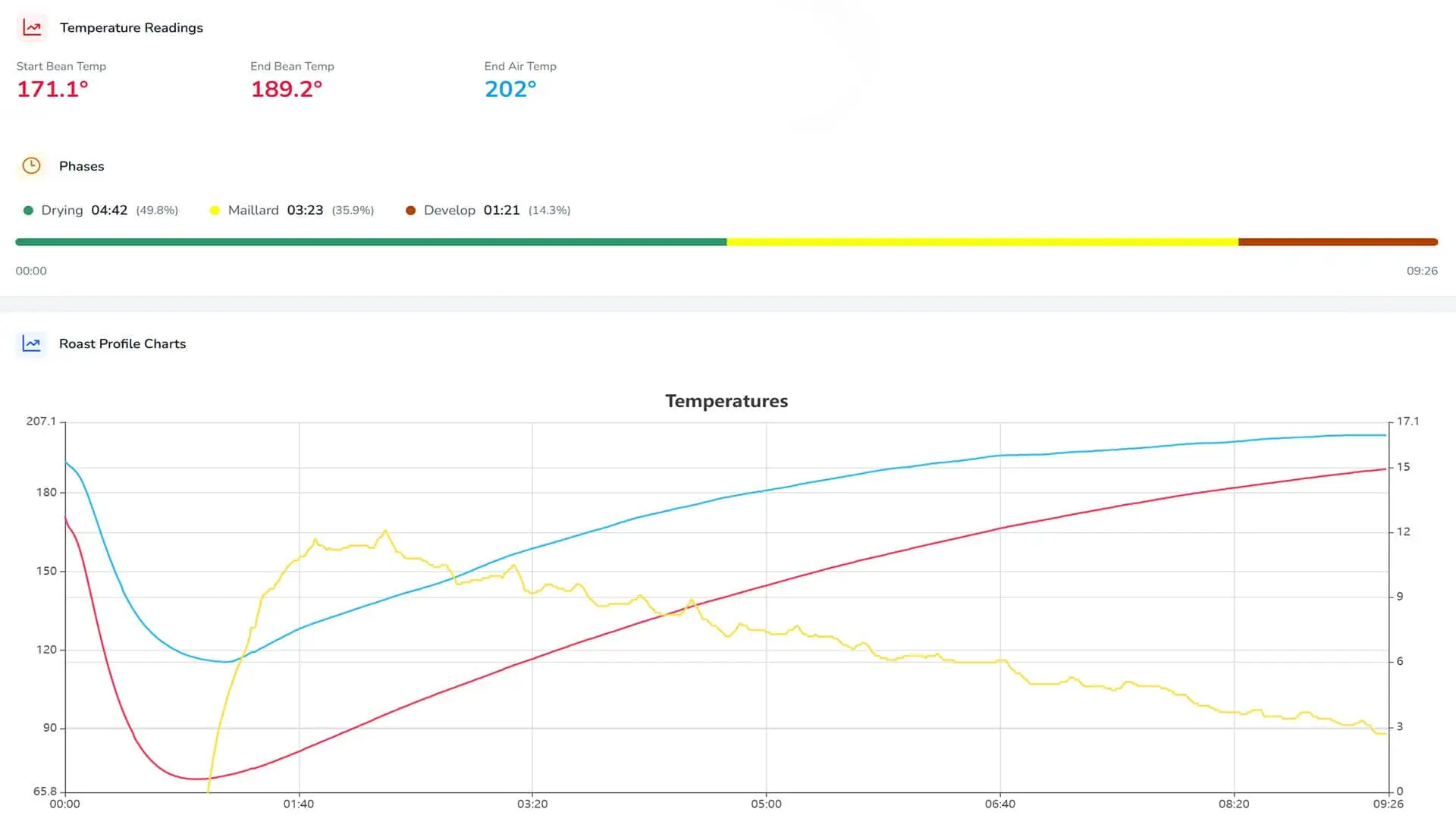

Quality Control (QC) System
The biggest difference between professional roasteries and intuitive models lies in their approach: one sees QC as a mandatory process, the other as an activity depending on time and mood.
A Specialty roasting QC system includes:
-
Post-batch/Post-lot Cupping
Evaluates flavor, detects deviations from the standard profile, and identifies causes if issues arise.

-
Consistency Evaluation
QC examines the uniformity between batches, which is vital for business partners and long-term coffee users.

-
Calibration and Periodic Standardization
Calibrating equipment and standardizing cupping protocols ensure that quality is understood and measured uniformly across the roastery.

- The Role of the Head Roaster
The head roaster is central to maintaining the QC system. A competent roasting company is one where quality does not depend on a single individual but is guaranteed by clear processes that can be communicated to the entire team.

These three pillars do not exist independently but are closely linked. Good green beans without proper roasting technology will not reach their potential. Modern technology without a systematic QC process leads to inconsistent quality. The synchronization between raw materials, technology, and quality control is what creates the sustainable competence of a professional roastery.
III. Common Risks and Mistakes When Choosing a Specialty Coffee Roastery
In the practical operation of coffee shops and business models related to Specialty Coffee, the choice of a roastery is often underestimated in the early stages. Many shop owners and businesses only realize the issues when coffee quality begins to fluctuate, customer feedback turns negative, or scaling up becomes difficult. The following risks are not rare occurrences, but direct consequences of choosing an incompetent roastery or one that does not align with long-term goals.

Inconsistent Quality Between Batches
One of the most common mistakes when working with a coffee roasting company is evaluating quality based on a few initial batches. During the early stages of partnership, a roastery may focus heavily on resources to produce a batch that meets expectations. However, without a system to control processes and roasting data, quality can easily fluctuate between lots. For a coffee shop, this instability forces baristas to constantly adjust brewing recipes, while the flavor in the cup depends on the “luck” of each shipment. In the long run, this increases operational costs and reduces the ability to control the customer experience.
Flavor Drift Over Time
In addition to variations between lots, another often overlooked risk is flavor drift over time. When a roastery lacks standardized profiling and periodic cupping, the coffee’s flavor may change slowly but continuously, making it difficult for shop owners to identify the cause. From a customer’s perspective, this change creates a sense of unreliability: today’s cup of coffee is not the same as last week’s, even if the menu name remains unchanged. In an increasingly competitive Specialty coffee market, this lack of consistency directly impacts brand identity and customer loyalty.
Lack of Technical Support and Partnership
Another mistake is viewing a roastery merely as a green bean supplier. In reality, for Specialty coffee shop models, the roastery acts as a technical partner. When a roastery is unable or unwilling to support profile adjustments, brewing recipes, or roasting tweaks based on the shop’s actual conditions, this burden falls entirely on the baristas and managers. The lack of technical companionship makes it hard for shops to optimize flavor, especially when changing equipment, coffee water sources, or scaling up. This is a major risk for businesses aiming for stable and long-term growth.
Over-dependence on a Single Individual
In many cases, the quality of a roastery depends almost entirely on one individual usually the head roaster. When this individual is absent, changes their schedule, or leaves the roastery, quality may drop noticeably. This indicates that the roastery lacks a system and standardized processes. For coffee roasting companies, this dependency poses a significant risk for long-term cooperation. A standardized Specialty coffee roastery must ensure that quality is maintained by processes and a team, not just by one person’s individual experience.
These risks go beyond technical issues or flavor perception. When coffee quality is unstable, the entire customer experience is affected: from product consistency and shop operational efficiency to brand image in the consumer’s mind. For large coffee shops or enterprises, choosing the wrong roastery affects both the Specialty coffee’s flavor and directly impacts customer experience and the sustainable development of the business model.


IV. XLIII Coffee - A Reliable Specialty Coffee Roastery Partner
After reviewing the technical criteria of a standardized Specialty coffee roastery, the question is no longer “which roastery to choose,” but which roastery actually meets those criteria in real-world operations. At XLIII Coffee, our roastery system is built on the same analyzed pillars to ensure consistent quality, transparency, and long-term partnership with businesses.
XLIII Coffee and the Three Pillars of a Standardized Specialty Coffee Roastery
The competence of XLIII Coffee is not expressed through subjective claims, but through how the roastery approaches each technical pillar in the Specialty coffee production process.


-
Sourcing & Green Bean Storage
XLIII Coffee approaches green beans as a strategic factor in the entire production system. Selecting beans based on clear origin, seasonality, and lot characteristics allows us to proactively develop appropriate profiles. Simultaneously, green beans are stored under temperature and humidity-controlled conditions, managed by lot and season, to maintain stable quality before roasting.
-
Roasting Technology and Profile Control
At XLIII Coffee, roasting technology is seen as the foundation for building long-term stability, not a tool for creating momentary impressions. Our roasting system is designed around the ability to monitor detailed thermal developments and replicate profiles consistently between batches. This approach allows us to maintain uniform quality over time, rather than depending on individual roasts.
XLIII Coffee utilizes solid drum roasters, prioritizing stable heat transfer mechanisms and the ability to control bean reactions throughout the roast. This platform is particularly suited to the brand’s extremely-light roasting orientation, where very small margins of error can significantly affect the flavor structure. Tight control over the Rate of Rise (RoR) and development stages helps the coffee beans retain clarity, brightness, and the original characteristics of the raw material.
-
Quality Control Process
Quality control activities at XLIII Coffee are an inseparable part of the production process. Batches are evaluated through periodic cupping, compared against standard profiles, and any deviations are recorded. This approach ensures that quality does not depend on personal perception but is maintained by clear procedures and standards.

Competence for Businesses
For Specialty coffee shops and corporate models, partnering with XLIII Coffee goes beyond purchasing coffee beans. The roastery is built to be a production partner, accompanying businesses throughout their operation and development. XLIII Coffee focuses on long-term, stable production, ensuring consistent quality between lots. Additionally, we support businesses in selecting beans and building roast profiles tailored to each shop model, thereby optimizing flavor and operational efficiency.
Value for Coffee Connoisseurs
Beyond businesses, XLIII Coffee’s roastery system also targets coffee connoisseurs, those who care deeply about origin, roasting technology, and flavor precision. Our roasted coffee lines are provided with transparent information regarding the beans, roast profiles, and consistent quality over time. This approach allows sophisticated consumers to both enjoy the coffee and understand the process behind every roast. Consistency and transparency are the factors that build long-term trust, rather than random experiences.
In conclusion,
With a methodical technical foundation, a standardized operational system, and a long-term partnership orientation, XLIII Coffee is not merely a Specialty coffee roastery, but a reliable partner for businesses and connoisseurs seeking sustainable quality!
V. Related questions
1. Why is choosing a specialty coffee roastery important for coffee flavor?
Choosing a specialty coffee roastery is crucial because the roastery plays a decisive role in preserving and enhancing the coffee beans’ natural flavors. A refined roasting process and professional technique help maintain the characteristic flavor, providing a unique and high-quality coffee experience.
2. What are the important criteria when choosing a specialty coffee roastery?
Important criteria include coffee bean origin, roasting process, brewing method, customer reviews, and quality certifications. These factors help ensure the coffee’s high quality and preservation of its original flavor notes.
3. What is the significance of tastings or workshops at a specialty coffee roastery?
Tastings and workshops provide opportunities for customers to experience and learn about specialty coffee directly. They also help assess the roastery’s skills and knowledge, build a coffee-loving community, and offer interaction opportunities.
4. What common mistakes occur when choosing a specialty coffee roastery?
Common mistakes include focusing only on price, choosing a roastery based on advertising, and not researching coffee bean origin and quality. These mistakes can lead to purchasing low-quality products that don’t meet expectations.
5. How do specialty coffee roasteries differ from traditional coffee roasteries?
Specialty coffee roasteries differ by using high-quality beans, meticulous roasting processes, transparency of origin, and sustainability. In contrast, traditional roasteries often use average-quality beans, have simpler roasting processes, and pay less attention to transparency and sustainability.

Bài viết mới

- Taste the Origin
Nigussie Nare – Murago Outgrowers #03028: Cultivated from the Values of Sustainable Reciprocity
Nestled beneath the shade trees of Sidama, Bensa, the Nigussie Nare – Murago Outgrowers #03028 coffee lot serves as a living testament to the values of sustainable reciprocity. This symbiosis begins with the intimate bond between a rich indigenous ecosystem and the smallholder farmers of the Murago region. Each harvested bean is the culmination of a virtuous cycle: a stable environment produces exceptional bean quality, and sustainable economic growth, in turn, continues to protect the verdant canopy of the great forest.

- Taste the Origin
Rift Valley Coffee Caucus #03757 – A Testament to Western Kenya’s Collective Spirit
Turning our gaze to the Great Rift Valley of East Africa, the fertile volcanic landscapes are witnessing an inspiring transformation. Moving away from fierce, survival-driven competition, smallholder farmers in Western Kenya have chosen to join forces, forging a resilient and unified network. The Rift Valley Coffee Caucus #03757 lot stands as the ultimate testament to this remarkable collective synergy.

- Breaking News
Airworks Coffee & XLIII Coffee – A “handshake” that brings original flavors across borders
XLIII Coffee, alongside our key wholesale partner Airworks Coffee, officially announces the latest release of specialty coffee lots for the North American market. This event reaffirms our commitment to bringing original flavors across all geographical barriers to coffee enthusiasts.
Early access (for Subscribers of Airworks): 10:00 AM (PST) | Wednesday, April 29, 2026
General access: 10:00 AM (PST) | Friday, May 1, 2026
We invite our Customers and Partners to visit (airworkscoffee.com) for detailed information and to prepare for this special release!
- Taste the Origin
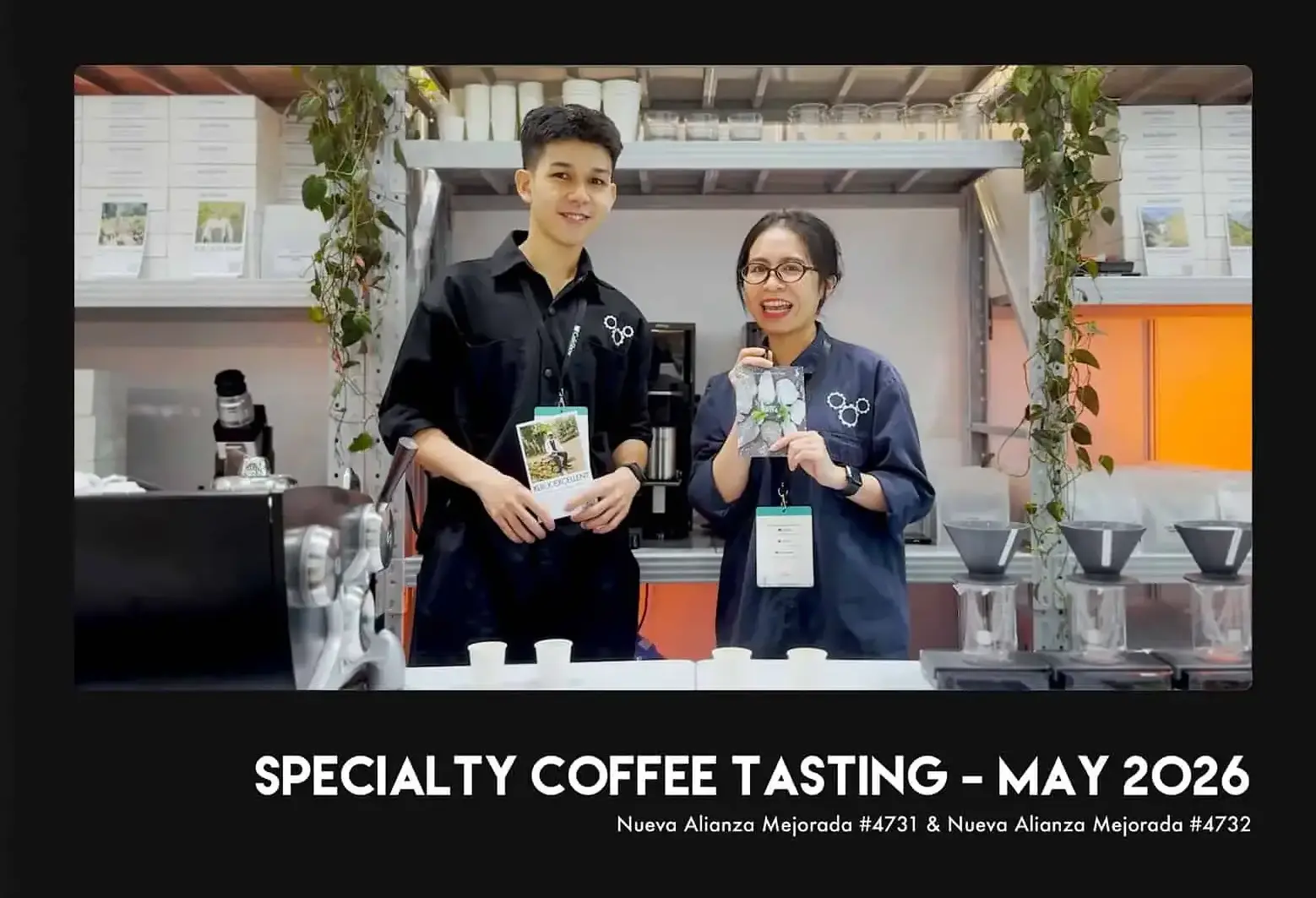
Unveiling May Discovery Subscription: Nueva Alianza Mejorada #4731 & Nueva Alianza Mejorada #4732
The Discovery Subscription is a silent dialogue, a place where the soul of the connoisseur finds a harmonious beat with distant lands. Like a transparent lens, we become storytellers, meticulously peeling back layers of cultural sediment, the breath of the soil, and the human philosophies hidden within every coffee bean.
May arrives with brilliant streaks of golden sunlight, a time when we long to hide beneath the lush, dew-drenched canopies of Santa Teresa. Amidst the silence of the Andes, when compassion touches Mother Earth, what will we hear? Perhaps it is a sweet response that nature reserves solely for souls who know how to wait patiently.

- Taste the Origin
Nueva Alianza Pacamara #4733 – The essence of Cusco with elegant jasmine notes
Nueva Alianza Pacamara #4733 is a testament to the miraculous terroir and dedicated cultivation of the renowned Cusco region. The combination of the characteristic Pacamara bean size and ideal altitude has forged a flavor profile of immense sophistication and depth. From the very first moment, this lot captivates with its elegant jasmine notes, radiating a gentle, pure fragrance akin to a flower blooming in the morning dew.

- Taste the Origin
Nueva Alianza Orange Gesha #4737 – An expedition of recessive genetic traits into the sensory realm
In a world of authenticity, Nueva Alianza Orange Gesha #4737 represents the proud emergence of rare biological traits often obscured by nature’s universality. Carrying a recessive genetic code, Lot #4737 embarks on an “expedition” into the connoisseur’s mind, where record-breaking fructose concentrations are released to perfectly fill every sensory gap with absolute smoothness and purity.
Through washed processing and extremely-light roasting, vibrant citrus nuances and ethereal floral notes, once hidden deep within the genetic structure, now manifest with power, transforming the tasting experience into a journey of ontological completion, where the rarity of recessive genes finally reigns supreme in flavor.

Specialty Coffee in Vietnam
BRAND VALUE
YOU SHOULD HAVE KNOWN
XLIII Coffee has been aiming to become a big, impactful company with social responsibilities,
have access to high-quality raw materials and convey the complete original values of coffee to our customer
