
A comprehensive comparison of Liberica vs Arabica vs Robusta coffee
In the binary mindset of the coffee world, long divided between the elegance of Arabica and the power of Robusta, Coffea Liberica exists as a forgotten variable, quietly awaiting its resurgence. At XLIII Coffee, we position Liberica as an independent force, a critical missing piece that helps complete the broader picture of the specialty coffee industry. To truly understand the value of this giant, we must place Liberica, Arabica, and Robusta onto a “strategic triangle”, examining them thoroughly through three core lenses: the expression in the cup (Sensory), resilience in the soil (Biology), and position in the market (Economics).
I. The sensory layer of Liberica, Arabica, and Robusta
If Arabica is a bright, catchy Pop melody, and Robusta is a powerful, rugged Rock drumbeat, then Liberica is an improvised Jazz composition – complex, acquired, and deeply captivating for those who seek depth.
Grounded in Sensory Science and the standardized Scentone T144 toolkit currently applied at XLIII Coffee, we decode Liberica’s flavor structure to reveal a truth: what the world once dismissed as defects is, in fact, a proud and distinctive identity.
“Smoky” & “Woody” notes: Defects or precious woods?
On the flavor wheel, Arabica dominates Floral and Fruity notes, Robusta controls Nutty and Cocoa, while Liberica exclusively occupies the most “Exotic” territories: Spice, Vegetable (herbal), and Savory (salty/umami).

Historically, Smoky and Woody notes were often downgraded by Q-Graders, as they evoked stale or over-roasted coffee.
However, with cleanly processed Liberica and Extremely Light Roast profiles at XLIII Coffee, a fairer frame of reference is required:
-
These notes go far beyond the idea of damp, rotten wood. They convey the warmth and luxury of Cedarwood and Sandalwood – base notes commonly found in high-end niche perfumes.
-
This is not “burnt” aroma, but rather the fragrance of golden-cut tobacco or smoked dark chocolate, creating a deep, long-lasting finish.
The “Glocal” nature of the Jackfruit note
Liberica’s most fascinating touchpoint lies in its “Glocal” (Global + Local) flavor identity. Globally, it is called Jackfruit. In Vietnam, it bears a folk name: Jackfruit Coffee. This is not coincidence, it is biology.
While Arabica ripens in 6-8 months, Liberica requires a prolonged gestation of 9-11 months. This extended maturation allows the plant to accumulate significantly higher levels of mucilage sugars and ester aromatic compounds within the bean. When roasted at carefully controlled temperatures (not high enough to burn the sugars), these esters burst into intense aromas of overripe tropical fruits: jackfruit, banana, mango, and occasionally the creamy richness of durian or cheese cream.
The jackfruit note in Liberica is not an off-flavor. It is a biological fingerprint – proof that the coffee tree has “borrowed time” to distill the essence of the entire tropical forest into a single seed.
Sensory Comparison Table
To accurately position Liberica coffee, examine the gap between the two giants through the analysis table below:
| Sensory Criteria | Liberica | Arabica | Robusta |
|---|---|---|---|
| Dominant aromas | Ripe jackfruit, spice, aromatic woods, smoke | White flowers, citrus, berries | Nuts, earthy notes, bitter chocolate |
| Acidity | Low to medium (soft) | High, bright, crisp | Low |
| Sweetness | Very high (fruit sugar, molasses) | Medium (clean sweetness) | Low |
| Body | Full, syrupy | Light, tea-like | Heavy, harsh/gritty |
| Evoked emotion | Warmth, depth, uniqueness | Elegance, lightness | Alertness, strength |
Liberica was never meant to please everyone. It is highly polarizing: you either fall in love with its complexity, sweetness, and “oddity”, or you find it far removed from conventional norms. Yet this very selectiveness turns Liberica into a holy grail for true hunters, those bored with safety and craving a sensory jolt beyond traditional borders.
II. The biological layer of Liberica, Arabica, and Robusta
If flavor is Liberica’s ticket into the drinker’s heart, biology is its shield against nature’s destruction. As climate change redraws the global agricultural map, the comparison among these three species is no longer about “which tastes better”, but “which will survive”.
Through the lens of Heritage Guardians, we analyze the biological resilience of this triangle based on its morphological structure and adaptability.
Arabica: The “princess in a glass box”
Coffea Arabica is a wonder of flavor but a tragedy of survival.
Regarding its root structure, Arabica possesses a fibrous root system that develops shallowly, concentrating in the topsoil. This makes the tree extremely sensitive to water shortages and easily toppled by strong winds and storms.


Beyond that, it demands “aristocratic” conditions: altitudes above 1,000m, a narrow temperature range (15°C-24°C), and stable rainfall. Even a slight rise in temperature is enough to trigger diseases like Coffee Leaf Rust to attack its already fragile immune system.
Arabica is gradually losing its “home” as the global coffee belt warms up and shifts to higher elevations.
Robusta: A warrior, but not “immortal”
Coffea Canephora (Robusta) is often praised for its strength, but it possesses a little-known “Achilles’ heel”.
While its heat tolerance is quite good, allowing it to thrive at low altitudes (0-800m) and in high temperatures, Robusta’s fatal weakness is its poor drought resistance.


Despite its resilience against pests, Robusta requires massive amounts of irrigation to maintain yield. In the context of the global freshwater crisis, Robusta cultivation is not the optimal sustainable solution in terms of water management.
Liberica: The potential of a sturdy “Biological Fortress”
At the third vertex of the triangle stands Coffea Liberica, a true giant seemingly designed by nature for a harsher era.
Its deep taproot system is its secret weapon. Unlike its siblings, Liberica’s main root penetrates deep into the earth, accessing underground water sources unreachable by Arabica.
This root system acts as a massive anchor, allowing the tree to withstand prolonged droughts and increasingly violent tropical storms.


Liberica is the only coffee species capable of thriving in peat soil, heavy clay, and acidic land – areas considered agricultural dead zones for Arabica.
The tree can reach 18-20 meters in height (compared to Arabica’s 3-5m), with large, thick, waxy leaves. This structure minimizes water loss and enables photosynthesis even under intense sunlight.
If the coffee industry is a ship entering a climate storm, Arabica is the protected passenger, Robusta the hardworking but resource-intensive crew, and Liberica the steel framework of the vessel itself. XLIII Coffee’s commitment to Liberica is not mere diversification, it is the construction of a biological “Noah’s Ark” for coffee’s future.
III. The commercial Layer of Liberica, Arabica, and Robusta
Throughout the 20th century, the fate of coffee varieties was determined by a single metric: Yield. Under that “leveling” frame of reference, Liberica coffee failed. But the 21st century is rewriting the rules of the game with a new metric: Scarcity & Uniqueness. This is the moment Liberica transforms from “The Outcast” into the “New Star” of the niche market.
To understand Liberica’s economic position, let’s look at the market equation of its two siblings:
- Arabica dominates the high-end (Specialty) segment, but it is falling into its own trap.
Forced to climb to ever-higher altitudes to evade pests and seek cooler climates, Arabica’s production costs are skyrocketing. The coffee market is essentially a “Red Ocean” where competition is cutthroat. Roasters must struggle against one another to secure high-quality lots that are becoming increasingly scarce. Arabica is gradually becoming a luxury commodity, making it less accessible to the general public.
- Robusta has become the backbone of the instant and energy coffee industries.
Its undeniable advantage is massive yield coupled with low costs. However, its indisputable limitation is low added value. Although the Fine Robusta movement is gaining momentum, the stigma of a “less sophisticated” flavor profile remains a major barrier for Robusta to enter high-end menus at premium prices. In essence, Robusta wins on Quantity but struggles to win on Value.


- Liberica embodies the paradox of the past and the hope for the future
Why was Liberica coffee once abandoned? In the past, farmers turned their backs on Liberica for two primary economic reasons: first, the trees were excessively tall (reaching 15-20m), necessitating the use of ladders for harvesting and doubling the labor costs compared to Arabica or Robusta. Second, it has a low bean-to-fruit ratio; due to its exceptionally thick skin, 10kg of fresh cherries yields only about 1kg of green beans (whereas Arabica yields 5-6kg). Consequently, the economic efficiency per cultivated area was remarkably low when sold at commodity coffee prices.
But why is it now considered a “gold mine”? In a landscape where Arabica is becoming scarce and Robusta is reaching saturation, Liberica opens up a “Blue Ocean” thanks to a fundamental shift in consumer mindset:
When processed and roasted to Specialty standards (as practiced at XLIII Coffee), Liberica can be sold at prices 3-4 times higher than Robusta, fully offsetting the high harvesting costs. Coupled with its signature sweetness and heavy body, Liberica is the only candidate capable of replacing Arabica in premium blends or standing alone as a unique Single Origin – a feat Robusta simply cannot achieve.
Furthermore, with its inherent disease resistance and drought tolerance, Liberica helps farmers significantly reduce expenditures on fertilizers, pesticides, and irrigation. As a result, net profits remain more stable in the face of climate volatility.

That strategic triangle is far from simple,
To conclude this in-depth analysis, we can envision the panoramic future of the coffee industry as a solid tripod: Arabica will maintain its reign in the ultra-premium segment as a symbol of sophistication and luxury; Robusta will continue to serve as the backbone of the mass market, providing the world’s caffeine and volume; while Liberica will rise as the champion of unique, bespoke experiences and sustainable solutions. It fills the sensory void between these two extremes while acting as a vital form of biological insurance for the entire industry.
It can be said that XLIII Coffee incorporates Liberica into its portfolio as a pledge to preserve diversity, ensuring that coffee flavors never become monotonous, and that farmers’ livelihoods are never shackled to the fate of a single species.
Images used in this journal are curated from various sources.
IV. FAQs
1. Will Liberica provide a strong wake-up call similar to Robusta?
Not exactly. If you are looking for a powerful adrenaline “kick” like Robusta (2.2% – 2.7% caffeine), Liberica is not that choice. Liberica has the lowest caffeine content of the trio (only about 1.2%), even lower than Arabica. It offers a gentle, sustained alertness without the common side effects of heart palpitations or the “jitters.”
2. Why is Liberica described as a “hardy” tree, yet its finished product is often more expensive than Robusta?
This is the Liberica Paradox. Although the trees require lower costs for fertilizers and irrigation (making them “hardy”), the costs for harvesting and processing are exceptionally high. Because the trees can reach up to 15 meters (making picking difficult) and have a very thick husk (requiring 10kg of fresh cherries to yield just 1kg of green beans), the final price is driven up. When purchasing Specialty Liberica, you are paying more for the intensive craftsmanship and labor than for raw material costs.
3. I’m not a fan of Arabica’s bright acidity, would Liberica be a good fit for me?
Liberica is the perfect choice for you. Unlike Arabica, which features high and sharp acidity, Liberica offers very low, mellow acidity with warm undertones. Its highlights are its exceptional sweetness and a heavy, full-bodied mouthfeel – ideal for those who enjoy a rich yet smooth coffee experience.
4. Can I blend Liberica with other coffee varieties?
Absolutely. Liberica is often dubbed the “Perfect Binder.” Blending it with Arabica adds body and a deep, sweet aftertaste without overshading the floral notes. Blending it with Robusta helps soften harsh bitterness, adds fruity aromas, and “rounds out” the cup. However, we highly recommend experiencing its original flavor as a Single Origin first.
5. Will Liberica eventually replace Arabica in the future?
Highly unlikely. Liberica will not “dethrone” Arabica as the Queen of coffee. Each variety plays an irreplaceable role: Arabica offers peak sophistication, while Liberica provides sustainability and a unique, exotic experience. The future of the coffee industry lies in Symbiosis, where both coexist to serve a wide range of diverse consumer preferences.

Bài viết mới

- Taste the Origin
Nigussie Nare – Murago Outgrowers #03028: Cultivated from the Values of Sustainable Reciprocity
Nestled beneath the shade trees of Sidama, Bensa, the Nigussie Nare – Murago Outgrowers #03028 coffee lot serves as a living testament to the values of sustainable reciprocity. This symbiosis begins with the intimate bond between a rich indigenous ecosystem and the smallholder farmers of the Murago region. Each harvested bean is the culmination of a virtuous cycle: a stable environment produces exceptional bean quality, and sustainable economic growth, in turn, continues to protect the verdant canopy of the great forest.

- Taste the Origin
Rift Valley Coffee Caucus #03757 – A Testament to Western Kenya’s Collective Spirit
Turning our gaze to the Great Rift Valley of East Africa, the fertile volcanic landscapes are witnessing an inspiring transformation. Moving away from fierce, survival-driven competition, smallholder farmers in Western Kenya have chosen to join forces, forging a resilient and unified network. The Rift Valley Coffee Caucus #03757 lot stands as the ultimate testament to this remarkable collective synergy.

- Breaking News
Airworks Coffee & XLIII Coffee – A “handshake” that brings original flavors across borders
XLIII Coffee, alongside our key wholesale partner Airworks Coffee, officially announces the latest release of specialty coffee lots for the North American market. This event reaffirms our commitment to bringing original flavors across all geographical barriers to coffee enthusiasts.
Early access (for Subscribers of Airworks): 10:00 AM (PST) | Wednesday, April 29, 2026
General access: 10:00 AM (PST) | Friday, May 1, 2026
We invite our Customers and Partners to visit (airworkscoffee.com) for detailed information and to prepare for this special release!
- Taste the Origin
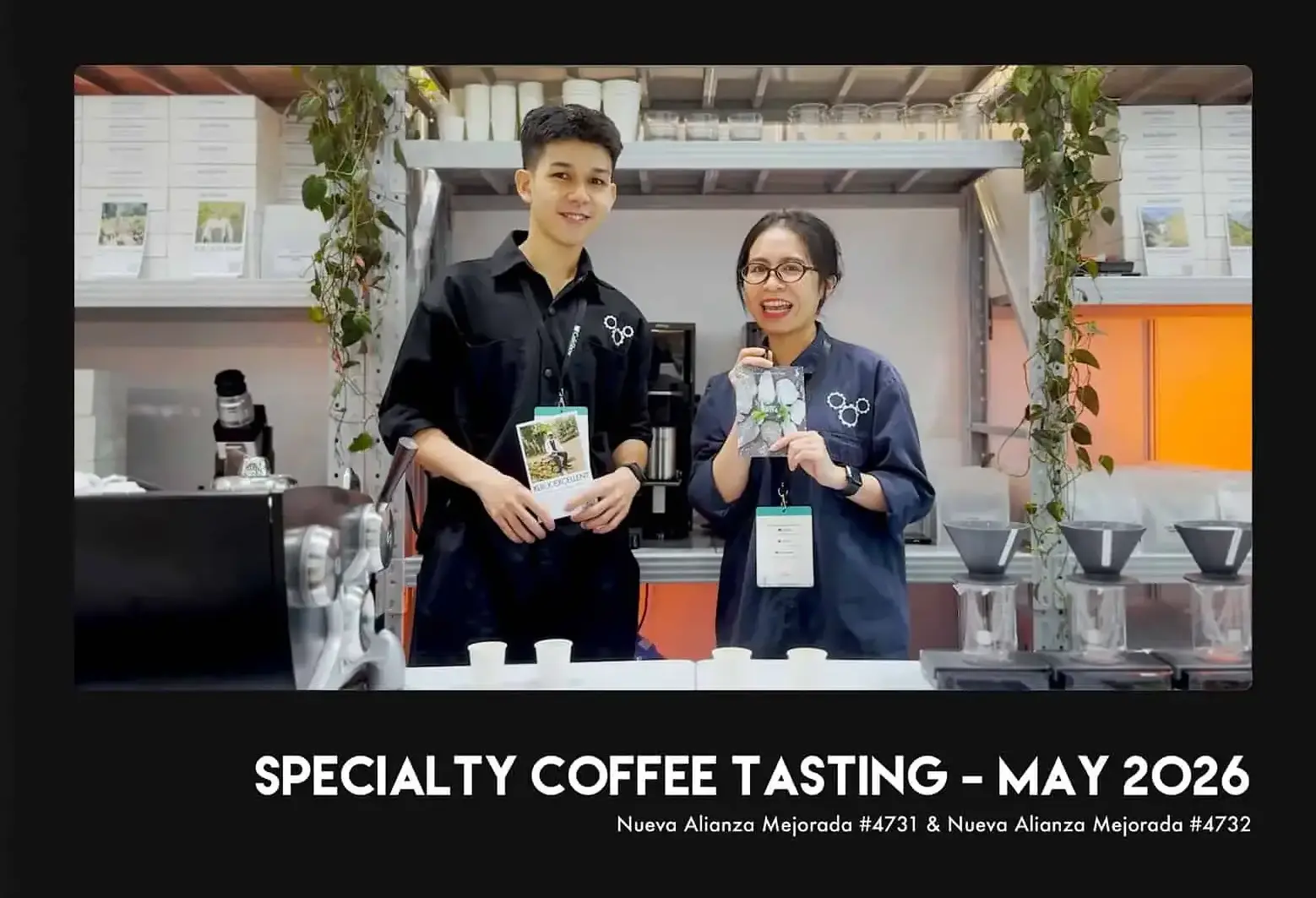
Unveiling May Discovery Subscription: Nueva Alianza Mejorada #4731 & Nueva Alianza Mejorada #4732
The Discovery Subscription is a silent dialogue, a place where the soul of the connoisseur finds a harmonious beat with distant lands. Like a transparent lens, we become storytellers, meticulously peeling back layers of cultural sediment, the breath of the soil, and the human philosophies hidden within every coffee bean.
May arrives with brilliant streaks of golden sunlight, a time when we long to hide beneath the lush, dew-drenched canopies of Santa Teresa. Amidst the silence of the Andes, when compassion touches Mother Earth, what will we hear? Perhaps it is a sweet response that nature reserves solely for souls who know how to wait patiently.

- Taste the Origin
Nueva Alianza Pacamara #4733 – The essence of Cusco with elegant jasmine notes
Nueva Alianza Pacamara #4733 is a testament to the miraculous terroir and dedicated cultivation of the renowned Cusco region. The combination of the characteristic Pacamara bean size and ideal altitude has forged a flavor profile of immense sophistication and depth. From the very first moment, this lot captivates with its elegant jasmine notes, radiating a gentle, pure fragrance akin to a flower blooming in the morning dew.

- Taste the Origin
Nueva Alianza Orange Gesha #4737 – An expedition of recessive genetic traits into the sensory realm
In a world of authenticity, Nueva Alianza Orange Gesha #4737 represents the proud emergence of rare biological traits often obscured by nature’s universality. Carrying a recessive genetic code, Lot #4737 embarks on an “expedition” into the connoisseur’s mind, where record-breaking fructose concentrations are released to perfectly fill every sensory gap with absolute smoothness and purity.
Through washed processing and extremely-light roasting, vibrant citrus nuances and ethereal floral notes, once hidden deep within the genetic structure, now manifest with power, transforming the tasting experience into a journey of ontological completion, where the rarity of recessive genes finally reigns supreme in flavor.

Specialty Coffee in Vietnam
BRAND VALUE
YOU SHOULD HAVE KNOWN
XLIII Coffee has been aiming to become a big, impactful company with social responsibilities,
have access to high-quality raw materials and convey the complete original values of coffee to our customer
