
Pacas Coffee Variety: The Advantage of a Single-Gene Bourbon Mutation
The Pacas coffee variety is one of the most important coffee cultivars in Central America, inheriting the outstanding qualities of the Bourbon lineage. Not only does it serve as a foundation for production and hybrid development, but Pacas is also highly regarded for its versatility in flavor quality. Let’s explore the detailed profile of this remarkable variety!
I. Origin of the Pacas Coffee Variety
According to the World Coffee Research institute, the Pacas variety is a natural mutation of Bourbon that originated in Central America. It was first discovered in 1949 on the Pacas family farm in the Santa Ana region of El Salvador and was subsequently named after them. This variety is unique due to a single-gene mutation, which granted it certain advantages that allowed it to spread rapidly and become one of the key coffee cultivars in El Salvador and Honduras.

The Pacas coffee variety is a natural mutation of the Bourbon variety originating from Central America
In 1960, the Salvadoran Coffee Research Institute (ISIC) launched a selective breeding program to develop Pacas, contributing to the preservation and improvement of both its quality and yield. Today, Pacas still accounts for approximately 25% of El Salvador’s total coffee production and is widely cultivated by farmers. In 1974, the Honduran Coffee Institute (IHCAFE) introduced Pacas to Honduras, further solidifying its prominence in the region’s coffee industry.
Beyond its significance in coffee production, Pacas also plays a crucial role in hybrid breeding. It is one of the two parent varieties that gave rise to Pacamara—one of El Salvador’s most renowned high-quality coffee cultivars.
II. Biological Characteristics of the Pacas Coffee Variety
Belonging to the Bourbon-Typica genetic group, with a single-gene mutation, Pacas is characterized by its compact size and adaptability to limited growing spaces, much like its Bourbon parent. The plant features dark green, glossy leaves and produces white or purple flowers before forming small berries that turn deep red when ripe. With its short stature and flexible structure, Pacas allows for high-density planting—ranging from 5,000 to 6,000 trees per hectare—when pruned to maintain single-stem growth. This helps maximize yield per unit of land, making it particularly advantageous in areas with limited space.

The important advantage of Pacas is its ability to grow and develop well in high altitude areas
Another key advantage of Pacas is its strong growth potential at high altitudes. In optimal elevation conditions, this variety can exhibit exceptional cup quality with a flavor profile similar to Bourbon—rich, sweet, and well-balanced. The trees begin bearing fruit in their third year, with a moderate ripening period that enables stable harvest management. Additionally, due to its compact foliage, Pacas can naturally shield itself from certain environmental factors, such as strong winds, direct sunlight, and temporary water shortages.

To this day, this variety still accounts for about 25% of El Salvador’s total coffee production and is trusted by many farmers
However, one notable drawback of the Pacas variety is its susceptibility to diseases. It is highly prone to coffee leaf rust and also sensitive to nematodes and coffee berry disease. This necessitates careful management and sustainable farming practices to maintain plant health. Despite these challenges, Pacas remains a preferred choice for many farms, particularly in El Salvador and Honduras, where favorable conditions allow it to reach its full potential in both yield and quality.
III. The Flavor of Pacas Coffee: Balanced and Pleasant Acidity
The flavor of any coffee bean is determined by its terroir, processing method, roasting level, and genetics. Pacas coffee is characterized by mild acidity, a sweet aftertaste, and a balanced, smooth texture—similar to its Bourbon parent and other Bourbon-descendant varieties like Catuai. Whether grown at high altitudes or in fertile valleys, Pacas consistently showcases its distinctive notes. Common flavor notes include chocolate, nuts, and fresh fruits, varying based on cultivation conditions and processing methods.
When wet-processed, Pacas coffee exhibits brightness with crisp acidity and a refined texture. Honey processing enhances its natural sweetness, bringing out richer fruit notes. Thanks to its versatility in flavor, Pacas has gained significant recognition in the specialty coffee world and among those seeking diversity in their coffee experiences.

Pacas is characterized by its light acidity, sweet aftertaste and smooth, balanced texture similar to Bourbon varieties
IV. Where Pacas is Grown and How It’s Produced
Pacas coffee is primarily cultivated in Central American countries such as El Salvador, Honduras, and Guatemala. It thrives under shade at altitudes ranging from 900 to 1,700 meters above sea level. The volcanic, mineral-rich soils in these regions provide essential nutrients that contribute to the coffee’s distinct flavor. The high elevation and diverse microclimates help shape its balance of acidity, sweetness, and lingering aftertaste.
Processing methods also play a crucial role in developing Pacas’ flavor profile. Most Pacas coffee undergoes washed (wet) processing, where the outer layers are fully removed using water in specialized fermentation tanks. Some producers also apply honey processing to enhance the depth of its flavors.

Pacas coffee is mainly grown in Central American countries such as El Salvador, Honduras and Guatemala, in the shade, at altitudes between 900 and 1,700 meters above sea level
To enjoy high-quality Pacas coffee, sourcing from reputable suppliers is essential. Freshly roasted beans retain their best flavors and are less prone to oxidation, which can degrade quality. The best way to purchase Pacas coffee is from specialty roasters that import green Pacas beans directly from Central American farms. You can contact XLIII Coffee for updates on high-quality Specialty Pacas lots.
Conclusion
As a natural mutation of Bourbon with stable genetics and a single mutation gene, Pacas not only offers advantages in cultivation but also stands out in the cup with its rich and balanced flavors. Whether grown in El Salvador, Honduras, or Guatemala, Pacas retains its core characteristics while showcasing versatility through different processing methods. With its outstanding potential, Pacas continues to play a vital role in the specialty coffee industry, promising unique tasting experiences for coffee lovers.
V. FAQs
1. Where does Pacas coffee originate from?
Pacas is a natural mutation of Bourbon, first discovered in 1949 in El Salvador. It features a shorter plant structure, making cultivation easier while maintaining Bourbon’s signature flavor quality.
2. What are the distinctive flavors of Pacas coffee?
Pacas coffee is known for its gentle sweetness, balanced acidity, and complex aroma. Depending on the processing method and growing region, its flavor can range from chocolate and caramel to citrus and delicate floral notes.
3. Where is Pacas commonly grown?
Pacas is primarily cultivated in Central American countries such as El Salvador, Honduras, and Guatemala, typically at altitudes between 900 and 1,700 meters above sea level. The region’s fertile volcanic soils enhance Pacas’ rich flavor profile.
4. What is the best brewing method for Pacas coffee?
For washed Pacas: Pour-over methods like Chemex, V60, and Siphon highlight its clarity and brightness.
For honey-processed Pacas: Aeropress, French Press, Espresso, and machine brewing methods enhance its sweetness and fuller body.
5. Where can I buy high-quality Pacas coffee?
Specialty Pacas coffee is available from reputable roasters specializing in single-origin beans. In Vietnam, you can find high-quality Pacas lots at XLIII Coffee, which sources directly from Central American farms.

Bài viết mới

- Find the Origin
Mandela coffee variety – A convergence of generations from a masterpiece breeding strategy
Amidst the constant fluctuations of the era, Mandela emerges as a gentle yet resilient response from the soil. Instead of attempting to alter or impose upon nature, this breeding strategy is, in essence, a profound act of listening. Each Mandela coffee bean carries the bloodline of multiple generations, possessing both the serene, steadfast nature of native trees and the sparkling elegance of premium varieties. It is a sacred continuation, where the flow of generations ultimate honors the original value of the species, imparting an intact and sustainable vitality into every cup.


- Taste the Origin
Nigussie Nare – Murago Outgrowers #03028: Cultivated from the Values of Sustainable Reciprocity
Nestled beneath the shade trees of Sidama, Bensa, the Nigussie Nare – Murago Outgrowers #03028 coffee lot serves as a living testament to the values of sustainable reciprocity. This symbiosis begins with the intimate bond between a rich indigenous ecosystem and the smallholder farmers of the Murago region. Each harvested bean is the culmination of a virtuous cycle: a stable environment produces exceptional bean quality, and sustainable economic growth, in turn, continues to protect the verdant canopy of the great forest.

- Taste the Origin
Rift Valley Coffee Caucus #03757 – A Testament to Western Kenya’s Collective Spirit
Turning our gaze to the Great Rift Valley of East Africa, the fertile volcanic landscapes are witnessing an inspiring transformation. Moving away from fierce, survival-driven competition, smallholder farmers in Western Kenya have chosen to join forces, forging a resilient and unified network. The Rift Valley Coffee Caucus #03757 lot stands as the ultimate testament to this remarkable collective synergy.

- Breaking News
Airworks Coffee & XLIII Coffee – A “handshake” that brings original flavors across borders
XLIII Coffee, alongside our key wholesale partner Airworks Coffee, officially announces the latest release of specialty coffee lots for the North American market. This event reaffirms our commitment to bringing original flavors across all geographical barriers to coffee enthusiasts.
Early access (for Subscribers of Airworks): 10:00 AM (PST) | Wednesday, April 29, 2026
General access: 10:00 AM (PST) | Friday, May 1, 2026
We invite our Customers and Partners to visit (airworkscoffee.com) for detailed information and to prepare for this special release!
- Taste the Origin
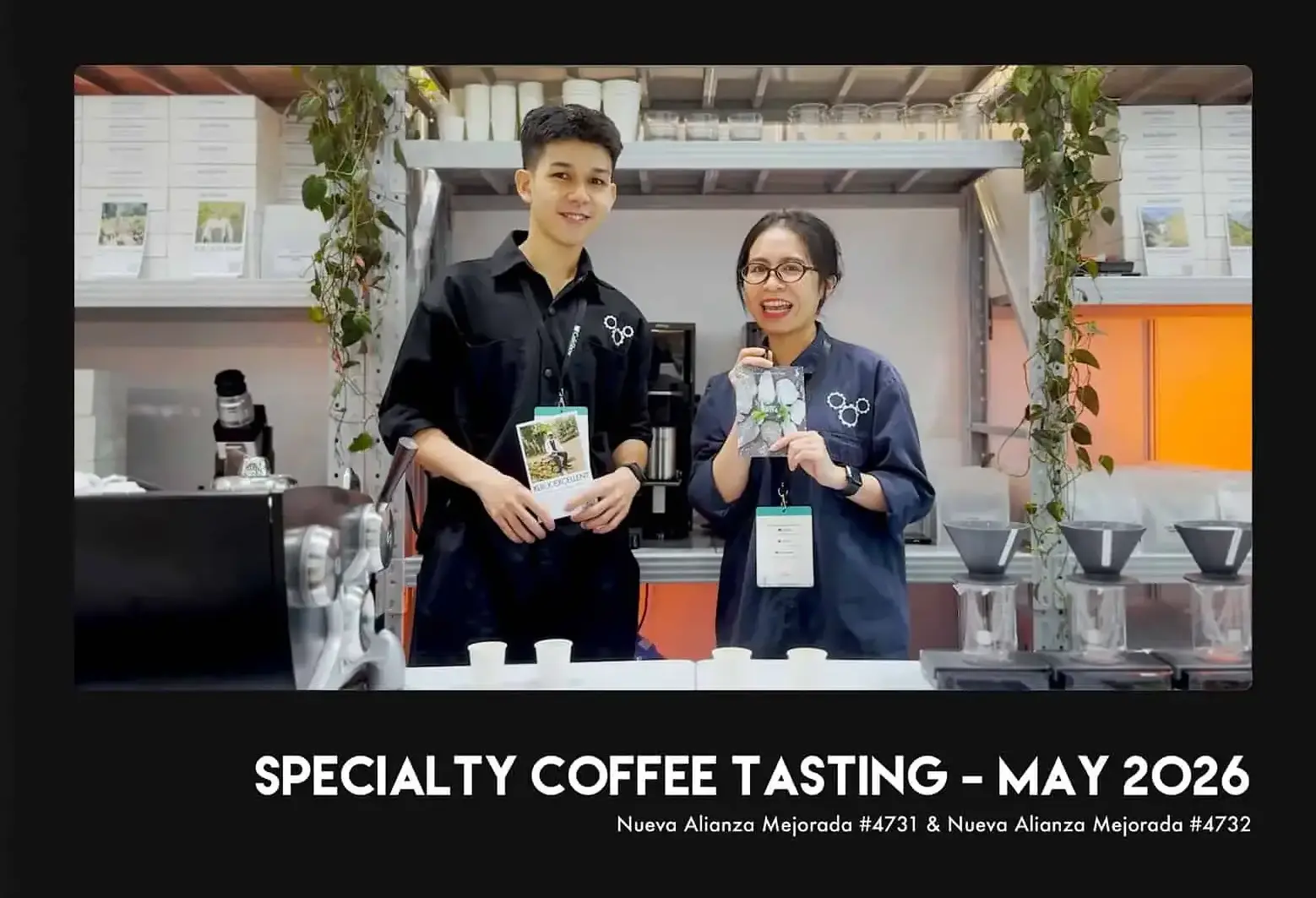
Unveiling May Discovery Subscription: Nueva Alianza Mejorada #4731 & Nueva Alianza Mejorada #4732
The Discovery Subscription is a silent dialogue, a place where the soul of the connoisseur finds a harmonious beat with distant lands. Like a transparent lens, we become storytellers, meticulously peeling back layers of cultural sediment, the breath of the soil, and the human philosophies hidden within every coffee bean.
May arrives with brilliant streaks of golden sunlight, a time when we long to hide beneath the lush, dew-drenched canopies of Santa Teresa. Amidst the silence of the Andes, when compassion touches Mother Earth, what will we hear? Perhaps it is a sweet response that nature reserves solely for souls who know how to wait patiently.

Specialty Coffee in Vietnam
BRAND VALUE
YOU SHOULD HAVE KNOWN
XLIII Coffee has been aiming to become a big, impactful company with social responsibilities,
have access to high-quality raw materials and convey the complete original values of coffee to our customer
