
Is Heirloom coffee variety the “Lifeblood” of Specialty Coffee?
The Heirloom coffee variety carries with it a story of time and tradition. This coffee type is also viewed as a part of its heritage, serving as the lifeblood that maintains the unique quality and flavor of specialty coffee. Why is this the case? Let’s explore with XLIII Coffee!
I. What is the Heirloom Coffee Variety?
In the world of botany, heirloom refers to native plant varieties preserved through generations without industrial breeding methods. For coffee, the Heirloom variety consists of a group of wild Coffea Arabica plants that have existed for a long time, primarily found in Ethiopia. These varieties grow in forest ecosystems and have been preserved by farmers over generations, maintaining biodiversity and complex flavor characteristics.
It is estimated that there are currently about 10,000 to 15,000 heirloom coffee varieties in Ethiopia. They are typically classified into two groups: JARC varieties and Regional Landraces, most of which have not yet been accurately identified genetically. The JARC varieties are developed and researched by the Jimma Agricultural Research Center (JARC) to exhibit desired traits, such as improved disease resistance or increased yield. Regional Landraces are coffee plants that grow entirely in the wild.

II. Why are Heirloom Varieties Considered the "Lifeblood" of Specialty Coffee?
The essential condition to become specialty coffee is that the plant must have potential for quality, flavor refinement, and sustainable values. Meanwhile, heirloom coffee is not only the source of many stars in the specialty coffee industry but also plays a key role in improving new potential coffee varieties and developing sustainable coffee models.
The Genetic Source of Specialty Coffee
Many famous coffee varieties, such as Gesha, 74110, 74112, Wolisho, and Dega, originate from heirloom varieties, thanks to their unique flavors and superior quality. Notably, the Gesha variety, developed from indigenous coffee in the Gesha region of Ethiopia, has become a symbol of specialty coffee with its delicate floral notes and unforgettable complexity. In Panama, Gesha has created a sensation among coffee lovers, with lots of coffee from Hacienda La Esmeralda scoring high and fetching thousands of dollars per kilogram at auctions.
Moreover, heirloom varieties are a valuable genetic resource for developing new potential coffee varieties. The genetic diversity within heirloom groups provides a foundation for research and developing new varieties, helping the coffee industry tackle challenges such as climate change and pests. New coffee varieties, although not entirely heirloom, have been developed based on heirloom genetic traits, demonstrating their importance in fostering innovation.

Heirloom varieties are a valuable genetic resource for the development of potential new coffee cultivars
Promoting Sustainable Development
Heirloom plays a crucial role in shaping modern specialty coffee trends. The unique flavor profiles and origins encourage users to develop new roasting and brewing methods that highlight and deepen the beautiful aspects of these coffees. Furthermore, these coffee types require special environmental conditions and care (in shaded or semi-forest areas). As a result, farmers cultivating heirloom often opt for traditional, agroforestry practices that benefit both the community and the environment.
Biniyam Aklilu, director of Nardos Coffee, along with Erik Liao, co-owner of Triup Coffee and head roaster at 19 Coffee Roasting Lab in Taiwan, points out that the growing recognition of heirloom varieties is actively supporting producers in Ethiopia. “His organization has provided coffee seedlings to over 4,000 farmers, as well as offering farm management services and financial support.” This support not only helps farmers improve their yields but also equips them with in-depth knowledge about their crops, enhancing traceability for their products. Improving traceability not only strengthens transparency in the coffee industry but also helps producers achieve greater long-term stability, facilitating a sustainable production model.

Heirloom varieties play a crucial role in shaping the trends of modern specialty coffee
III. Challenges in Growing and Preserving Heirloom Varieties
High Production Costs, Limited Yield
Despite their many values, growing and preserving heirloom coffee is not easy. To maintain quality and flavor characteristics, farmers must dedicate significant effort and expertise to care for each coffee plant. Heirloom varieties require specific soil and climate conditions, which increases production and preservation costs.
With the robust development of the mainstream coffee market, heirloom is also facing the risk of extinction if not properly preserved. A major challenge producers face is the frequent mixing of coffee varieties during harvest. This leads to selling products as traditional coffee, making it difficult for buyers seeking local indigenous coffees. Medina Hussein, a coffee producer, states that if there is a specific request for indigenous coffee, she can only supply a very limited quantity, typically around 50 or 100 bags. This necessitates that orders be placed early, ahead of the harvest, to allow producers to prepare in time.

Heirloom varieties require specific soil and climate conditions, which increases production and preservation costs
Batching Issues, Reduced Distinctiveness
Most farmers in Ethiopia are smallholders who view coffee as a commercial crop. Prioritizing disease resistance and high yields often overshadows flavor. Heleanna Georgalis, an industry expert, has pointed out that collaboration to test a specific coffee variety is very challenging for roasters. For instance, a farmer with a small plot may not be able to supply enough coffee for a large order and often won’t sell just because you want a specific variety. This fragmentation reduces access to high-quality, unique coffee varieties.
Although grouping heirloom varieties under a common term may seem unreasonable, in Ethiopia’s practical conditions, it is necessary to maintain stable and efficient production.

Large quantities of Heirloom lots are very rare, primarily because multiple varieties are often combined into a single lot, reducing access to high-quality and unique coffee varieties
IV. What Does the Future Hold for Heirloom Coffee Varieties?
The future of heirloom varieties in the coffee industry can be viewed through the lens of increasing research and conservation efforts. With the growth of specialty coffee, many research programs have been initiated to exploit and document thousands of wild coffee varieties originating from Ethiopia. These varieties have naturally developed to adapt to the specific climatic and soil conditions of each region, opening up potential for unique, high-quality coffees.
The Ethiopian Institute of Agricultural Research (EIAR) and the Jimma Agricultural Research Center (JARC) have devoted significant effort to understanding wild Arabica varieties. They not only aim to improve crop varieties but also support farmers with modern cultivation techniques to enhance yield and disease resistance. Partnering with World Coffee Research since 2021, these organizations have promoted the development of improved coffee varieties, benefiting local farmers.
However, the road ahead still presents many challenges. The need to document and standardize names for heirloom coffee varieties is still a work in progress and requires considerable time to achieve transparency. Heleanna has shared that this will require a lot of effort and time to complete.

The Ethiopian Institute of Agricultural Research (EIAR) and the Jimma Agricultural Rese
For individuals like Getu Bekele, the future outlook is very optimistic. He believes that within the next ten years, Ethiopia will be capable of producing a greater variety of high-quality coffees from different regions of the country. Information transparency in the supply chain will be key to creating strong connections between farmers, roasters, and consumers. This will not only enhance the value of heirloom varieties but also help preserve Ethiopia’s unique coffee heritage, moving towards a sustainable future for the coffee industry there.
Conclusion
Heirloom can be considered the “lifeblood” of specialty coffee, not only for the complex and refined flavors it brings but also for the cultural and ecological values it represents. Moreover, heirloom serves as a bridge between the past and the present, connecting diligent farmers who protect traditional varieties and modern consumers seeking exceptional coffee experiences. Visit XLIII Coffee to enjoy the distinctive nuances of specialty coffee beans!
V. FAQs
1. What makes heirloom coffee varieties special and considered the “lifeblood” of specialty coffee?
Heirloom coffee varieties stand out for their flavor diversity and unique quality, often providing distinctive experiences for consumers. They are the source of many renowned varieties in the specialty coffee industry, contributing to high-quality, exceptional products.
2. Why is preserving heirloom coffee varieties important?
Preserving heirloom coffee varieties is crucial as they not only safeguard cultural heritage but also contribute to agricultural biodiversity. These varieties also have the potential to provide seeds for new varieties, helping farmers adapt to climate change and production challenges.
3. What challenges do heirloom coffee producers face?
Producers often struggle with distributing heirloom coffee varieties due to the mixing of varieties during harvest. Additionally, many farmers prioritize yield and disease resistance over flavor, leading to undercultivation and development of heirloom varieties.
4. What famous coffee varieties have been developed from heirloom groups?
Many famous coffee varieties, such as Geisha, Yirgacheffe, and Sidamo, originate from heirloom varieties. These typically offer distinctive flavors and have become popular choices in the specialty coffee industry.
5. How can consumers support the preservation of heirloom varieties?
Consumers can support heirloom preservation by seeking out and purchasing heirloom coffee, advocating for sustainable farming practices, and promoting transparency in the coffee supply chain.

Bài viết mới

- Taste the Origin
Nigussie Nare – Murago Outgrowers #03028: Cultivated from the Values of Sustainable Reciprocity
Nestled beneath the shade trees of Sidama, Bensa, the Nigussie Nare – Murago Outgrowers #03028 coffee lot serves as a living testament to the values of sustainable reciprocity. This symbiosis begins with the intimate bond between a rich indigenous ecosystem and the smallholder farmers of the Murago region. Each harvested bean is the culmination of a virtuous cycle: a stable environment produces exceptional bean quality, and sustainable economic growth, in turn, continues to protect the verdant canopy of the great forest.

- Taste the Origin
Rift Valley Coffee Caucus #03757 – A Testament to Western Kenya’s Collective Spirit
Turning our gaze to the Great Rift Valley of East Africa, the fertile volcanic landscapes are witnessing an inspiring transformation. Moving away from fierce, survival-driven competition, smallholder farmers in Western Kenya have chosen to join forces, forging a resilient and unified network. The Rift Valley Coffee Caucus #03757 lot stands as the ultimate testament to this remarkable collective synergy.

- Breaking News
Airworks Coffee & XLIII Coffee – A “handshake” that brings original flavors across borders
XLIII Coffee, alongside our key wholesale partner Airworks Coffee, officially announces the latest release of specialty coffee lots for the North American market. This event reaffirms our commitment to bringing original flavors across all geographical barriers to coffee enthusiasts.
Early access (for Subscribers of Airworks): 10:00 AM (PST) | Wednesday, April 29, 2026
General access: 10:00 AM (PST) | Friday, May 1, 2026
We invite our Customers and Partners to visit (airworkscoffee.com) for detailed information and to prepare for this special release!
- Taste the Origin
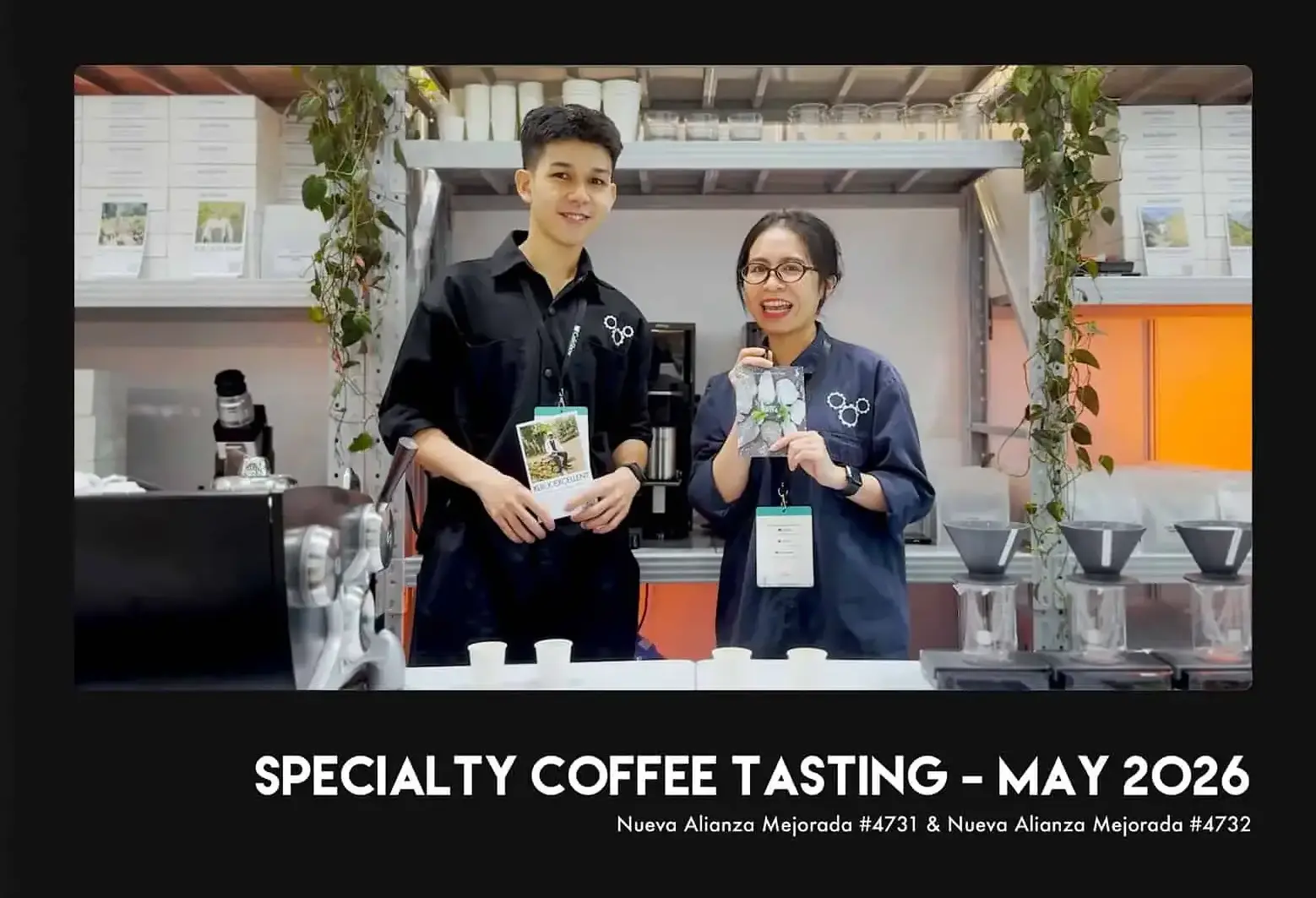
Unveiling May Discovery Subscription: Nueva Alianza Mejorada #4731 & Nueva Alianza Mejorada #4732
The Discovery Subscription is a silent dialogue, a place where the soul of the connoisseur finds a harmonious beat with distant lands. Like a transparent lens, we become storytellers, meticulously peeling back layers of cultural sediment, the breath of the soil, and the human philosophies hidden within every coffee bean.
May arrives with brilliant streaks of golden sunlight, a time when we long to hide beneath the lush, dew-drenched canopies of Santa Teresa. Amidst the silence of the Andes, when compassion touches Mother Earth, what will we hear? Perhaps it is a sweet response that nature reserves solely for souls who know how to wait patiently.

- Taste the Origin
Nueva Alianza Pacamara #4733 – The essence of Cusco with elegant jasmine notes
Nueva Alianza Pacamara #4733 is a testament to the miraculous terroir and dedicated cultivation of the renowned Cusco region. The combination of the characteristic Pacamara bean size and ideal altitude has forged a flavor profile of immense sophistication and depth. From the very first moment, this lot captivates with its elegant jasmine notes, radiating a gentle, pure fragrance akin to a flower blooming in the morning dew.

- Taste the Origin
Nueva Alianza Orange Gesha #4737 – An expedition of recessive genetic traits into the sensory realm
In a world of authenticity, Nueva Alianza Orange Gesha #4737 represents the proud emergence of rare biological traits often obscured by nature’s universality. Carrying a recessive genetic code, Lot #4737 embarks on an “expedition” into the connoisseur’s mind, where record-breaking fructose concentrations are released to perfectly fill every sensory gap with absolute smoothness and purity.
Through washed processing and extremely-light roasting, vibrant citrus nuances and ethereal floral notes, once hidden deep within the genetic structure, now manifest with power, transforming the tasting experience into a journey of ontological completion, where the rarity of recessive genes finally reigns supreme in flavor.

Specialty Coffee in Vietnam
BRAND VALUE
YOU SHOULD HAVE KNOWN
XLIII Coffee has been aiming to become a big, impactful company with social responsibilities,
have access to high-quality raw materials and convey the complete original values of coffee to our customer
