
Official Launch of Cerro Azul Java 672-B: The Quintessence of Coffee from the Legendary Siguatepeque
Cerro Azul Java 672-B coffee officially launches, carrying the spirit of the mythical Siguatepeque region. The Javanica beans are nurtured amidst a cool climate and mineral-rich soil, creating a cup with a unique character: it opens with the sweet, rich flavor of nutella, balanced by the crisp, neutral sensation of cracker, and finishes with a bright, subtly lingering raspberry note, leaving a full-bodied and unforgettable aftertaste.
I. A Glimpse of Cerro Azul Farm
Cerro Azul is a coffee farm located in the Siguatepeque region of Comayagua province. The farm sits at an elevation of approximately 1.600 to 1.700 meters above sea level, bordering the pristine forest of the Azul Meámbar National Park. The natural environment here is particularly favorable for coffee trees: the cool air, stable humidity, and mineral-rich soil allow the trees to grow slowly, accumulating more sugars and aromatic compounds. As a result, the coffee beans from Cerro Azul consistently display flavor depth and high, stable quality across every season.
The story of Cerro Azul is tied to the vision of the Mierisch family. In 2011, while serving as Head Judge at the Cup of Excellence Honduras, Erwin Mierisch had the opportunity to directly engage with many local coffee-growing regions. He recognized the immense potential in the abundant land of Siguatepeque. From that point, the Mierisch family decided to invest in and develop Cerro Azul, making it an important part of Fincas Mierisch’s specialty coffee farm system, which spans Nicaragua and Honduras.


Cerro Azul’s climate creates a natural and sustainable growth cycle. The average daytime temperature is only about 25°C, dropping to around 17°C at night, creating an ideal temperature difference that helps the coffee cherries develop slowly and accumulate flavor better. The soil at Cerro Azul is a sandy-clay type, which both retains water and drains naturally effectively. This helps prevent the trees from being stressed by waterlogging or drought, while maintaining microbial balance in the soil.
In processing, Cerro Azul applies the washed method with a strictly controlled process from pulping, fermentation, washing, to drying the beans. Notably, the wastewater treatment system is meticulously designed to ensure that post-processing water is filtered clean before being returned to the environment. This demonstrates the farm’s clear commitment to protecting natural resources and the local ecosystem.
The harmonious combination of natural conditions, responsible agricultural practices, and the Mierisch family’s management experience has created a unique terroir, contributing to shaping the distinct identity of coffee from the Siguatepeque region.
II. Notable Characteristics of Javanica Variety
Javanica is an Arabica coffee variety with a long and relatively special history in the coffee world. The ancestry of this variety originated on the island of Java in Indonesia, then was introduced to Central and South America through crop exchange programs in the 19th century. Despite sharing ancestry with the traditional Java variety, Javanica evolved into a biological variant suited to the growing conditions in the high-altitude regions of Latin America, giving it distinct characteristics in morphology and flavor.
Javanica trees are often significantly taller than many other Arabica varieties, with slender trunks and sparse canopies, giving them a graceful appearance in the field. The leaves are large, deep green, and longer, allowing the tree to photosynthesize effectively in the diffused light conditions of the high mountains. Javanica coffee cherries are often longer and slightly tapered, while the green beans inside have an elongated shape, differing from the common oval shape of many other Arabica varieties. This specific bean shape makes Javanica easy to identify during post-harvest sorting.


In terms of cultivation, Javanica has a slow growth rate, requiring a relatively stable and cool growing environment. The tree demands extensive care regarding soil nutrition and drainage systems, as it is easily affected by humidity fluctuations. However, this slow growth rate is a crucial factor that helps the coffee bean accumulate higher sugar content and create a balanced acid structure. This is what creates the characteristic roundness and clarity in the flavor when roasted and brewed.
These characteristics make Javanica a coffee variety that is not widely mass-produced but is cherished in the specialty coffee community. When cultivated in regions with suitable conditions like Cerro Azul, Javanica has the opportunity to fully express its flavor personality: delicate, naturally subtle sweetness, and leaving a refined impression after every sip.
III. What Creates the Unique Experience of Cerro Azul Java 672-B?
When approaching the Cerro Azul Java 672-B lot, the drinker can easily feel that it carries the story of the Siguatepeque region and the mark of the Javanica variety. Every step in the production journey, from soil and climate to cultivation and processing methods, contributes to building a “self-narrative” tasting experience of the coffee bean itself: authentic, clear, and full of depth.
The first impression that registers with the drinker is the flavor structure naturally developed from the slow growth process in the high mountains. Java 672-B offers a warm and intimate sensation through flavor layers reminiscent of creamy nutella, light roasted cracker, combined with the bright, clean, and gently sweet note of raspberry. This intertwining is both coherent and harmonious, creating a flavor profile balanced between richness, sweetness, and a fruity highlight. It is the scientific balance between the natural sugars in the fruit, the bean’s development level, and the ultra-light roasting technique at XLIII Coffee that creates a uniqueness rarely found in other coffee lots.

Beyond the flavor, the mouthfeel delivered by Java 672-B also contributes to the complete experience. The smooth body, pleasant fruit acidity, along with a clean and lingering finish, create a continuous emotional flow from the first sip to the final aftertaste. The drinker not only recognizes the flavor but also feels the meticulous care in every production stage, as if the Cerro Azul farm is inviting them to listen to a story told by the coffee bean itself.
In summary, the uniqueness of Cerro Azul Java 672-B does not lie in a single factor but in the way all those elements blend: the special terroir, the delicate Javanica variety, the precise processing, and the roasting technique that respects the original flavor. Every cup of coffee, therefore, becomes a complete, subtle experience, worth pausing to savor as an invitation to explore the world of coffee with slowness and empathy.
IV. The Opportunity to Enjoy Cerro Azul Java 672-B Awaits You
Cerro Azul Java 672-B is the result of a sustainable, transparent value chain from the farm to the cup in your hand. One of the key factors creating this experience is the direct trade relationship that XLIII Coffee maintains with Fincas Mierisch. Without intermediaries, every trade contract is built on trust, transparency, and respect for the farmer’s hard work, ensuring direct benefits reach the producer.
Based on this direct relationship, the price paid to the producer is set at 11.02 USD/kg. This figure not only reflects the superior quality of the coffee lot but also affirms XLIII Coffee’s commitment to supporting farmers’ sustainable development, improving their livelihoods, and investing in environmentally friendly farming methods

Furthermore, the method of roasting the coffee also plays a decisive role in the final flavor. At XLIII Coffee, as is customary, the Cerro Azul Java 672-B lot is processed using the extremely-light roast method. This technique helps preserve the maximum original aroma and the subtle flavor compounds in the bean, while highlighting the acid structure and natural sweetness. As a result, every cup of coffee provides a vivid tasting experience: from the fresh fruit and floral notes, balanced flavor profile, to the smooth and lingering aftertaste, fully reflecting the unique “terroir” of the Cerro Azul farm.
Thus, the opportunity to enjoy Cerro Azul Java 672-B goes beyond experiencing a specialty coffee; it is an experience of direct connection with the farm, honoring the effort of the farmers, and tasting the essence of flavor from a region renowned for specialty coffee. Every cup of Cerro Azul Java 672-B is a harmonious blend of quality, sustainability, and a subtle tasting experience, ready to welcome those who appreciate the true flavor of original coffee!
In conclusion,
The Cerro Azul Java 672-B lot is the crystallization of soil, climate, people, and sustainable farming methods. From the farm to the cup in your hand, every step in the production process is meticulously cared for to deliver a subtle, authentically original tasting experience. This is an opportunity to discover a unique, complete, and nature-friendly flavor profile, while acknowledging the efforts of dedicated farmers.
Images used in this article are owned by Fincas Mierisch and XLIII Coffee.
V. FAQs
1. What kind of coffee is Cerro Azul Java 672-B and where does it originate?
Cerro Azul Java 672-B coffee belongs to the Javanica variety, grown at the Cerro Azul farm in the Siguatepeque region. This coffee variety is known for its subtle flavor and balanced structure thanks to the high-altitude conditions, sandy-clay soil, and sustainable farming methods.
2. How is the Cerro Azul Java 672-B coffee lot harvested and processed?
Cerro Azul Java 672-B coffee is harvested from February to June, processed using the washed method with strict procedures for pulping, fermentation, washing, and drying, ensuring the preservation of the original flavor and environmental protection.
3. How should Cerro Azul Java 672-B coffee beans be stored to maintain the best flavor?
To keep the subtle flavor of Cerro Azul Java 672-B beans intact, they should be stored in airtight packaging, in a dry, cool place, away from direct sunlight and high temperatures. If possible, a storage container with a one-way valve should be used to let the beans “breathe” without oxidizing.
4. How does the extremely-light roast affect the flavor of Cerro Azul Java 672-B?
The extremely-light roast helps preserve the natural aroma and acidity, highlighting the balanced sweetness, fresh fruit notes, and smooth finish, fully expressing the characteristic features of the Cerro Azul region.
5. Which brewing methods are suitable for Cerro Azul Java 672-B coffee?
At XLIII Coffee, Cerro Azul Java 672-B coffee is served through three methods: filter (pour-over), shot (intense espresso), and milkbase (with milk), helping to honor its multi-layered flavor and flexible tasting experience.

Bài viết mới

- Taste the Origin
Nigussie Nare – Murago Outgrowers #03028: Cultivated from the Values of Sustainable Reciprocity
Nestled beneath the shade trees of Sidama, Bensa, the Nigussie Nare – Murago Outgrowers #03028 coffee lot serves as a living testament to the values of sustainable reciprocity. This symbiosis begins with the intimate bond between a rich indigenous ecosystem and the smallholder farmers of the Murago region. Each harvested bean is the culmination of a virtuous cycle: a stable environment produces exceptional bean quality, and sustainable economic growth, in turn, continues to protect the verdant canopy of the great forest.

- Taste the Origin
Rift Valley Coffee Caucus #03757 – A Testament to Western Kenya’s Collective Spirit
Turning our gaze to the Great Rift Valley of East Africa, the fertile volcanic landscapes are witnessing an inspiring transformation. Moving away from fierce, survival-driven competition, smallholder farmers in Western Kenya have chosen to join forces, forging a resilient and unified network. The Rift Valley Coffee Caucus #03757 lot stands as the ultimate testament to this remarkable collective synergy.

- Breaking News
Airworks Coffee & XLIII Coffee – A “handshake” that brings original flavors across borders
XLIII Coffee, alongside our key wholesale partner Airworks Coffee, officially announces the latest release of specialty coffee lots for the North American market. This event reaffirms our commitment to bringing original flavors across all geographical barriers to coffee enthusiasts.
Early access (for Subscribers of Airworks): 10:00 AM (PST) | Wednesday, April 29, 2026
General access: 10:00 AM (PST) | Friday, May 1, 2026
We invite our Customers and Partners to visit (airworkscoffee.com) for detailed information and to prepare for this special release!
- Taste the Origin
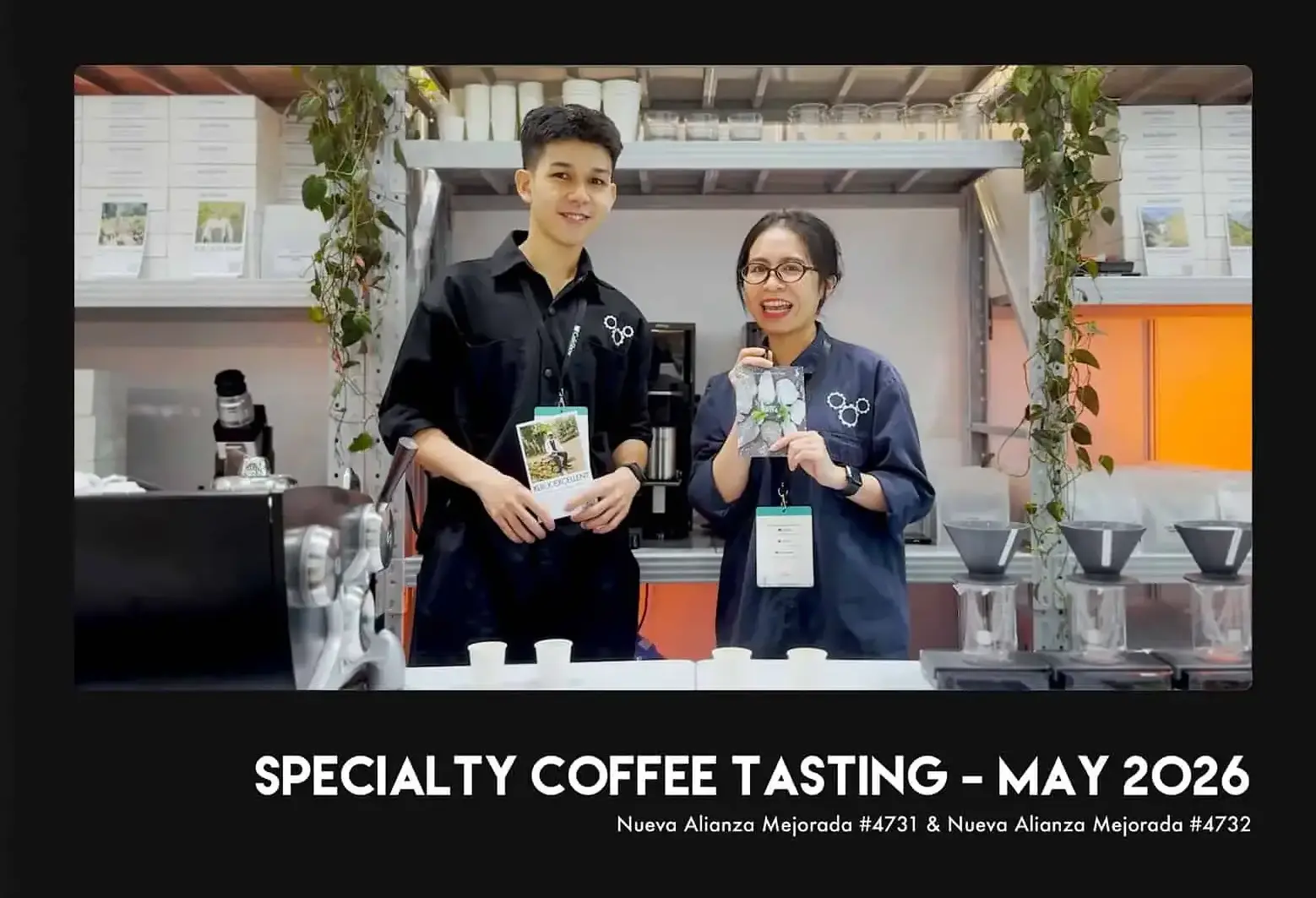
Unveiling May Discovery Subscription: Nueva Alianza Mejorada #4731 & Nueva Alianza Mejorada #4732
The Discovery Subscription is a silent dialogue, a place where the soul of the connoisseur finds a harmonious beat with distant lands. Like a transparent lens, we become storytellers, meticulously peeling back layers of cultural sediment, the breath of the soil, and the human philosophies hidden within every coffee bean.
May arrives with brilliant streaks of golden sunlight, a time when we long to hide beneath the lush, dew-drenched canopies of Santa Teresa. Amidst the silence of the Andes, when compassion touches Mother Earth, what will we hear? Perhaps it is a sweet response that nature reserves solely for souls who know how to wait patiently.

- Taste the Origin
Nueva Alianza Pacamara #4733 – The essence of Cusco with elegant jasmine notes
Nueva Alianza Pacamara #4733 is a testament to the miraculous terroir and dedicated cultivation of the renowned Cusco region. The combination of the characteristic Pacamara bean size and ideal altitude has forged a flavor profile of immense sophistication and depth. From the very first moment, this lot captivates with its elegant jasmine notes, radiating a gentle, pure fragrance akin to a flower blooming in the morning dew.

- Taste the Origin
Nueva Alianza Orange Gesha #4737 – An expedition of recessive genetic traits into the sensory realm
In a world of authenticity, Nueva Alianza Orange Gesha #4737 represents the proud emergence of rare biological traits often obscured by nature’s universality. Carrying a recessive genetic code, Lot #4737 embarks on an “expedition” into the connoisseur’s mind, where record-breaking fructose concentrations are released to perfectly fill every sensory gap with absolute smoothness and purity.
Through washed processing and extremely-light roasting, vibrant citrus nuances and ethereal floral notes, once hidden deep within the genetic structure, now manifest with power, transforming the tasting experience into a journey of ontological completion, where the rarity of recessive genes finally reigns supreme in flavor.

Specialty Coffee in Vietnam
BRAND VALUE
YOU SHOULD HAVE KNOWN
XLIII Coffee has been aiming to become a big, impactful company with social responsibilities,
have access to high-quality raw materials and convey the complete original values of coffee to our customer
