
Coffee price today domestically and internationally
Coffee price impacts the revenue of farmers and businesses in the industry. Let’s take a look at the current domestic and international coffee prices to grasp the market fluctuations. Today’s coffee prices are updated daily to provide accurate and timely insights.
Domestic coffee prices today June 6th
In today’s session, the domestic coffee market continues to adjust in line with global trends. Below are the current purchasing prices across key raw material regions in Vietnam:
| Market | Coffee price (VND/kg) |
| Cư M’gar (Đắk Lắk) |
86.000 |
| Ea H’leo, Buôn Hồ | 85.700 |
| Gia Lai | 86.000 |
| Dak Nong | 86.000 |
| Di Linh, Lam Ha, Bao Loc (Lam Dong) region | 85.300 |
International coffee prices today June 6th
On the global market, Robusta prices on the London exchange and Arabica prices on the New York exchange have fluctuated as follows:
| Futures Exchange | Term | Price | Change |
| London (Robusta) | July 2026 | 3.352 USD/ton | – 19 USD/ton (+ 0,56%) |
| September 2026 | 3.270 USD/ton | – 8 USD/ton (+ 0,24%) | |
| December 2026 | 3.196 USD/ton | – 10 USD/ton (+ 0,31%) | |
| New York (Arabica) | July 2026 | 247,15 cent/lb | – 5,95 cent/lb (- 2,35%) |
| September 2026 | 242,40 cent/lb | – 5,20 cent/lb (- 2,10%) | |
| December 2026 | 235,35 cent/lb | – 5,10 cent/lb (- 2,12%) |
The coffee market is currently experiencing notable shifts. We have gathered diverse perspectives on how industry players and coffee lovers alike are navigating these changing conditions:”
Specialty coffee prices at XLIII Coffee
Here is the price list of premium specialty coffee currently available at XLIII Coffee:
| Coffee beans | Pay for producer | Serving price |
| Finca Rosenheim Typica & Caturra | 14,29 USD/kg | Box 250g: 700.000 VND |
| Fincas Putushio Mejorado | 1.980 USD/bag 30kg | Box 250g: 2.500.000 VND |
| Finca Soledad Mejorado Tyoxy | 2.550 USD/bag 30kg | Box 250g: 3.000.000 VND |
| Finca La Palestina Red Bourbon #5487 | 3.130 USD/276kg | Box 250g: 700.000 VND |
| Mandela Natural #00307 | 793,66 USD/bag 24kg | Box 250g: 1.500.000 VND |
| Las Margaritas #00305 | 1.428,58 USD/bag 24kg | Box 250g: 2.500.000 VND |
| Potosi Sidra #00306 | 1.428,58 USD/bag 24kg | Box 250g: 2.500.000 VND |
| La Esperanza Gesha #00308 | 793,66 USD/bag 24kg | Box 250g: 1.500.000 VND |
| Nigussie Nare – Murago Outgrowers #03028 | 1.135 USD/bag 60kg | Box 250g: 800.000 VND |
| Rift Valley Coffee Caucus #03757 | 1.070 USD/bag 60kg | Box 250g: 800.000 VND |
| Nueva Alianza Pacamara #4733 | 2.737,92 USD/bag 69kg | Box 250g: 1.500.000 VND |
|
Nueva Alianza Mejorada #4731 |
1,825,74 USD/bag 69kg | Box 250g: 1.000.000 VND |
|
Nueva Alianza Sidra #4736 |
3.803,28 USD/bag 69kg | Box 250g: 2.500.000 VND |
|
Nueva Alianza Maragogipe #4735 |
2.586,12 USD/bag 69kg | Box 250g: 1.500.000 VND |
|
Kinini Village by Abateranankunga Farmer Group #03734 |
943 USD/bag 20kg | Box 250g: 800.000 VND |
|
Nueva Alianza Mejorada #4732 |
2129,34 USD/bag 69kg | Box 250g: 1.000.000 VND |
|
Ziriguidum #2 – Masterpieces Auction 2025 |
3,360 USD/bag 36kg | Box 250g: 3.500.000 VND |
|
Ninety Plus Yuzo |
250 USD/kg green bean | Box 250g: 8.000.000 VND |
|
Santa Lucia Triangulo Gesha By Mierisch |
3.307 USD/bag 60 kg | Box 250g: 2.500.000 VND |
|
Santa Lucia Casona Gesha By Mierisch |
3.307 USD/bag 60 kg | Box 250g: 2.500.000 VND |
|
Nueva Alianza Yellow Gesha #4730 |
3803,28 USD/bag 69kg | Box 250g: 2.500.000 VND |
|
Kinini Village by Dufatanye Farmer Group #03732 |
945 USD/bag 60kg | Box 250g: 800.000 VND |
FAQs
1. How do organic coffee and regular coffee differ in price and why?
Organic coffee is usually more expensive than regular coffee due to the following reasons:
- Complex production process: Organic coffee is grown using organic methods, without chemical fertilizers or pesticides, resulting in higher production costs.
- Lower yield: Organic coffee generally has a lower yield compared to regular coffee because chemical fertilizers, which can boost productivity, are not used.
- Certification requirements: Organic coffee must meet certain quality standards and be certified organic, which also adds to production costs.
- High demand: Organic coffee is increasingly popular among consumers because it’s seen as healthier and more environmentally friendly, driving up demand and prices.
2. How to invest in coffee?
There are several ways to invest in coffee, including:
- Buying stocks of coffee companies: Invest in companies that produce, process, and distribute coffee.
- Purchasing futures contracts: Trade coffee futures contracts to speculate or hedge risks.
- Investing in ETFs: Invest in exchange-traded funds (ETFs) that track the coffee market index.
- Direct investment in coffee farms: Buy coffee farms or partner with farmers to produce and sell coffee together.
Note: Like any investment, coffee investments carry risks. You should research thoroughly and consult with experts before making investment decisions.
3. How does climate change affect coffee prices?
Climate change is having a negative impact on coffee production globally, including:
- Climate shifts: Higher temperatures, unstable rainfall, droughts, and floods occurring more frequently disrupt coffee plant growth and development.
- Pests and diseases: Climate change fosters conditions for the spread of pests and diseases harmful to coffee crops.
- Reduced yield: Lower coffee yields drive up prices.
- Quality changes: Coffee quality is also affected, with changes in flavor and acidity.
4. What are the quality standards for coffee?
Coffee quality standards vary by country and organization. Some common standards include:
- Purity standards: Coffee must meet high purity levels without adulteration.
- Flavor standards: Coffee should have a distinct flavor, free from strange tastes.
- Bean size standards: Coffee beans must be uniform in size.
- Moisture standards: Coffee moisture content must meet specific requirements to ensure quality.
- Certifications: Organic coffee and Fair Trade coffee certifications ensure quality and origin.
5. What is the future of the coffee market?
The future of the coffee market faces both challenges and opportunities:
- Growing demand: Global coffee consumption continues to rise, particularly in developing countries.
- Climate change: Climate change poses a significant challenge to coffee production.
- Alternative beverages: The rise of alternative beverages like tea and fruit juices presents a challenge to coffee.
- Consumer trends: Consumers are increasingly concerned about health and the environment, creating opportunities for organic and specialty coffee products.

Bài viết mới

- Taste the Origin
Finca La Palestina Red Bourbon #5487 – A blossoming legacy in the highlands of Cajamarca
Amidst the ethereal clouds of Cajamarca, where the deep forest, Mother Earth, and time harmonize, Finca La Palestina Red Bourbon #5487 is born as a proud epic of heritage. It bears witness to the story of three generations of the Alarcón Coronel family, to their respect for nature, and to their Cup of Excellence achievements. Each layer of fragrance is a journey for all the senses, leading the connoisseur into subtle and captivating depths.

- Breaking News
Royal Botanic Gardens, Kew announces new hybrid coffee named Libex
As the global coffee industry faces unprecedented challenges from climate change, the Royal Botanic Gardens, Kew (UK) has brought a ray of hope by formally announcing a natural hybrid coffee named Libex. Identified after intensive genetic research across three continents, Libex represents a perfect intersection between the resilient heat tolerance of Liberica and the robust agronomic vigor of Excelsa.

- Find the Origin
Mejorado Coffee Variety – The Perfect Blend of Bourbon & SLN Hybrid Lineage
Originating from the windswept hillsides of the South American highlands, the Mejorado coffee variety tells the story of a genetic masterpiece that is redefining the boundaries of the contemporary Specialty Coffee world. Behind a easily misunderstood name lies a completely distinct alter ego, where the sweet heritage of the Bourbon variety intertwines with the resilient vitality of the SLN hybrid lineage. Thanks to a profound slow-ripening process in the chill of extreme altitudes, this seed nurtures a magnificent flavor profile with ethereal floral and fruit notes, stepping onto the altars of global competitions to assert its status as a future icon, ready to stir the most discerning senses.
- Taste the Origin
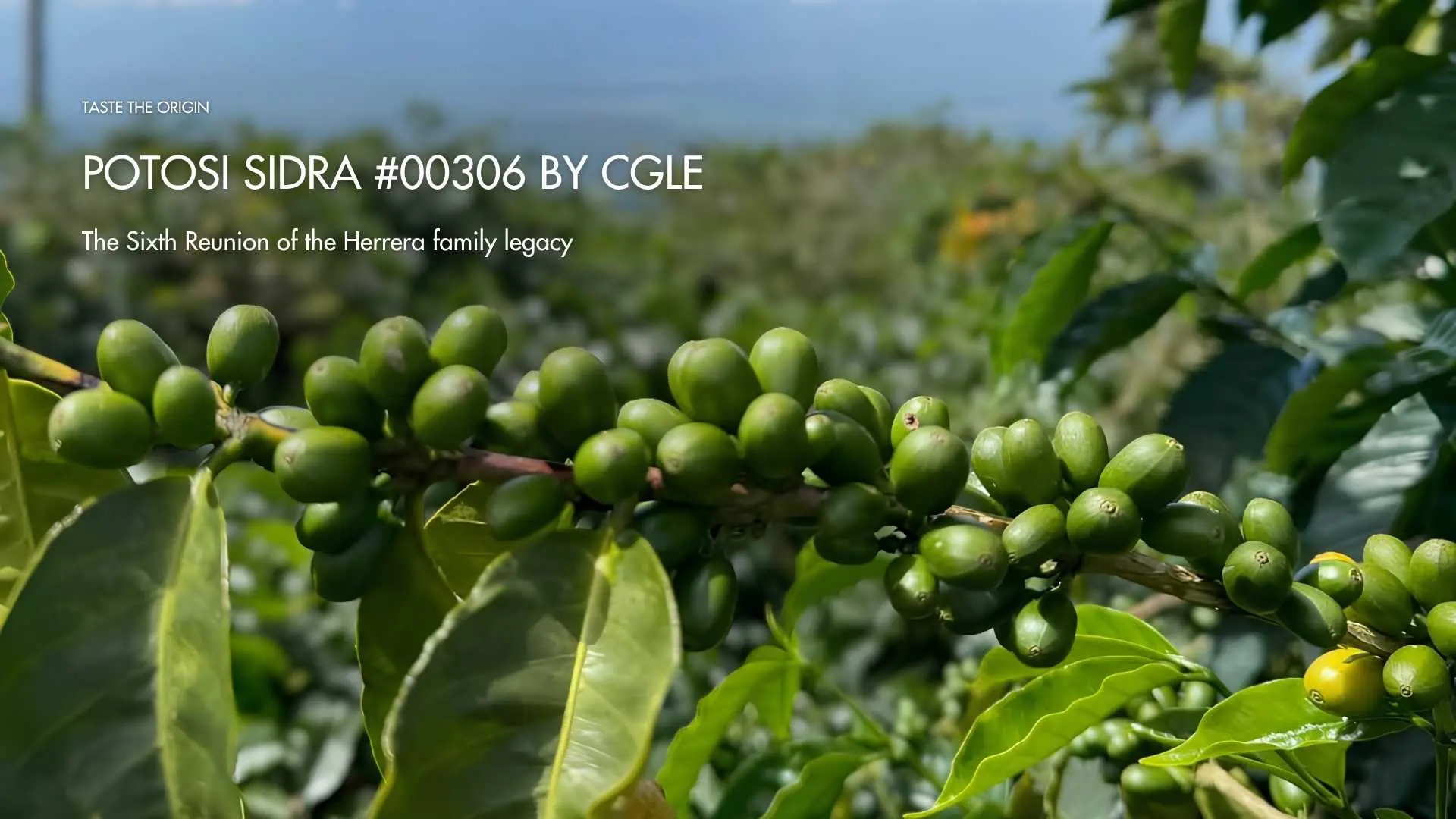
Potosi Sidra #00306 – The sixth reunion of the Herrera family legacy
The sixth harvest marks the return of Potosi Sidra #00306 by CGLE, carrying the presence of a family patriarch entrusted with more than eighty years of heritage from the Herrera family. Cultivated in the founding valley of Potosi since 1945 in Caicedonia, this genetic treasure born from the union of Bourbon and Typica presents a remarkably evolved sensory profile. Through its Extremely Light Roast philosophy and the financial transparency of the Paid for Producer model, XLIII Coffee chooses to preserve the authentic voice of terroir and the coffee’s original flavor structure.
- Taste the Origin
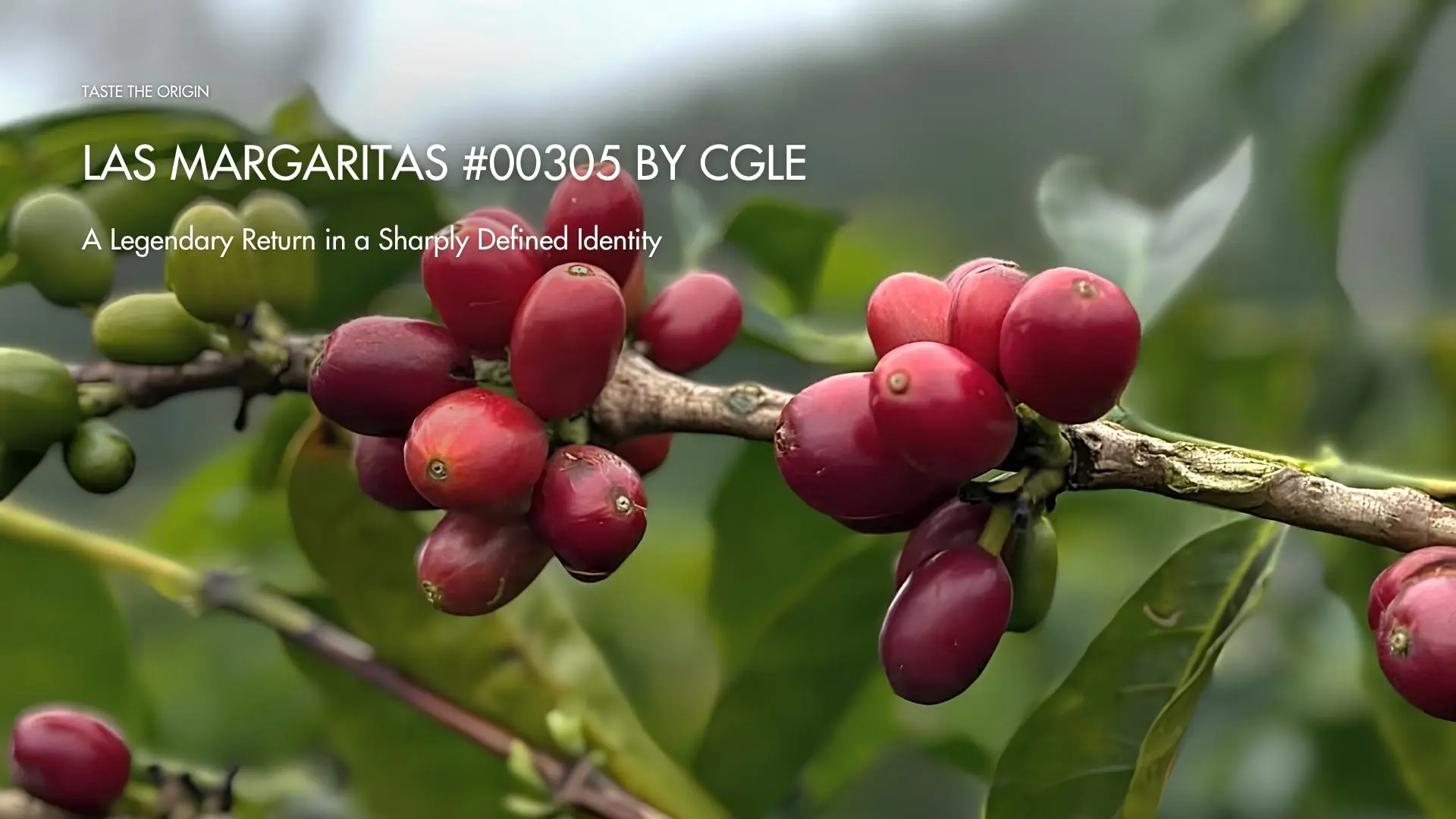
Las Margaritas #00305 by CGLE – A Legend Reunited in a Sharper Identity
Las Margaritas #00305 by CGLE returns to XLIII Coffee as a Gesha masterpiece reborn from the renowned Valle del Cauca region. Infused with the exquisite craftsmanship of Café Granja La Esperanza, this rare batch of coffee embarks on an enchanting flavor journey with vibrant citrus notes, delicate jasmine, and an elegant, lingering Earl Grey finish. Each drop is a crystallization of fertile volcanic soil and the sustainable farming philosophy that CGLE has persistently pursued for decades, creating a full-bodied, sharp flavor profile while retaining the pristine beauty characteristic of the royal Gesha variety.

- Taste the Origin
Finca Rosenheim Typica & Caturra – The Crossroads of Cultural Currents
Across the tides of world history, Finca Rosenheim Typica & Caturra emerges as a living testament hidden within the vast wilderness of Villa Rica. Here, the ancient lineage of the legendary Typica variety converges with the purity of the Washed process and the artistry of shade grown cultivation, weaving together delicate layers of Milk Chocolate, Nougat, and Purple Floral. Together, they create a profound resonance between resilient European heritage and the soul of the native Andes.

Specialty Coffee in Vietnam
BRAND VALUE
YOU SHOULD HAVE KNOWN
XLIII Coffee has been aiming to become a big, impactful company with social responsibilities,
have access to high-quality raw materials and convey the complete original values of coffee to our customer
