
How do East African farmers address PTD in coffee flavor?
East African coffee is famous for its layers of fruity and milk chocolate flavors that specialty coffee enthusiasts absolutely love. However, the coffee lots here also encountered PTD in coffee flavor. This is an uncommon error but still affects the user experience and farmers’ livelihoods. What is PTD? How have East African Farmers addressed this shortcoming? Let’s find out with XLIII Coffee!
What is PTD in coffee flavor?
PTD (potato taste defect) is also known as potato taste defect of coffee. As the name suggests, this defect causes a cup of coffee to taste like raw potatoes. Usually they appear in coffee lots from Rwanda, Burundi, Congo, Western Uganda.
PTD defects are caused by a chemical called 2-Isopropyl 3-methoxy pyrazine (IPMP). However, the cause originates from the beetle Antestiopsis orbitalis. It is a type of shield beetle that can be found in many regions of the world, including in Pakistan, India and Sri Lanka. However, the antestia bug that causes PTD is mainly found in the Great Lakes region of Africa. The adult beetle is about 6 to 8mm long, shield-shaped, dark brown mixed with orange and white patches. They often hide in fruit bunches or flowers, making holes in the fruit, allowing bacteria to enter, creating pyrazine, which causes the smell of raw potatoes.

PTD defects in coffee flavor severely affect East African farmers
Coffee from the East African region possesses incredibly rich, diverse flavors and can score 90 SCA points or more. But when faced with potato defects, the coffee scores dropped and did not meet standards, causing great losses to manufacturers. Ruth Ann Church – President and founder of Artisan Coffee Imports said that at the 2013 Cup of Excellence (CoE) events, up to 62% of Baristas from Burundi and 51% of Rwandan Baristas had to withdraw from the competition because of coffee. have PTD.
PTD also hinders the development of the coffee industry in some East African countries. Research has shown that just one additional antestia beetle per tree can increase the risk of PTD occurring by up to 73%. It is estimated that having 15 antestia beetles per tree can cause a yield decrease of 30% – 38%.
For the specialty coffee industry, this defect has caused serious losses to farmers in areas affected by PTD. They not only cause farms with antestia worms to reduce output and quality, but also cause other farms in the area to lose sales and reputation.

How to prevent PTD defects in coffee flavor?
Experts have proposed many and conducted many studies, but until now no solution has been proven to completely eliminate this defect. However, manufacturers can cooperate to minimize risks. According to the President of Artisan Coffee Imports – a green coffee trading company headquartered in Michigan, USA that specializes in supplying Rwandan and Ethiopian coffee, manufacturers should have a more comprehensive process to check PTD from cultivation to Processing. Besides, they can create a flavor guarantee policy for roasters. In particular, the contract should include an agreement on quality control and taste defects between the parties.
Roasters should grind coffee in small batches and not use these coffees for concentrated drinks like espresso or AeroPress. If coffee is discovered to have PTD, the roaster must filter and clean the grinder carefully.
In addition, to reduce PTD, the coffee industry should invest and support coffee production in this area. When receiving many sources of capital, farmers can focus on improving and developing their farms, thereby completely preventing PTD.
PTD errors in coffee cause coffee to lose its delicious flavor, but avoiding using coffee from these countries will be a great disadvantage to farmers who are trying to grow high-quality coffee. Besides, potato-flavored coffee is not common. Therefore, we need more support to support these farmers in developing their coffee.

If you want to enjoy specialty coffee in East African countries without worrying about PTD errors, stop by XLIII Coffee to experience Gisheke #21132, Vunga #21135 from Rwanda or Nyagishiru #1552 from Burundi!
Don’t forget to follow XLIII Coffee’s journal channel to read lots of useful information.
Articles you may be interested in:
– SCA Barista’s new 2024 SCA Skills Diploma System should know
– Decaf – Secrets about the world of decaffeination you should know
– The 5th World Coffee Conference is extremely large with an exhibition area of 8000 square meters

Bài viết mới
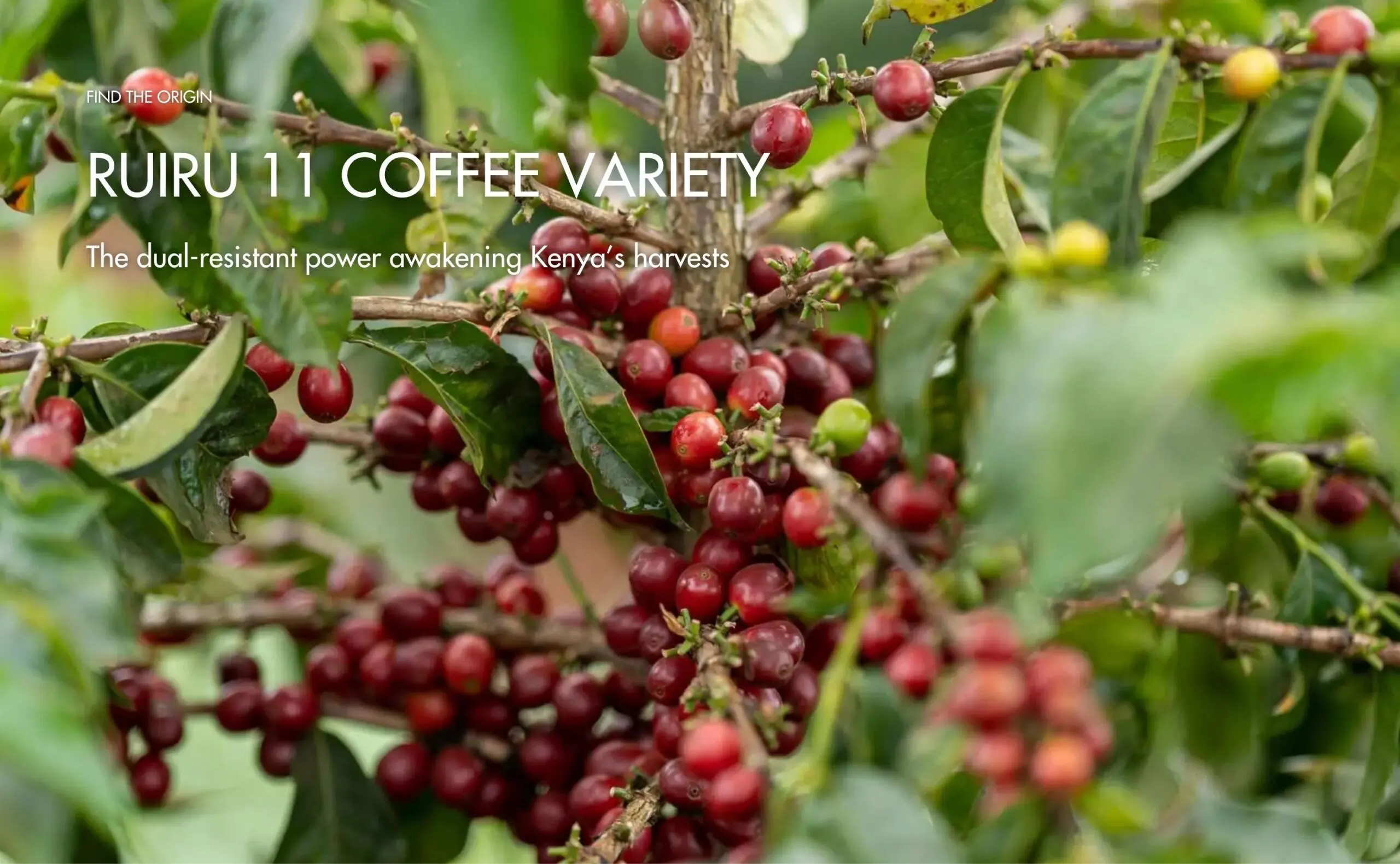
- Find the Origin
Ruiru 11 coffee variety – The dual-resistant power awakening Kenya’s harvests
Born from the ashes of a devastating pandemic, Ruiru 11 is a resilient response of indigenous wisdom to the trials of nature. Carrying a complex genetic code from 66 sibling isolines, this humbly statured coffee variety possesses superb “dual-resistance” against the twin shadows of Coffee Berry Disease and Coffee Leaf Rust. Overcoming early prejudices and the paradox of trade-offs between yield and flavor, Ruiru 11 has been weaving through nurseries, awakening dormant harvests across highland hillsides, and igniting a proud flame of self-reliance for Kenyan coffee.

- Taste the Origin
Sudan Rume #00313 by CGLE – The origin legend beneath the Eucalyptus canopy
From a wild coffee lineage discovered in the Rume Mountains in the 1940s to the enduring conservation efforts of Café Granja La Esperanza, Sudan Rume #00313 by CGLE invites drinkers on a sensory pilgrimage to the birthplace of the Arabica world. It is a rare biological legacy preserved through unwavering dedication, integrity, and deep reverence for history.
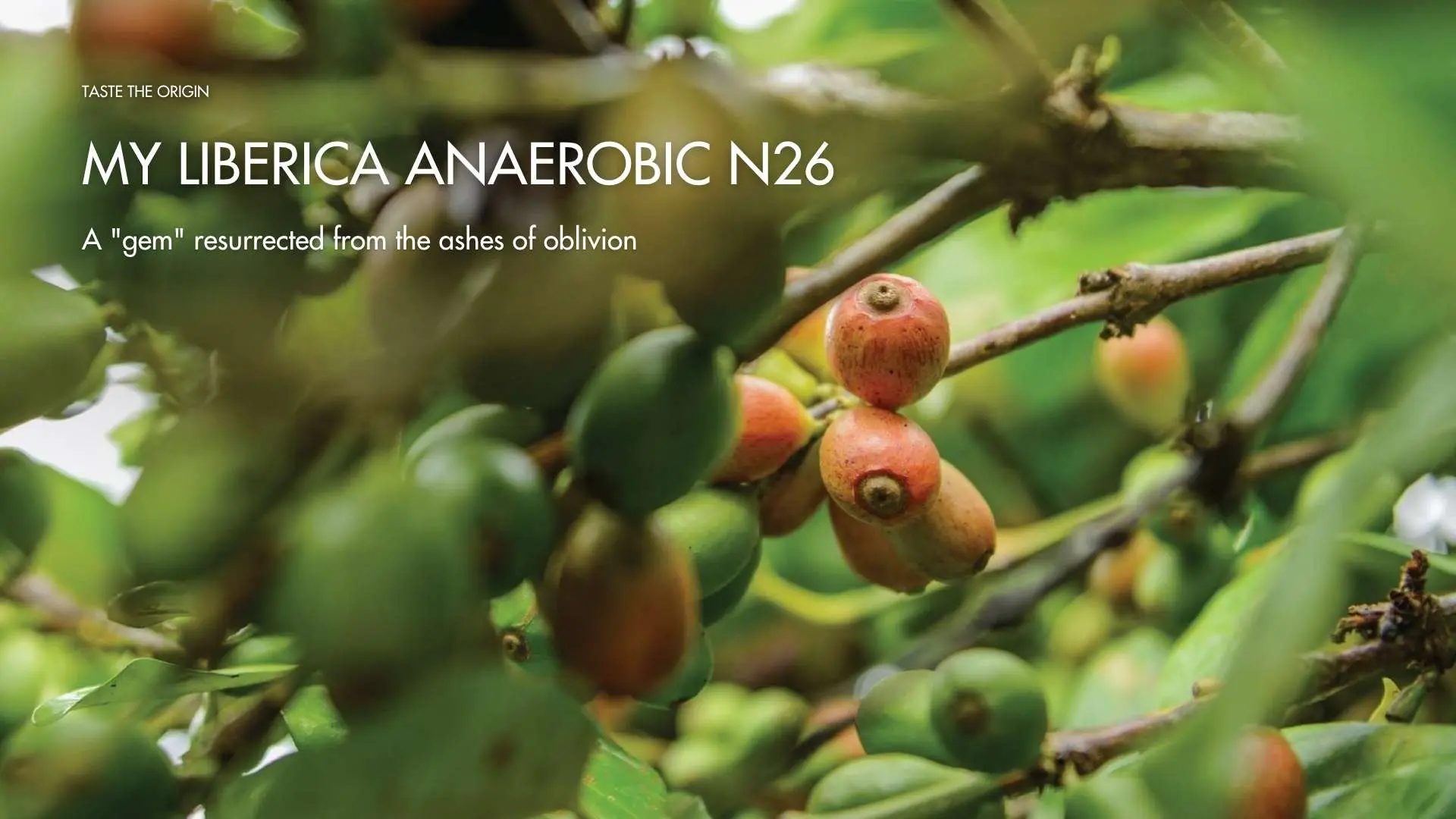
- Taste the Origin
My Liberica Anaerobic N26 – A “gem” resurrected from the ashes of oblivion
The journey of My Liberica Anaerobic N26 is the triumph of a forgotten species, awakened by the depth of understanding, patience, and faith in its original essence. From the heavy clay layers of Kulai to 26 days of transformation in absolute darkness, each step contributes to unlocking layers of flavor that the world once thought could not exist in Liberica. More than just a cup of coffee, My Liberica Anaerobic N26 is a powerful declaration that all great values begin with the courage to delve into their essence, and then rise to a unique voice that resonates throughout the world.


- Taste the Origin
Finca Soledad Mejorado Tyoxy & Fincas Putushio Mejorado – The red thread of the Jijón family
The simultaneous arrival of Finca Soledad Mejorado Tyoxy and Fincas Putushio Mejorado at XLIII Coffee paints a remarkable portrait of the adaptability of the Mejorado variety within Ecuador’s specialty coffee landscape. Nurtured by a shared family philosophy and a commitment to principled cultivation, these two processed lots represent both a breakthrough in microbial innovation and the remarkable return of an exceptional flavor profile.

- Taste the Origin
Finca La Palestina Gesha #5482 – A new chapter in the legend from Cajamarca
From the renowned Cajamarca region, Finca La Palestina Gesha #5482 returns after a period of absence with a proud and fresh appearance. Nurtured in ideal altitude conditions and the cool climate characteristic of the Andes, each coffee bean slowly accumulates subtle flavor nuances before being perfected using the Washed method to maximize the purity of the Gesha variety. Under a carefully refined extremely-light roast profile, this batch of coffee reveals layers of white jasmine, ripe citrus, and sweet golden apricot aromas, interwoven in an elegant and rich flavor structure.

Specialty Coffee in Vietnam
BRAND VALUE
YOU SHOULD HAVE KNOWN
XLIII Coffee has been aiming to become a big, impactful company with social responsibilities,
have access to high-quality raw materials and convey the complete original values of coffee to our customer
