
Maragogipe Coffee: The “Elephant Bean” Marvel of Nature and Science
Maragogipe – a remarkable coffee variety dubbed “elephant beans” due to its massive size, twice that of regular Arabica beans. Beyond its impressive dimensions, this variety carries a fascinating scientific story and has become an icon of uniqueness in the specialty coffee industry. Let’s explore this extraordinary coffee!
I. Origins and Genetics of Maragogipe Coffee
In 1870, in the small town of Maragogipe in Bahia state, Brazil, an unexpected discovery changed coffee history forever. Researchers from World Coffee Research confirm this as the birthplace where this exceptional coffee variety was first discovered.
Maragogipe emerged as a natural mutation from the Typica variety – one of the two foundational genetic lineages of Coffea arabica. Interestingly, this coffee variety takes its name from the very city where it was discovered, reflecting its deep connection to Brazilian soil.
The story of coffee’s arrival in Brazil involves Francisco de Mello Palheta, a historical figure who cleverly obtained coffee seeds from French Guiana through a romantic liaison with the governor’s wife. These seeds were later planted in Bahia, laying the foundation for Maragogipe’s emergence.
Advanced Genetic Knowledge
Full scientific name: Coffea arabica L. var. maragogipe A. Fern. Ex A. Frohner
The most remarkable genetic characteristic of Maragogipe is that it’s created by a single dominant gene. This gene doesn’t just affect bean size but impacts the entire plant structure – from leaves and branches to the coffee cherries themselves.
| Genetic Characteristic | Detailed Description |
| Mutation type | Natural mutation from Typica |
| Genetic mechanism | Single dominant gene |
| Morphological impact | Increases size of all plant parts |
| Heritability | Stably transmitted across generations |
Maragogipe serves as the “parent” of two famous hybrid varieties:
- Pacamara = Pacas × Maragogipe (developed in El Salvador)
- Maracaturra = Maragogipe × Caturra (developed in Nicaragua)
The 2020 Coffea arabica genome study using Red Bourbon provided deep insights into Arabica’s complex genetic structure, helping us better understand the mutation mechanisms that created Maragogipe.

From a scientific perspective, Maragogipe demonstrates the power of natural mutation in creating biodiversity. The fact that a single gene can produce such dramatic morphological changes reveals the complexity and sophistication of plant genetics. This has significance not only scientifically but also opens potential applications in breeding and developing new coffee varieties. (Photo collected from Perfect Daily Grind)
II. Biological Characteristics and Morphology
To understand Maragogipe’s uniqueness, we need to examine the biological and morphological characteristics that create this coffee’s distinctive signature.
Outstanding Morphological Features
The enormous size is the first and most obvious identifying feature:
- Coffee beans: Twice the size of regular Arabica, averaging 11.69mm × 7.25mm
- Plant leaves: Unusually large with wide internode spacing
- Young leaves: Characteristic bronze tips when immature
- Coffee cherries: Plum-sized, containing high natural sugars
The bean structure has one important characteristic: porous consistency. This creates special challenges during roasting, as uneven heat penetration can cause inconsistent roasting.
Notable agricultural characteristics:
- Thrives at elevations above 1,000m, optimal at 1,500-2,500m
- Tall trees with wide canopies, requiring minimum 2.4m planting distance
- Better cold climate adaptation than many other Arabica varieties


Production Challenges and Disease Resistance
Serious yield limitations:
Maragogipe produces 25-32% less than conventional coffee varieties. This isn’t just an economic issue but the primary reason many farmers switch to other varieties like Mundo Novo or Catuai.
High disease susceptibility:
| Disease Type | Susceptibility Level | Impact |
|---|---|---|
| Coffee Leaf Rust (la roya) | Very high | Destroys leaves, reduces photosynthesis |
| Coffee Berry Disease (CBD) | High | Directly affects cherries |
| Nematodes (Meloidogyne spp.) | High | Attacks roots, kills trees |
| Coffee Berry Borer | Medium-high | Damages coffee beans |
Special cultivation requirements:
Ideal soil must be mineral-rich alluvial soil, especially volcanic soil containing potassium, magnesium, and phosphorus. These minerals not only nourish the plant but directly influence the final flavor.
Harvesting must be done entirely by hand due to uneven ripening. This significantly increases labor costs but ensures quality of harvested beans.
These biological challenges explain why Maragogipe has become one of the world’s rarest coffee varieties. However, these very difficulties create special value – when properly cultivated, Maragogipe delivers taste experiences unavailable in any other coffee variety.

(Photo collected from Perfect Daily Grind, Roastmaster, kahiwacoffee)
III. Unique Flavor Profile and Market Position in Specialty Coffee
After exploring the complex biological characteristics, we come to the most exciting part: Maragogipe’s unique flavor profile and special position in the global specialty coffee market.
Sensory Characteristics by Terroir
Maragogipe possesses a very distinctive sensory profile, completely different from conventional Arabica varieties:
- Body: Full and smooth with a syrupy mouthfeel
- Acidity: Perfectly balanced, neither harsh nor astringent
- Sweetness: Prominent natural sweetness from high sugar content
- Finish: Long-lasting and complex with multiple flavor layers
The magic of Maragogipe lies in its excellent terroir expression:
| Growing Region | Flavor Characteristics | Cupping Score |
|---|---|---|
| Nicaragua | Butterscotch sweetness, wildflower honey, light vanilla | 85-88 |
| Hawaii (Ka’u) | Ripe peach, bergamot, wild honey | 90-94 |
| Guatemala | Roasted almonds, dark chocolate, jasmine finish | 86-89 |
| Colombia | Sweet peach, milk chocolate, acid-sweet balance | 87-90 |
Maragogipe from Hawaii’s Ka’u region is particularly renowned with cupping scores above 90, rated by Coffee Review as having “rich, deep, and confident flavors with wild honey and sweet nut aromas.”
Most Maragogipe undergoes washed processing, creating clean and pure flavors. When natural processing is applied, sweetness and fruit flavors are significantly amplified through natural fermentation in the large coffee cherries.


(Photo belongs to XLIII Coffee and collected from Perfect Daily Grind, Big Island Coffee)
Market Position and Future
Maragogipe belongs to the “ultra-premium” segment in specialty coffee with these characteristics:
- Limited production: Only a few specialized farms worldwide
- High prices: 2-3 times regular specialty coffee prices
- Growing demand: Particularly strong in North American, European, and Japanese markets
According to Perfect Daily Grind research, there’s significant increasing demand for “large bean” coffee varieties in the specialty coffee community. This isn’t just due to aesthetics but the belief that larger beans = more complex flavors.
Mauricio Salvaverra from Divisadero Coffee (El Salvador) shares: “Maragogipe has similar bean size and cup quality to Pacamara, but high production costs and low farmer interest keep market prices elevated.“
Brandon von Damitz from Big Island Coffee Roasters emphasizes: “Fortunately, this coffee thrives in Hawaii, where we can experiment with different growing regions and processing methods to create even more diverse sensory experiences.“
Brazil’s Instituto Agronômico de Campinas (IAC) is developing special methods to increase Maragogipe yields through:
- Preserving Red and Yellow Maragogipe genetic lines in germplasm banks
- Research on optimal planting distances, nutrition, and pest management
- Developing hybrid varieties combining Maragogipe advantages with high yields
Maragogipe represents the “quality over quantity” philosophy in an era where specialty coffee increasingly becomes an art form. Its natural scarcity isn’t a weakness but a strength – creating a unique experience that only true coffee connoisseurs can properly appreciate.
Conclusion
In an increasingly homogenized coffee world, Maragogipe exists as a reminder that the greatest things often come from patience and passion. Perhaps this very rarity – that not everything can be mass-produced, not every flavor can be replicated – is what creates the true value of specialty coffee.
IV. Frequently Asked Questions
1. Why is Maragogipe called “elephant beans”?
Maragogipe is dubbed “elephant beans” due to its enormous size – twice that of regular Arabica with an average size of 11.69mm × 7.25mm. This name also reflects the rarity and uniqueness of this coffee variety.
2. Is Maragogipe more expensive than regular coffee?
Yes, Maragogipe typically costs 2-3 times more than regular specialty coffee due to low yields (only 68-75% of other varieties), difficult cultivation, and limited global production.
3. How should I brew Maragogipe for the best flavor?
Best brewed using pour-over, Chemex, AeroPress, or French Press with a 1:15-1:18 ratio, water temperature 93-95°C (199-203°F). Avoid espresso as it may diminish the characteristic floral notes. Don’t add milk to preserve natural sweetness.
4. How does Maragogipe differ from Pacamara?
Pacamara is a hybrid of Maragogipe × Pacas, developed in El Salvador. Pacamara inherits large size from Maragogipe but has higher yields and cup quality often rated higher (typically achieving 90+ points).
5. Is Maragogipe suitable for espresso?
Not recommended. Large size creates grinding difficulties, and high-pressure extraction diminishes delicate floral notes. Best used for gentle brewing methods to honor natural flavor layers.
6. Why don’t more farmers grow Maragogipe despite high prices?
Due to 25-32% lower yields, high susceptibility to coffee leaf rust and other diseases, special care requirements, and completely manual harvesting. High production costs and risks lead many farmers to choose other varieties.

Bài viết mới

- Find the Origin
Mandela coffee variety – A convergence of generations from a masterpiece breeding strategy
Amidst the constant fluctuations of the era, Mandela emerges as a gentle yet resilient response from the soil. Instead of attempting to alter or impose upon nature, this breeding strategy is, in essence, a profound act of listening. Each Mandela coffee bean carries the bloodline of multiple generations, possessing both the serene, steadfast nature of native trees and the sparkling elegance of premium varieties. It is a sacred continuation, where the flow of generations ultimate honors the original value of the species, imparting an intact and sustainable vitality into every cup.


- Taste the Origin
Nigussie Nare – Murago Outgrowers #03028: Cultivated from the Values of Sustainable Reciprocity
Nestled beneath the shade trees of Sidama, Bensa, the Nigussie Nare – Murago Outgrowers #03028 coffee lot serves as a living testament to the values of sustainable reciprocity. This symbiosis begins with the intimate bond between a rich indigenous ecosystem and the smallholder farmers of the Murago region. Each harvested bean is the culmination of a virtuous cycle: a stable environment produces exceptional bean quality, and sustainable economic growth, in turn, continues to protect the verdant canopy of the great forest.

- Taste the Origin
Rift Valley Coffee Caucus #03757 – A Testament to Western Kenya’s Collective Spirit
Turning our gaze to the Great Rift Valley of East Africa, the fertile volcanic landscapes are witnessing an inspiring transformation. Moving away from fierce, survival-driven competition, smallholder farmers in Western Kenya have chosen to join forces, forging a resilient and unified network. The Rift Valley Coffee Caucus #03757 lot stands as the ultimate testament to this remarkable collective synergy.

- Breaking News
Airworks Coffee & XLIII Coffee – A “handshake” that brings original flavors across borders
XLIII Coffee, alongside our key wholesale partner Airworks Coffee, officially announces the latest release of specialty coffee lots for the North American market. This event reaffirms our commitment to bringing original flavors across all geographical barriers to coffee enthusiasts.
Early access (for Subscribers of Airworks): 10:00 AM (PST) | Wednesday, April 29, 2026
General access: 10:00 AM (PST) | Friday, May 1, 2026
We invite our Customers and Partners to visit (airworkscoffee.com) for detailed information and to prepare for this special release!
- Taste the Origin
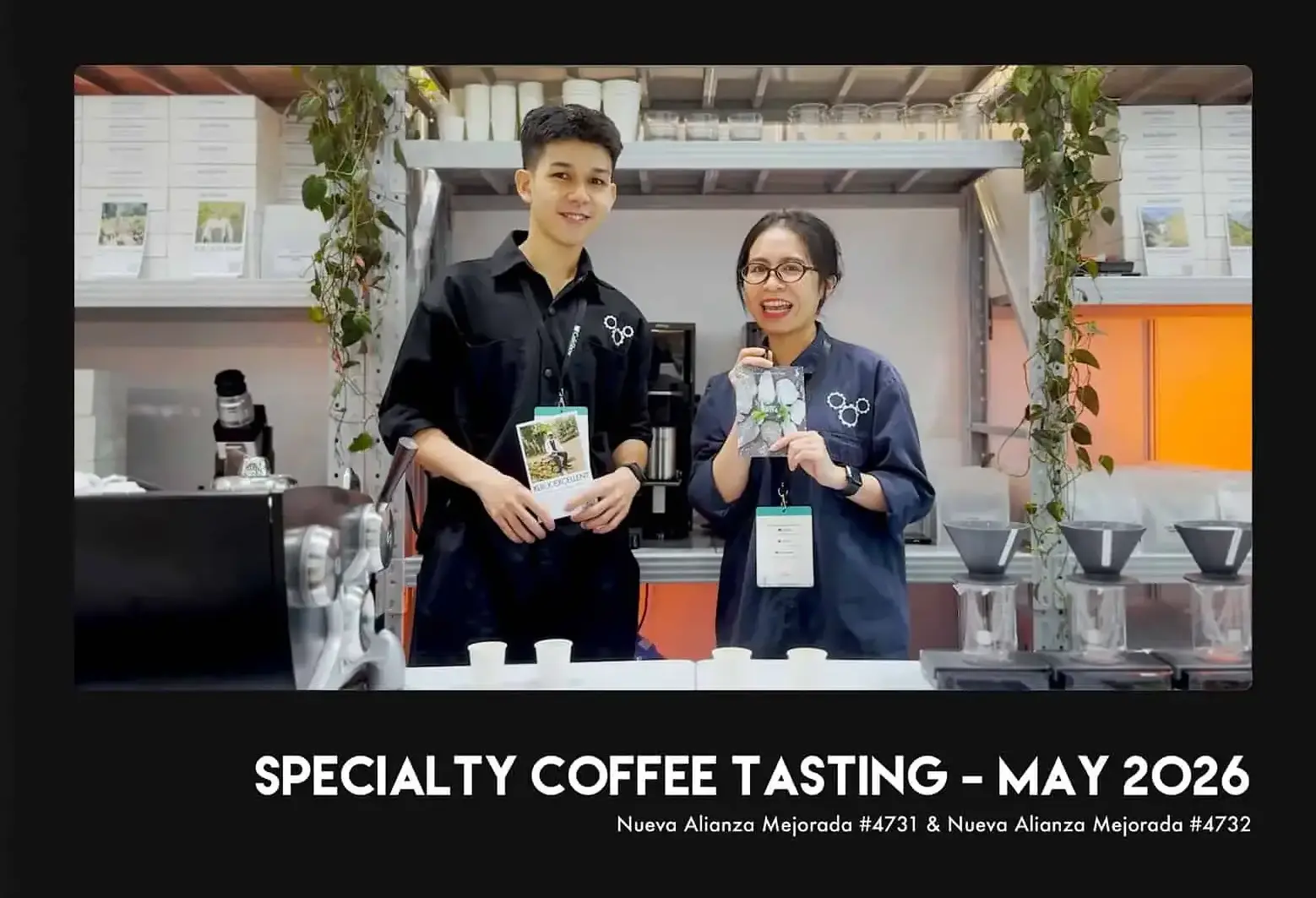
Unveiling May Discovery Subscription: Nueva Alianza Mejorada #4731 & Nueva Alianza Mejorada #4732
The Discovery Subscription is a silent dialogue, a place where the soul of the connoisseur finds a harmonious beat with distant lands. Like a transparent lens, we become storytellers, meticulously peeling back layers of cultural sediment, the breath of the soil, and the human philosophies hidden within every coffee bean.
May arrives with brilliant streaks of golden sunlight, a time when we long to hide beneath the lush, dew-drenched canopies of Santa Teresa. Amidst the silence of the Andes, when compassion touches Mother Earth, what will we hear? Perhaps it is a sweet response that nature reserves solely for souls who know how to wait patiently.

Specialty Coffee in Vietnam
BRAND VALUE
YOU SHOULD HAVE KNOWN
XLIII Coffee has been aiming to become a big, impactful company with social responsibilities,
have access to high-quality raw materials and convey the complete original values of coffee to our customer
