
Mozambique Coffee Regions: The Cradle of the World’s Rarest Coffee Species
Nestled in the sun-drenched landscapes of Africa, Mozambique is renowned for its pristine nature and coffee farms of exceptional value. With a tropical climate, fertile soils, and ideal elevations, it has become the cradle for some of the world’s rarest coffee species, most notably Coffea racemosa
I. Introduction to Mozambique Coffee Regions
When looking at the world’s coffee map, Mozambique appears like a “new storyteller” just joining the conversation. Located on the southeastern coast of Africa, the country is not only known for its long coastline and pristine nature but also for its highlands and lush green mountains, where coffee trees are quietly taking root and unfolding their own unique narrative.
Geographical Features
Mozambique’s coffee regions form a diverse geographical mosaic, stretching from the central highlands to the northern coastal islands.
In the central region, Gorongosa (Sofala Province) and the Chimanimani Mountains (Manica Province) are considered the heartlands of Arabica coffee. With altitudes ranging from 650 to over 1,200 meters above sea level, these elevations create a cool climate that allows coffee cherries to ripen slowly, producing more complex flavors. The soil here is primarily rich red basalt and volcanic alluvium – fertile, well-draining, and mineral-rich. These characteristics enable coffee roots to penetrate deeply, absorb nutrients effectively, and develop beans with higher density and balanced structure.
Further north, in Cabo Delgado Province and especially the Quirimbas Archipelago with Ibo Island at its center, lie the origins of rare indigenous coffee varieties. Unlike the central highlands, the soils here are mostly coastal sands mixed with coral sediments – nutrient-poor yet perfectly suited to Coffea zanguebariae, an indigenous species with remarkable drought tolerance and pest resistance. This harsh soil environment has given rise to a naturally low-caffeine coffee with a refined, delicate flavor unlike any other.


Image credits: Matt Jordan, Global Coffee Report
Climatic Features
Mozambique has a tropical monsoon climate, yet conditions in the highlands are noticeably milder. Average temperatures range from 18-24 °C, with annual rainfall of 1,000-1,500 mm, and distinct diurnal variations – all of which create an ideal rhythm for coffee cultivation. The rainy season from November to March nurtures strong plant growth, while the dry season from April onward aligns with the harvest, making post-harvest drying easier. As a result, Mozambican coffees often retain clarity in the cup and balanced flavors.
Still, the climate also poses challenges. Tropical cyclones along the coast can severely damage crops. To mitigate this, coffee is often grown under forest shade, which not only enhances bean quality but also acts as a natural shield, protecting farms from strong winds, erosion, and intense sunlight.
From the highlands to the coast, from Coffea arabica in Gorongosa’s mountains to Coffea zanguebariae on Quirimbas Island, Mozambican coffee is slowly revealing its distinct identity. Fertile volcanic soils, ideal elevations, and a balanced climate are steadily affirming the country as a “new cradle” of African coffee. From here, the journey of Mozambican coffee begins – carrying with it the story of nature, people, and the aspiration to reach the world.
II. A Glimpse into the History of Coffee in Mozambique
Mozambique’s coffee sector reflects the fate of the nation itself: a modest beginning under colonial rule, a collapse during years of conflict, and today, a rebirth grounded in the unique character of its growing regions.
Colonial Era – Coffee as an Export Crop (Late 19th Century – 1975)

When Portugal expanded its control over East Africa, coffee was introduced to Mozambique as part of a plantation-based agricultural network. Arabica was trialed in the central highlands (Manica, Sofala), while Robusta proved better suited to the hot, humid coastal conditions.
Production was concentrated on large estates managed by Portuguese colonists, relying on local farmers as laborers. However, due to limited investment in varieties, techniques, and processing infrastructure, Mozambique’s yields could not compete with African powerhouses like Ethiopia or Kenya. As a result, Mozambican coffee remained marginal on Portugal’s export map.
Image credit: gov.br
Independence and Civil War Era – A Prolonged Disruption (1975 – 1992)
Mozambique gained independence in 1975, but its coffee industry quickly collapsed. Large estates were abandoned or nationalized, and with little capital, technical expertise, or infrastructure, coffee trees were neglected. Nearly two decades of civil war devastated rural areas: farms were destroyed, farmers displaced, and production systems dismantled. During this time, Mozambican coffee “disappeared” from international trade, leaving a long void in the country’s agricultural history.
Recovery and Renewal Era – Coffee Tied to Conservation (1992 – Present)
Peace ushered in new opportunities. Instead of restoring large-scale estates, Mozambique chose a different path: sustainable and specialty coffee.

The most notable example is the Gorongosa Project, where Arabica is cultivated under forest canopy as a dual-purpose solution – restoring ecosystems while generating income for local farmers.
Image credit: Piotr Naskrecki
Government initiatives and international support programs (AICS, Omwani, USAID) have focused on technical training, cooperative building, and processing improvements, laying the groundwork for a new generation of Mozambican coffee. Though still small in scale, production increasingly meets specialty standards. This era has also seen the rediscovery of Coffea racemosa, a once-forgotten indigenous species, whose scientific and commercial value is now being recognized.
Currently, Mozambique has only one remaining commercial-scale producer of Racemosa coffee, Miyosi Farm, located in Chelene, Manica Province, in central Mozambique. In addition, Calane Coffee in Namaasha, southern Mozambique, is the only producer still maintaining the cultivation of Canephora (Robusta) coffee in the country.
III. Coffee-Growing Regions in Mozambique

Mozambique is home to unique coffee-growing regions: Arabica thrives in the Gorongosa highlands and the Chimanimani mountains, while Coffea zanguebariae is closely associated with the Quirimbas Archipelago.
Image credit: Omwani Coffee Co.
If history has given Mozambican coffee a distinctive foundation, geography has endowed it with remarkable flavor diversity. From the cool central highlands to the character-rich northern coast, each growing region offers unique conditions of soil, climate, and ecology.
|
Gorongosa |
Chimanimani |
Cabo Delgado & Quirimbas |
Other provinces (Niassa, Zambézia, Nampula) |
|
|
Geographic location |
Located inside and around Gorongosa National Park, central Mozambique |
Borders Zimbabwe, part of the Chimanimani mountain range |
Northern Mozambique, along the Indian Ocean coast and Quirimbas islands |
Northern and central Mozambique |
|
Topography |
Highlands, elevation 1,000-1,200 m; basaltic and alluvial soils, fertile and rich in minerals |
Mountains, elevation 1,200-1,800 m; granite and basalt soils |
Coastal plains, elevation 20-600 m; sandy soils |
Highlands, elevation 800-1,200 m; ferralsol and alluvial soils |
|
Climate |
Tropical climate with moderate rainfall, annual average 1,200-1,500 mm; cool nights |
Mild mountain climate, annual rainfall ~1,500 mm; cooler temperatures due to higher altitude |
Hot tropical climate, annual rainfall ~800-1,000 mm; long dry season |
Tropical climate with moderate rainfall, 1,000-1,400 mm/year |
|
Species/ Varieties |
Arabica (SL28, Bourbon) |
Coffea zanguabariae |
Arabica (mainly Catimor, Caturra) |
|
|
Flavor profile |
A bright acidity, clean sweetness, notes of citrus and tropical fruits, comparable to Central America |
Full-bodied, floral and fruity, complex acidity, similar to Kenya/ Zimbabwea specialty coffees |
Distinctively rare, light body, low caffeine, delicate sweetness; Robusta here offers local earthy tones |
Arabica: mild, balanced, nutty. |
It is precisely this diversity of landscapes and climates that has shaped Mozambique’s coffee flavor profiles, from the bright, clean notes of highland Arabica to the indigenous uniqueness of coastal Coffea zanguebariae. Together, they form the basis for Mozambique to carve out its own identity within the global specialty coffee movement.
IV. Coffee Production Process in Mozambique
Coffee production in Mozambique presents two parallel faces: on one hand, Arabica cultivation in the highlands following specialty coffee standards; on the other, local traditions of cultivating and processing rare species like Coffea racemosa.
1. Cultivating
In regions like Gorongosa and Chimanimani, Arabica is grown using agroforestry systems. Instead of monocropping, farmers intercrop coffee under forest canopy alongside bananas, pineapples, or native shade trees. This approach helps to:
-
Maintain soil moisture and moderate extreme temperatures.
-
Enrich soils with organic matter from leaf litter.
-
Preserve topsoil and reduce erosion during the rainy season.
At elevations between 650-1,200 meters, cherries ripen slowly, beans grow dense, and quality improves – an essential foundation for specialty-grade coffee.
2. Harvesting
In Mozambique, coffee is harvested manually, with farmers selectively picking ripe red cherries to ensure uniformity. Though labor-intensive, this method preserves bean quality and provides employment in local communities.

The harvest season usually takes place from April to September for Arabica coffee, and from November to March of the following year for Racemosa.
Image credit: Omwani Coffee Co.
3. Processing
In Gorongosa, many processing stations have been established to process Arabica using different methods:
-
Washed: clean, bright cups with clear acidity.
-
Natural: fruit-forward, sweeter flavors.
- Honey and experimental anaerobic fermentations: enhance complexity, suited for the specialty market.
This marks a major improvement, as Mozambican coffee was historically exported raw with little or no processing.
In coastal regions, however, Coffea racemosa is still mainly harvested on a small scale and sun-dried naturally on the ground or on bamboo mats. Though rudimentary, this practice reflects an age-old local heritage and preserves the raw character of this rare species.


Image credit: Gorongosa National Park
4. Post-Harvest Processing and Export
After primary processing, coffee is sent to dry mills, where parchment layers are removed and beans are graded by size and weight. Lots scoring above 80 points on the cupping scale are classified as specialty-grade for export.
Some coffee is also roasted domestically, serving a growing local market and ensuring that more value remains within Mozambique.
V. Challenges and Prospects of Mozambique’s Coffee Industry
As a young coffee industry, Mozambique faces significant hurdles, yet international attention, local heritage, and global trends toward specialty coffee offer promising opportunities.
About challenges,
Despite its vast potential, the path of Mozambique’s coffee industry is far from smooth. The sector continues to face numerous barriers, from natural conditions to infrastructure and market limitations. These challenges are not only tests of resilience but also forces that shape how Mozambican coffee carves out its place in the world.
-
Climate & Natural disasters: Mozambique is among Africa’s most climate-vulnerable nations. Extended droughts, floods, and rising temperatures threaten both yield and quality, especially for Arabica in cooler regions.
-
Weak infrastructure: Most coffee regions lie in remote mountains and forests with poor roads, limited logistics, and insufficient storage/export facilities, making it hard to maintain quality and competitiveness.
-
Small-scale farming: Over 90% of coffee farmers are smallholders with only a few hectares each. With limited capital and technical knowledge, they depend heavily on development projects, resulting in low yields and limited national branding capacity.
-
Weak market & Branding: Mozambican coffee lacks a strong identity abroad. Most exports rely on international projects, with little independent trade or certification systems.

Image credit: Gorongosa National Park
About prospects,
Alongside its challenges, Mozambique is also opening up to new opportunities. From the attention of the international community and integration policies to the global specialty coffee trend, all of these are building a promising foundation for Mozambican coffee to step into the spotlight.
-
Strong international support: Agencies and companies such as AICS, Nespresso, and Illycaffè are investing in Mozambique, not only helping build infrastructure but also opening access to global markets.
-
Joining the International Coffee Organization (ICO) in 2023: A milestone that connects Mozambique to the global coffee stage, bringing technical resources, policy support, and trade opportunities.
-
Sustainable development path: Agroforestry models like Gorongosa showcase dual benefits: farmer incomes alongside ecosystem conservation. If scaled, this could define Mozambique’s coffee identity, linking agriculture with biodiversity and ecotourism.
-
Global specialty coffee trends: Rising demand for unique, sustainable coffees gives Mozambique a dual advantage: bright highland Arabica and the ultra-rare, low-caffeine Coffea racemosa, a genetic “treasure” in the coffee world.
In conclusion,
Despite harsh climates, weak infrastructure, and an underdeveloped market, Mozambique’s coffee sector stands at the threshold of a new era. With international backing, sustainable strategies, and unique assets like Coffea racemosa, the country has the potential to secure a distinctive place on the world’s specialty coffee map. Challenges remain, but within them lies the promise of a new future for Mozambican coffee.
VI. FAQs
1. Why did Mozambican coffee disappear from international markets for decades?
After independence in 1975, Mozambique plunged into nearly two decades of civil war. Plantations were abandoned, infrastructure destroyed, and farmers displaced, leading to a collapse in production. Coffee nearly vanished from world markets until rebuilding began in the 1990s.
2. What are the main coffee species cultivated in Mozambique?
Mozambique grows three main species: C. arabica in highlands like Gorongosa and Chimanimani (sweet, bright acidity); C. robusta in lowlands (strong, high-caffeine); and the rare C. racemosa (naturally low-caffeine, delicate, clean flavors).
3. How does Mozambican coffee taste compared to Ethiopia, Kenya, or Tanzania?
Mozambican coffee is gentler and more approachable: not as fruit-forward and complex as Ethiopia, not as sharply bright as Kenya, and not just balanced like Tanzania. Instead, it leans toward clean sweetness, mild acidity, and clarity, with racemosa offering a truly unique signature.
4. Why is most coffee in Mozambique still hand-harvested instead of mechanized?
With small-scale farms, mountainous terrain, and agroforestry systems, mechanization is impractical. Hand-picking ensures only ripe cherries are selected, preserving quality and aligning with specialty standards, while also providing crucial jobs for rural communities.
5. Which markets does Mozambique currently export coffee to?
Though volumes remain modest, Mozambican coffee is now found in Europe (Italy, Portugal, Germany), the United States, and Japan, mainly through specialty roasters. These markets are particularly drawn to Coffea racemosa, seen as a “rising star” among rare coffees.

Bài viết mới

- Taste the Origin
Nigussie Nare – Murago Outgrowers #03028: Cultivated from the Values of Sustainable Reciprocity
Nestled beneath the shade trees of Sidama, Bensa, the Nigussie Nare – Murago Outgrowers #03028 coffee lot serves as a living testament to the values of sustainable reciprocity. This symbiosis begins with the intimate bond between a rich indigenous ecosystem and the smallholder farmers of the Murago region. Each harvested bean is the culmination of a virtuous cycle: a stable environment produces exceptional bean quality, and sustainable economic growth, in turn, continues to protect the verdant canopy of the great forest.

- Taste the Origin
Rift Valley Coffee Caucus #03757 – A Testament to Western Kenya’s Collective Spirit
Turning our gaze to the Great Rift Valley of East Africa, the fertile volcanic landscapes are witnessing an inspiring transformation. Moving away from fierce, survival-driven competition, smallholder farmers in Western Kenya have chosen to join forces, forging a resilient and unified network. The Rift Valley Coffee Caucus #03757 lot stands as the ultimate testament to this remarkable collective synergy.

- Breaking News
Airworks Coffee & XLIII Coffee – A “handshake” that brings original flavors across borders
XLIII Coffee, alongside our key wholesale partner Airworks Coffee, officially announces the latest release of specialty coffee lots for the North American market. This event reaffirms our commitment to bringing original flavors across all geographical barriers to coffee enthusiasts.
Early access (for Subscribers of Airworks): 10:00 AM (PST) | Wednesday, April 29, 2026
General access: 10:00 AM (PST) | Friday, May 1, 2026
We invite our Customers and Partners to visit (airworkscoffee.com) for detailed information and to prepare for this special release!
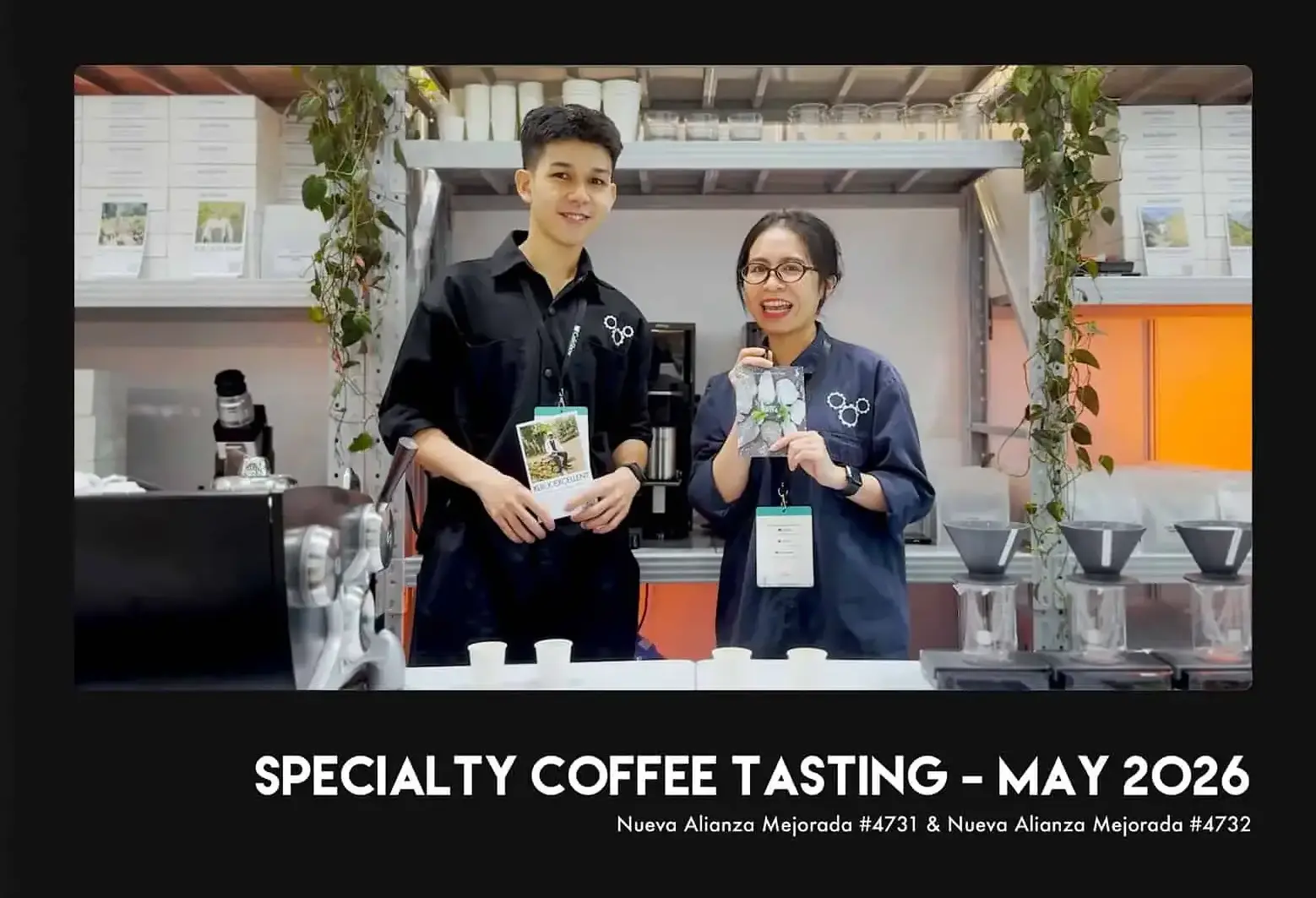
- Taste the Origin
Unveiling May Discovery Subscription: Nueva Alianza Mejorada #4731 & Nueva Alianza Mejorada #4732
The Discovery Subscription is a silent dialogue, a place where the soul of the connoisseur finds a harmonious beat with distant lands. Like a transparent lens, we become storytellers, meticulously peeling back layers of cultural sediment, the breath of the soil, and the human philosophies hidden within every coffee bean.
May arrives with brilliant streaks of golden sunlight, a time when we long to hide beneath the lush, dew-drenched canopies of Santa Teresa. Amidst the silence of the Andes, when compassion touches Mother Earth, what will we hear? Perhaps it is a sweet response that nature reserves solely for souls who know how to wait patiently.

- Taste the Origin
Nueva Alianza Pacamara #4733 – The essence of Cusco with elegant jasmine notes
Nueva Alianza Pacamara #4733 is a testament to the miraculous terroir and dedicated cultivation of the renowned Cusco region. The combination of the characteristic Pacamara bean size and ideal altitude has forged a flavor profile of immense sophistication and depth. From the very first moment, this lot captivates with its elegant jasmine notes, radiating a gentle, pure fragrance akin to a flower blooming in the morning dew.

- Taste the Origin
Nueva Alianza Orange Gesha #4737 – An expedition of recessive genetic traits into the sensory realm
In a world of authenticity, Nueva Alianza Orange Gesha #4737 represents the proud emergence of rare biological traits often obscured by nature’s universality. Carrying a recessive genetic code, Lot #4737 embarks on an “expedition” into the connoisseur’s mind, where record-breaking fructose concentrations are released to perfectly fill every sensory gap with absolute smoothness and purity.
Through washed processing and extremely-light roasting, vibrant citrus nuances and ethereal floral notes, once hidden deep within the genetic structure, now manifest with power, transforming the tasting experience into a journey of ontological completion, where the rarity of recessive genes finally reigns supreme in flavor.

Specialty Coffee in Vietnam
BRAND VALUE
YOU SHOULD HAVE KNOWN
XLIII Coffee has been aiming to become a big, impactful company with social responsibilities,
have access to high-quality raw materials and convey the complete original values of coffee to our customer
