
How is Racemosa coffee processed to preserve its unique flavor?
Coffea Racemosa, a rare species with exceptionally low caffeine content and a delicate, tea-like profile, requires a carefully designed processing method to preserve its subtle elegance. From selective harvesting and controlled fermentation to drying and storage, every stage plays a critical role in retaining its intricate flavors. But which processing method allows Racemosa to truly shine?
I. Unique characteristics of Coffea Racemosa that influence processing
Processing coffee refers to the entire journey of handling coffee cherries after harvest, removing the fruit to obtain green beans for roasting. While it may sound simple, processing is the stage that determines the final flavor in the cup.
A well-controlled process can highlight sweetness, acidity, or floral and fruity notes, while even a small deviation can strip the beans of their inherent qualities. Factors such as bean size, caffeine content, climate conditions, and even harvest season all play critical roles in choosing and applying the right method.
For Coffea Racemosa, these unique traits make processing especially challenging and at the same time, the key to preserving its rare value.
Small and thin beans

Racemosa beans (left) are smaller and thinner than Arabica (right), making them highly sensitive to heat and humidity during drying. Extended or uneven drying can lead to cracking, degradation, or mold growth. Farmers must therefore adopt gentle and closely monitored drying techniques to maintain bean quality.
Exceptionally low caffeine content
One of Racemosa’s defining traits is its ultra-low caffeine level, just 0.38-0.83%, compared to Arabica (~1.2%) and Robusta (~2%). Since caffeine naturally protects against spoilage, Racemosa beans are more fragile, losing aroma quickly and requiring careful storage. Fermentation must also be adjusted: if prolonged, it risks disrupting flavor balance and diminishing Racemosa’s distinct character.
Unique flavor profile
Racemosa impresses coffee lovers with herbal, floral and cacao nibs notes, reflecting its wild origins and natural habitat. Yet this delicate profile is easily altered: excessive fermentation or improper drying can produce harsh or heavy flavors. Processing Racemosa therefore demands minimal intervention, but executed with precision, to safeguard its natural clarity.


Adaptation to distinct coastal climates
Native to the dry coastal regions of central and southern Mozambique, eastern Zimbabwe, and northern KwaZulu-Natal in South Africa, Racemosa thrives under unique environmental conditions. While this climate shapes its distinctive traits, it also challenges processing. Farmers often rely on raised drying beds and protective structures to prevent mold and ensure even drying.
Harvest season coinciding with the rains
Another challenge is that Racemosa’s harvest typically overlaps with the rainy season (November-December). High humidity creates risks of mold, while unstable sunshine hinders efficient drying. Farmers often use raised beds with covers or supplement with mechanical dryers. Compared to other species, this makes processing Racemosa more complex and labor-intensive.
From bean size and caffeine content to flavor profile, climate, and harvest season, every characteristic of Coffea Racemosa directly affects how it must be processed. Each step, from harvesting and fermentation to drying and storage, requires tailored adjustments to preserve the refined elegance and unique value of this rare species.
II. The most common processing method for Coffea Racemosa

Today, in producing regions such as Mozambique, South Africa, and Zimbabwe, the washed process is by far the most widely used method. Some smallholder farms and experimental roasters have tried honey and natural (dry) methods to diversify flavor, but these are less common, as Racemosa’s thin beans are fragile and easily damaged in humid environments.
Washed processing method
The washed process involves removing the pulp and mucilage of the coffee cherry using water, controlled fermentation, and thorough washing, before drying the beans. This method ensures clarity, cleanliness, and minimal off-flavors.
Key steps in washed processing
-
Harvest and sorting: Only ripe cherries are picked; float tests remove defective or underripe ones.
-
Depulping: Cherries are pulped to remove the outer skin, leaving a thin mucilage layer.
-
Fermentation: Beans are soaked in water for 12-48 hours to break down mucilage. Racemosa, with its thin beans, usually requires shorter fermentation to avoid flavor loss.
-
Washing: Beans are rinsed thoroughly to remove any remaining mucilage.
-
Drying: Beans are dried on raised beds or under covered structures until reaching 10-12% moisture.
-
Milling: The parchment is removed, yielding clean green beans ready for storage or roasting.


Why the washed process is most suitable for Racemosa?
Several reasons explain why washed processing is the most common choice for Racemosa. Its small, thin beans are vulnerable to damage, making quick, systematic processing essential.
First, washed processing helps retain clean, delicate flavors while minimizing defects. By removing mucilage efficiently and managing fermentation carefully, the herbal, floral, and cacao nibs notes characteristic of Racemosa are enhanced.
Second, given the coastal climate where harvest overlaps with the rainy season, washed processing reduces the risk of mold compared to natural, which requires prolonged sunshine.
Finally, it limits the risk of over-fermentation – a factor that could otherwise compromise Racemosa’s unique flavor profile. For all these reasons, the washed process remains the most trusted and widely adopted method for processing Coffea Racemosa.
III. The potential of multi-method processing

Coffea Racemosa already stands out with its one-of-a-kind flavor profile, but its potential goes far beyond the washed process. In recent years, smallholder farms, specialty roasters, and even coffee research labs have begun experimenting with alternative processing methods.
Most of these efforts have been documented in Mozambique and South Africa, the species’ native regions, as well as in specialty coffee facilities across Europe. Early results suggest that beyond the familiar clarity of washed Racemosa, other methods can unlock layers of sweetness, richer body, or fruit-forward complexity. Techniques such as natural, honey, anaerobic fermentation, and carbonic maceration have revealed surprising possibilities.
|
Processing method |
Where practiced |
Regions applied |
Flavor outcomes |
Key challenges |
|
Washed |
Mainly Racemosa farms |
Mozambique, South Africa |
Clean, bright, and reminiscent of herbal, floral, and cacao nibs |
High water usage, requires strict fermentation control |
|
Natural |
Smallholder farms, experimental roasters |
Mozambique, South Africa |
Sweet, full body, pronounced fruity notes |
High mold risk, difficult to manage during rainy season |
|
Honey |
Smallholder farms, experimental roasters |
Selected farms in South Africa & Europe |
Smooth sweetness, more complexity than washed |
Technically demanding, flavor instability if drying is inconsistent |
|
Anaerobic fermentation/ Carbonic maceration |
Research labs, high-end roasters |
Mainly in Europe |
Unique fermented fruit notes, layered complexity |
Complex process, high risk, costly |
This diversity opens a vast new horizon for Racemosa: washed may remain the “golden key” for preserving purity, but natural, honey, or anaerobic processes act as additional doors, guiding Racemosa deeper into the colorful world of specialty coffee.

In the future, adopting and developing multi-method processing could raise the economic value of Racemosa for farmers while enriching experiences for drinkers, transforming this rare species into a symbol of both creativity and refinement in the specialty coffee industry.
In summary,
At XLIII Coffee, we view the processing of Racemosa not as a fixed formula, but as a journey of discovery. As one of the rarest coffee species with extremely low yields and virtually no established “standards” to reference, every processing experiment, from washed, natural, honey to anaerobic fermentation, is approached with openness, without forcing the outcome into a predetermined mold.
We recognize that conventional processing methods, originally developed for Arabica and Robusta, may not fully capture or do justice to Racemosa. For us, processing Racemosa is not about finding the “right” method, but about creating the opportunity for this species to express its own intrinsic value. This spirit of openness allows us not only to preserve Racemosa’s authenticity, but also to respect its wild, unfinished journey within the world of specialty coffee.
Image owned and curated by XLIII Coffee.
IV. FAQs
1. How do Racemosa’s small, thin beans affect drying time?
Due to their delicate structure, Racemosa beans are highly sensitive to heat and humidity. Prolonged drying risks mold or flavor loss, so farmers often shorten drying time and rely on raised beds or mechanical dryers for support.
2. Why is the washed process considered the best fit for Racemosa?
The washed method removes mucilage quickly, tightly controls fermentation, and reduces the risk of mold during the rainy harvest season, allowing Racemosa’s clean and delicate profile to shine.
3. Does Racemosa require special technology for processing?
Not necessarily complex technology, but it does require strict control of temperature and humidity. Many farms use covered drying beds, raised platforms, or mechanical dryers to protect beans during the wet harvest months.
4. What potential do methods like anaerobic fermentation or carbonic maceration hold for Racemosa?
They unlock exciting new flavor dimensions, such as fruity fermentation notes or layered sweetness. While not yet mainstream, these methods bring unique value to this rare species.
5. Could Racemosa become a “playground” for innovative methods such as thermal shock or double fermentation in the future?
Very likely. Racemosa’s rare profile and low caffeine content make it a promising candidate for experimental techniques. With further research and investment, it could serve as a “natural laboratory” for innovation in specialty coffee processing.

Bài viết mới

- Taste the Origin
Nigussie Nare – Murago Outgrowers #03028: Cultivated from the Values of Sustainable Reciprocity
Nestled beneath the shade trees of Sidama, Bensa, the Nigussie Nare – Murago Outgrowers #03028 coffee lot serves as a living testament to the values of sustainable reciprocity. This symbiosis begins with the intimate bond between a rich indigenous ecosystem and the smallholder farmers of the Murago region. Each harvested bean is the culmination of a virtuous cycle: a stable environment produces exceptional bean quality, and sustainable economic growth, in turn, continues to protect the verdant canopy of the great forest.

- Taste the Origin
Rift Valley Coffee Caucus #03757 – A Testament to Western Kenya’s Collective Spirit
Turning our gaze to the Great Rift Valley of East Africa, the fertile volcanic landscapes are witnessing an inspiring transformation. Moving away from fierce, survival-driven competition, smallholder farmers in Western Kenya have chosen to join forces, forging a resilient and unified network. The Rift Valley Coffee Caucus #03757 lot stands as the ultimate testament to this remarkable collective synergy.

- Breaking News
Airworks Coffee & XLIII Coffee – A “handshake” that brings original flavors across borders
XLIII Coffee, alongside our key wholesale partner Airworks Coffee, officially announces the latest release of specialty coffee lots for the North American market. This event reaffirms our commitment to bringing original flavors across all geographical barriers to coffee enthusiasts.
Early access (for Subscribers of Airworks): 10:00 AM (PST) | Wednesday, April 29, 2026
General access: 10:00 AM (PST) | Friday, May 1, 2026
We invite our Customers and Partners to visit (airworkscoffee.com) for detailed information and to prepare for this special release!
- Taste the Origin
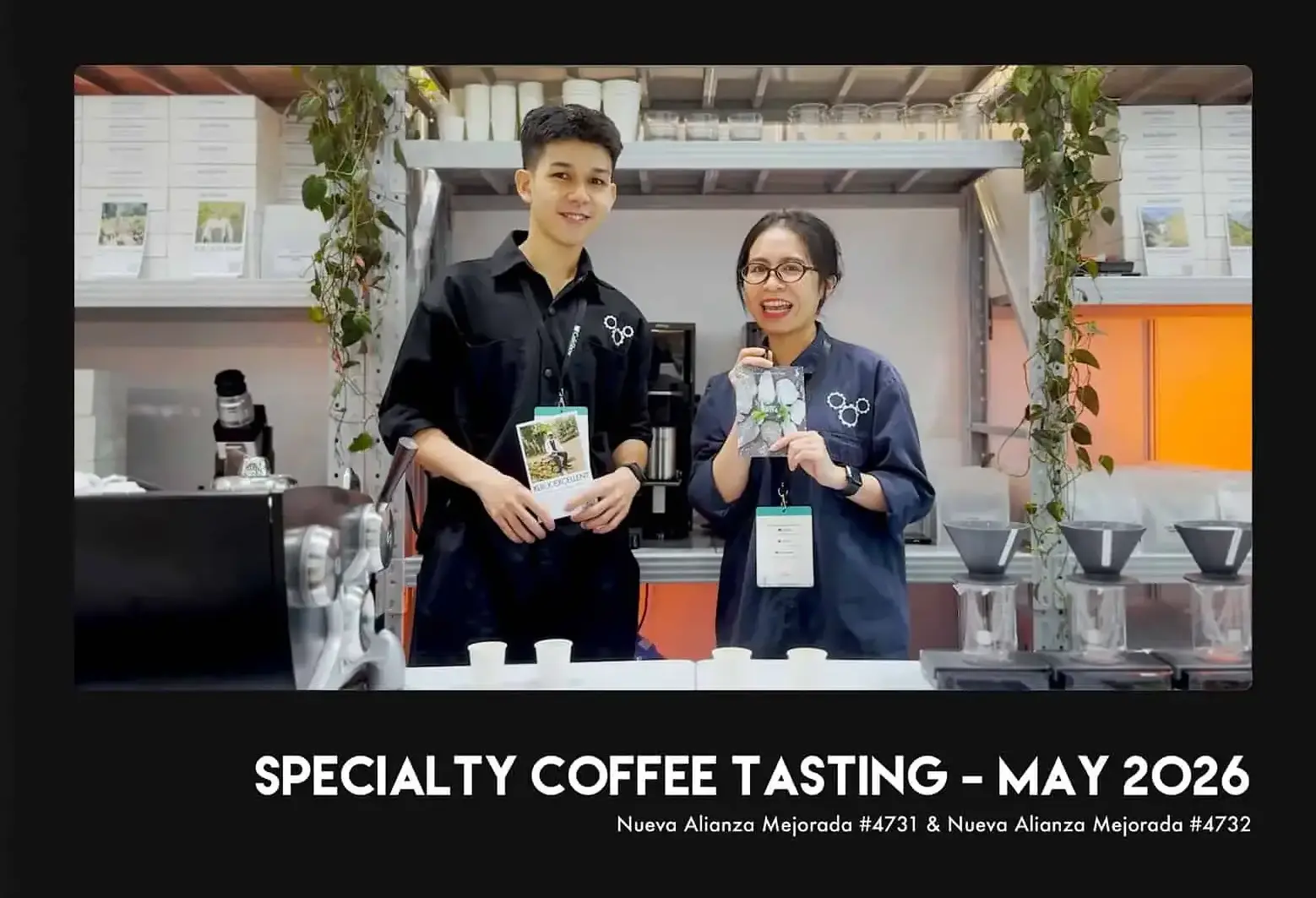
Unveiling May Discovery Subscription: Nueva Alianza Mejorada #4731 & Nueva Alianza Mejorada #4732
The Discovery Subscription is a silent dialogue, a place where the soul of the connoisseur finds a harmonious beat with distant lands. Like a transparent lens, we become storytellers, meticulously peeling back layers of cultural sediment, the breath of the soil, and the human philosophies hidden within every coffee bean.
May arrives with brilliant streaks of golden sunlight, a time when we long to hide beneath the lush, dew-drenched canopies of Santa Teresa. Amidst the silence of the Andes, when compassion touches Mother Earth, what will we hear? Perhaps it is a sweet response that nature reserves solely for souls who know how to wait patiently.

- Taste the Origin
Nueva Alianza Pacamara #4733 – The essence of Cusco with elegant jasmine notes
Nueva Alianza Pacamara #4733 is a testament to the miraculous terroir and dedicated cultivation of the renowned Cusco region. The combination of the characteristic Pacamara bean size and ideal altitude has forged a flavor profile of immense sophistication and depth. From the very first moment, this lot captivates with its elegant jasmine notes, radiating a gentle, pure fragrance akin to a flower blooming in the morning dew.

- Taste the Origin
Nueva Alianza Orange Gesha #4737 – An expedition of recessive genetic traits into the sensory realm
In a world of authenticity, Nueva Alianza Orange Gesha #4737 represents the proud emergence of rare biological traits often obscured by nature’s universality. Carrying a recessive genetic code, Lot #4737 embarks on an “expedition” into the connoisseur’s mind, where record-breaking fructose concentrations are released to perfectly fill every sensory gap with absolute smoothness and purity.
Through washed processing and extremely-light roasting, vibrant citrus nuances and ethereal floral notes, once hidden deep within the genetic structure, now manifest with power, transforming the tasting experience into a journey of ontological completion, where the rarity of recessive genes finally reigns supreme in flavor.

Specialty Coffee in Vietnam
BRAND VALUE
YOU SHOULD HAVE KNOWN
XLIII Coffee has been aiming to become a big, impactful company with social responsibilities,
have access to high-quality raw materials and convey the complete original values of coffee to our customer
