
Coffea eugenioides – The story of Arabica’s mysterious ancestor
Few people know that behind the renowned flavor of Arabica lies the genetic imprint of a little-known wild coffee species: Coffea eugenioides. With its delicate taste, low caffeine content, and high genetic value, this species is the “missing piece” that helps decode Arabica’s origin story while opening up new directions for the coffee world in the era of sustainability.
I. Origin and genetics of Coffea eugenioides

Coffea eugenioides was first described scientifically in 1907 by botanist Spencer Le Marchant Moore. In research literature, it is often cited as one of the oldest wild coffee species, virtually untouched by domestication. Unlike Arabica or Robusta, which have been widely cultivated by humans, C. eugenioides exists mainly in natural populations and is known primarily within the scientific community.
Image collected from Sweet Maria’s Coffee Library.
Geographic origin and distribution
This species originates from the East African highlands, particularly in Uganda, Rwanda, Burundi, Kenya, Tanzania, Ethiopia, South Sudan, and the Democratic Republic of Congo. These are humid tropical forests, at elevations between 1,000 and 2,000 meters above sea level. Today, C. eugenioides populations still exist in scattered natural habitats, but they are increasingly threatened by climate change and deforestation, leading to shrinking distribution.
Genetic characteristics
Coffea eugenioides is a species belonging to the genus Coffea, family Rubiaceae – alongside all other known coffee species. It is important to emphasize that C. eugenioides is not a variety or cultivar selected by humans but a naturally existing wild species from East African forests.

Because it carries an ancestral, undomesticated genome, C. eugenioides has become a valuable genetic resource for breeding, especially as one of the two “parent species” that gave rise to Coffea arabica.
Image collected from Cafe Imports.
The genetic distinction lies in its ploidy. C. eugenioides is diploid (2n), carrying only two basic chromosome sets, similar to many wild coffee species. In contrast, C. arabica is a tetraploid, the result of a hybridization between C. eugenioides and C. canephora (Robusta).
| Characteristic | Details |
|---|---|
| Chromosome count | Diploid (2n = 22) |
| Genome type | Diploid – stable with two basic sets of chromosomes |
| Genetic role | Direct ancestor of Coffea arabica (hybrid of C. eugenioides × C. canephora) |
| Time of Arabica hybridization | ~600,000 years ago (single hybridization event) |
| Genetic contribution to Arabica | Low caffeine, naturally sweet flavor, partial drought tolerance |
| Genetic diversity | Higher than Arabica (which stems from a single hybridization event → low genetic diversity today) |
| Research significance | Rare genetic resource for developing new cultivars: low caffeine, refined flavors, climate resilience |
Thanks to advancements in genome sequencing (e.g., Nature Genetics, 2024), scientists now better understand the role of C. eugenioides within the coffee gene pool. It is considered a “natural gene bank”, offering crucial material for breeding programs aimed at quality improvement, disease resistance, and sustainable coffee varieties.
II. Morphology and biology of Coffea eugenioides
In this section, we will explore the morphology and biological characteristics of C. eugenioides, from the structure of its leaves, flowers, and fruits to its growth capacity and flavor profile, in order to explain why it has become known as the “mysterious ancestor” of Arabica.
Morphological traits
C. eugenioides is a wild coffee species with distinctive physical traits:
-
Growth form: shrub or small tree, 1-4.5 m tall, straight sturdy trunk.
-
Leaves: narrow and elongated compared to other coffee species, 5-15 cm long, 2-5 cm wide.
-
Flowers: funnel-shaped, white, blooming in small clusters, delicate and fragrant.
-
Fruits: small, spherical or ovoid, turning from green to red when ripe.
-
Seeds: each fruit contains 2 smaller coffee beans than Arabica or Robusta, contributing to its mild cup profile.


Images collected from MTPak Coffee, SICC, Coffee Magazine.
Biological traits
This species carries several biological characteristics that explain its importance as Arabica’s “mysterious ancestor”:
-
Genetics: member of Rubiaceae, evergreen, long-lived in natural forests.
-
Caffeine content: low (0.4-0.6%), about one-third of Arabica, resulting in naturally sweet, less bitter flavors.
-
Drought tolerance: stronger than some species, allowing survival in East African highlands.
-
Yield: low productivity, which limits commercial farming; mainly used for breeding and research.
-
Growth cycle: from flowering to fruit maturation takes 9-11 months – slower than Arabica or Robusta.
Morphology compared with “parents” of Arabica
When compared with the “parents” of Arabica – C. canephora (Robusta) and C. arabica – C. eugenioides stands out with its smaller stature, narrower leaves, and smaller fruits, reflecting the traits of a primitive wild species that has not undergone domestication.
| Trait | C. eugenioides | C. arabica | C. canephora (Robusta) |
|---|---|---|---|
| Plant height | 1-4.5 m | 2-5 m | 4-6 m |
| Leaf size | 5-15 × 2-5 cm | 10-15 × 5-8 cm | 10-15 × 6-9 cm |
| Fruit size | Small, spherical/ovoid | Medium | Larger than Arabica |
| Caffeine | 0.4-0.6% | 1-1.5% | 2-4% |
| Flavor | Sweet, mild | Balanced | Bitter, strong |
| Growth cycle | 9-11 months | 7-9 months | 9-11 months |
These differences not only help distinguish C. eugenioides in the wild but also explain its crucial role in passing on mild, low-caffeine traits to modern Arabica.
III. The demanding requirements of cultivating Coffea eugenioides
Growing Coffea eugenioides is by no means simple. This wild coffee species has strict requirements for its environment and cultivation techniques, and poses numerous risks that make farming it highly challenging.
Environmental requirements
To grow well, the plant needs natural conditions similar to its native East African habitats:
-
Soil must be well-drained, slightly acidic (pH 5.5 – 6.5), and nutrient-rich.
-
Prefers partial shade and does not tolerate direct, harsh sunlight.
-
Thrives in temperatures between 15 – 24°C, but is highly sensitive to frost.
-
Requires abundant rainfall (1,500 – 2,500 mm/year) and cannot withstand prolonged drought.
Cultivation techniques
Farming Coffea eugenioides demands delicate techniques, usually based on manual methods since no improved cultivars exist. At Finca Inmaculada in Colombia, farmers use grafting onto rootstocks such as C. excelsa to enhance drought resistance. However, yields are only about 1/3 that of Arabica, making harvesting costly.
In Kenya, pilot farms have faced issues with fruit drop due to strong winds and irregular irrigation, requiring continuous monitoring. These techniques are not only complex but also capital-intensive, making them more suitable for research than for large-scale commercial farming.
|
Cultivation aspect |
Practical approach | Challenges |
|---|---|---|
| Propagation | Seed or grafting (e.g., grafting onto C. excelsa rootstock to increase drought tolerance). | Grafting is complex, with low survival rates; in Colombia, skilled technicians are required. |
| Spacing | 2-3 m between plants for proper ventilation and nutrition. | Limited space in Kenyan highlands raises land preparation costs. |
| Irrigation & care | Requires consistent watering but must avoid waterlogging; daily monitoring needed. | In Colombia, drought conditions + high irrigation costs; yields only 1/3 of Arabica. |
| Harvesting | Fruits drop easily in strong winds; manual harvest only since species is not domesticated. | Low yield, labor-intensive; high labor costs in Kenya increase expenses. |
| Breeding improvements | Not yet domesticated, still reliant on wild genetics. | Difficult to scale; hybrid breeding suggested to improve yield and drought tolerance. |
Risks and strict requirements

One of the biggest challenges in cultivating C. eugenioides is its high susceptibility to pests and diseases, especially coffee leaf rust (hemileia vastatrix). This increases farming costs, which are already high due to low productivity and labor-intensive requirements.
Additionally, no improved cultivars have yet been developed to enhance adaptability or disease resistance, making large-scale commercialization impractical. Pilot farms in Kenya and Colombia are exploring solutions, from hybrid breeding to grafting to reduce these strict demands and unlock the potential of this rare yet promising species.
IV. Decoding the distinct sweetness of Coffea eugenioides
Coffea eugenioides has long stirred debate within the specialty coffee community. Geoff Watts of Intelligentsia Coffee once admitted that although the species has a small cult following, its flavor diverges so far from the familiar definition of coffee that it appeals only to a niche audience.
Instead of being bold, bitter, and heavy-bodied, C. eugenioides is characterized by naturally low caffeine levels, resulting in a pronounced sweetness, smoothness, and minimal bitterness. This gives it a flavor profile “unlike coffee” in the traditional sense – more reminiscent of sesame cookies, toasted marshmallows, lemon candy, or cereal milk: playful, unique, and full of surprises.

Image collected from Inmaculada Coffee Farm.
This difference, rather than excluding it, has actually elevated C. eugenioides into the spotlight of professional coffee circles. A striking example came at the World Barista Championship 2021, where Eugenioides dominated the stage.
Barista Diego Campos, representing Colombia, chose Eugenioides from his homeland to present. He described it as “one of the most surprising and captivating coffees” he had ever tasted. Both the judges and audience were won over by its unusual sweetness and refined subtlety.
Signature flavor profile
-
Sweetness: sesame cookies, toasted marshmallows, lemon candy, cereal milk
-
Floral notes: reminiscent of jasmine, lavender, or rose
-
Fruit tones: light hints of orange, lemon, or peach
-
Acidity: gentle, balanced, bright without being sharp
-
Body: light to medium, silky, allowing flavors to shine with clarity and finesse
Not everyone agrees that Eugenioides represents “true coffee flavor” – some find it too different. But it is precisely this polarizing character that makes it fascinating for specialty coffee enthusiasts eager for new sensory experiences.
The science behind its sweetness

Research reveals that the sweetness and smoothness of C. eugenioides are directly tied to its naturally low caffeine content. Due to genetic mutations affecting caffeine biosynthesis, the plant produces fewer bitter compounds.
This parallels varieties like Laurina, which is also renowned for low caffeine. Interestingly, despite low caffeine, Eugenioides retains high levels of beneficial compounds such as chlorogenic acids, contributing antioxidant properties. Furthermore, its slow maturation in East African highlands allows beans to accumulate more sugars, intensifying its sweet character.
Image is owned by XLIII Coffee.
V. The importance of conservation and future prospects
In the broader picture of the coffee industry, Coffea eugenioides is not just a rare plant – it is a “genetic treasure trove”. According to a study in Science Advances, at least 60% of wild coffee species worldwide, including Eugenioides, are at risk of extinction due to deforestation and climate change. Losing them means losing invaluable genetic resources that could help commercial coffee varieties resist pests, drought, and adapt to harsher climates in the future.
Though not cultivated or marketed on the same scale as Arabica or Robusta, C. eugenioides holds extraordinary biological significance. As one of the original “parent species” of the Coffea genus, it plays a crucial role in preserving genetic diversity. This opens pathways for developing improved cultivars resilient to diseases and climate shifts. Protecting this species means safeguarding unique genetic potential for the entire coffee sector and strengthening the foundation for a sustainable future (Intelligence Coffee, 2023).


Currently, many conservation strategies are being implemented: from Ex Situ gene banks (storing seeds under controlled conditions) to In Situ conservation programs (protecting plants directly in natural forests, such as in Uganda – a center of wild coffee diversity). Uganda is also a pioneering country in surveying and researching C. eugenioides, in order to better understand its biological characteristics, disease resistance, and applications in hybrid breeding.
The future of Eugenioides opens many notable directions. In research, it can be used to develop hybrids that are drought-tolerant, pest-resistant, and more suitable for changing climates. In commerce, Eugenioides also carries the potential to become an independent specialty coffee line, thanks to its delicate, sweet, complex flavor and naturally low caffeine content – a factor increasingly attractive to modern consumers. However, low yields and high cultivation costs remain challenges, requiring progress in breeding and agricultural techniques.
In conclusion,
From an obscure wild species, Coffea eugenioides is now recognized as a key to coffee’s sustainable future. Its value lies not only in its unique sweetness but also in its rare genetic wealth, which could help the global coffee industry adapt to climate challenges. Conserving C. eugenioides thus means more than saving a species – it means preserving the possibility for coffee to evolve, innovate, and endure for centuries to come.
VI. FAQs
1. Why is Coffea eugenioides called the “mysterious ancestor” of Arabica?
Because Arabica (Coffea arabica) originated from a natural hybridization between Coffea canephora (Robusta) and Coffea eugenioides. Yet for decades, the role of Eugenioides received little attention, making it the “hidden ancestor” behind familiar Arabica.
2. What role does Coffea eugenioides play in breeding and coffee improvement?
It serves as a rare genetic reservoir, enabling the development of hybrids with lower caffeine content, richer flavors, and better adaptability to climate change and pests.
3. Why does Eugenioides taste naturally sweet?
Because its beans contain very low caffeine levels, meaning fewer bitter compounds. At the same time, it contains more sugars (like sucrose) and fewer bitter compounds (such as chlorogenic acids), giving it a mild, balanced sweetness.
4. Has Eugenioides been used to develop new commercial coffee cultivars?
Yes, institutions such as World Coffee Research and IAC (Brazil) have conducted hybridization projects combining Eugenioides with Arabica and other species to develop promising cultivars. However, these remain limited in scale and mostly experimental.
5. Could Coffea eugenioides become a widely recognized specialty coffee in the future?
Yes. Its potential is significant thanks to its unique flavor and naturally low caffeine, aligning with modern consumer preferences. However, to become mainstream, Eugenioides must overcome challenges of low yield, strict cultivation demands, and limited supply.

Bài viết mới

- Taste the Origin
Nigussie Nare – Murago Outgrowers #03028: Cultivated from the Values of Sustainable Reciprocity
Nestled beneath the shade trees of Sidama, Bensa, the Nigussie Nare – Murago Outgrowers #03028 coffee lot serves as a living testament to the values of sustainable reciprocity. This symbiosis begins with the intimate bond between a rich indigenous ecosystem and the smallholder farmers of the Murago region. Each harvested bean is the culmination of a virtuous cycle: a stable environment produces exceptional bean quality, and sustainable economic growth, in turn, continues to protect the verdant canopy of the great forest.

- Taste the Origin
Rift Valley Coffee Caucus #03757 – A Testament to Western Kenya’s Collective Spirit
Turning our gaze to the Great Rift Valley of East Africa, the fertile volcanic landscapes are witnessing an inspiring transformation. Moving away from fierce, survival-driven competition, smallholder farmers in Western Kenya have chosen to join forces, forging a resilient and unified network. The Rift Valley Coffee Caucus #03757 lot stands as the ultimate testament to this remarkable collective synergy.

- Breaking News
Airworks Coffee & XLIII Coffee – A “handshake” that brings original flavors across borders
XLIII Coffee, alongside our key wholesale partner Airworks Coffee, officially announces the latest release of specialty coffee lots for the North American market. This event reaffirms our commitment to bringing original flavors across all geographical barriers to coffee enthusiasts.
Early access (for Subscribers of Airworks): 10:00 AM (PST) | Wednesday, April 29, 2026
General access: 10:00 AM (PST) | Friday, May 1, 2026
We invite our Customers and Partners to visit (airworkscoffee.com) for detailed information and to prepare for this special release!
- Taste the Origin
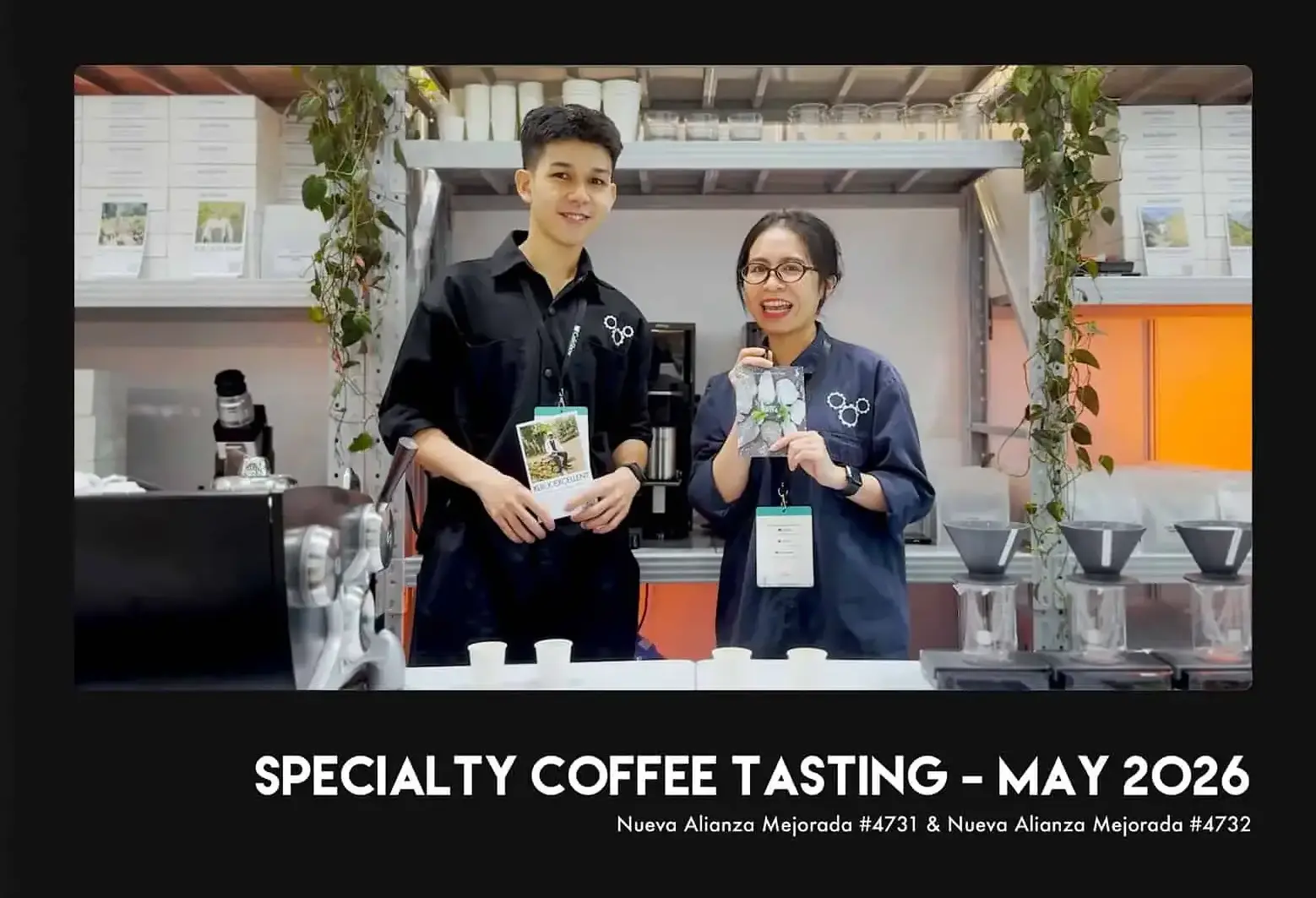
Unveiling May Discovery Subscription: Nueva Alianza Mejorada #4731 & Nueva Alianza Mejorada #4732
The Discovery Subscription is a silent dialogue, a place where the soul of the connoisseur finds a harmonious beat with distant lands. Like a transparent lens, we become storytellers, meticulously peeling back layers of cultural sediment, the breath of the soil, and the human philosophies hidden within every coffee bean.
May arrives with brilliant streaks of golden sunlight, a time when we long to hide beneath the lush, dew-drenched canopies of Santa Teresa. Amidst the silence of the Andes, when compassion touches Mother Earth, what will we hear? Perhaps it is a sweet response that nature reserves solely for souls who know how to wait patiently.

- Taste the Origin
Nueva Alianza Pacamara #4733 – The essence of Cusco with elegant jasmine notes
Nueva Alianza Pacamara #4733 is a testament to the miraculous terroir and dedicated cultivation of the renowned Cusco region. The combination of the characteristic Pacamara bean size and ideal altitude has forged a flavor profile of immense sophistication and depth. From the very first moment, this lot captivates with its elegant jasmine notes, radiating a gentle, pure fragrance akin to a flower blooming in the morning dew.

- Taste the Origin
Nueva Alianza Orange Gesha #4737 – An expedition of recessive genetic traits into the sensory realm
In a world of authenticity, Nueva Alianza Orange Gesha #4737 represents the proud emergence of rare biological traits often obscured by nature’s universality. Carrying a recessive genetic code, Lot #4737 embarks on an “expedition” into the connoisseur’s mind, where record-breaking fructose concentrations are released to perfectly fill every sensory gap with absolute smoothness and purity.
Through washed processing and extremely-light roasting, vibrant citrus nuances and ethereal floral notes, once hidden deep within the genetic structure, now manifest with power, transforming the tasting experience into a journey of ontological completion, where the rarity of recessive genes finally reigns supreme in flavor.

Specialty Coffee in Vietnam
BRAND VALUE
YOU SHOULD HAVE KNOWN
XLIII Coffee has been aiming to become a big, impactful company with social responsibilities,
have access to high-quality raw materials and convey the complete original values of coffee to our customer
