
Why Does the Coffee World Have So Many “Names”? Understanding Species, Variety, and Cultivar Correctly
The world of coffee does not stop at just Arabica or Robusta. Dig a little deeper, and you will encounter a wide range of different “names” appearing on packaging and throughout the specialty coffee world: from species and variety to cultivar. Each term represents a different level of classification, reflecting biological origins, natural evolution, and the deliberate intervention of humans in shaping the coffee plant.
I. Behind every cup of coffee lies a complex system of terminology
When coffee aromas spread through the cup, most of the drinker’s experience takes place at the sensory level. However, simply turning the package over quickly replaces that emotional world with a series of scientific terms: species, variety, cultivar, sometimes accompanied by names that sound unfamiliar and difficult to pronounce.

The frequent appearance of these terms is not a linguistic trend for decoration; rather, it reflects the modern coffee industry’s effort to accurately describe the biological nature of the coffee bean.
In the context of specialty coffee, “names” are not merely tools for product differentiation but vehicles for information. Each term functions like a layer of data, helping decode why two coffee lots grown in different locations, despite undergoing the same roasting proces can express completely contrasting flavor personalities.
Biological Classification – The Foundation of the Terminology System
At the scientific level, coffee is classified according to the botanical taxonomy system, similar to other cultivated plants. The Plants of the World Online (POWO) database, managed by the Royal Botanic Gardens, Kew, indicates that the genus Coffea includes more than 120 recorded species, yet only a very small proportion are cultivated commercially.
Identifying the species is the first and most critical step. Species determine core biological characteristics such as:
- Genetic makeup and level of genetic diversity.
- Ability to adapt to altitude, climate, and pests.
- Caffeine content and chemical structure, which directly influence flavor.
From this biological foundation, Arabica, Robusta, and Liberica form different “flavor frameworks”, even before human intervention through farming or processing techniques.
When Nature Branches Out and Humans Begin to Select

From the species level, coffee plants continue to branch into variety (natural variants), which arise through natural mutations or long-term adaptation to local environments. Genetic studies show that many Arabica varieties originate from wild populations in Ethiopia, where coffee evolved under diverse ecological conditions with minimal human intervention.
At the same time, as cultivation demands expanded, humans began to play a deeper role in shaping coffee plants through cultivar (selected or bred varieties). These are varieties intentionally selected or hybridized to achieve specific goals such as:
- Increasing yield.
- Enhancing disease resistance (especially coffee leaf rust).
- Preserving or improving sensory quality
At this intersection, terminology no longer reflects nature alone but also records the imprint of agricultural science and the global history of coffee production.
Why naming matters in Specialty Coffee?
In the conventional commercial coffee world, simplifying names to “Arabica” or “Robusta” is sufficient. But in specialty coffee, where quality is evaluated down to fine-grained details accurate naming becomes essential. According to the Specialty Coffee Association (SCA), variety and cultivar are among the key variables influencing sensory scores, alongside terroir and processing methods.
| Criteria | Species | Variety | Cultivar |
|---|---|---|---|
| Position in biological classification | 8th rank (the most basic level in formal taxonomy) | Below species | Not an official taxonomic rank; an agronomic and breeding term |
| Formation | Natural evolution with clear genetic differences | Natural mutation and long-term environmental adaptation | Intentional selection, hybridization, or propagation by humans |
| Human involvement | None | Minimal or nearly none | Clear, goal-oriented intervention |
| Genetic stability | Very high | High (with natural variation) | Very high if propagated correctly |
| Influence on flavor | Defines the foundational flavor framework | Adds nuance and flavor personality | Can improve or modify flavor toward specific goals |
| Commercial relevance | Broad, foundational | Common in specialty coffee | Common in large-scale production and modern specialty coffee |
| Representative examples | Coffea arabica, C. canephora, C. liberica | Typica, Bourbon, Ethiopian Heirloom | SL28, Catimor, F1 Hybrid |
Thus, this terminology system is not intended to complicate the drinker’s experience. On the contrary, it creates a shared language, one that allows farmers to tell the story of the plants they choose, roasters to make informed decisions, and drinkers to better understand why the cup in front of them tastes the way it does
II. What is a Species?

If understanding coffee is like tracing flavor in the cup back to its deepest origins, then species is the starting point. It is the most basic level of biological classification, used to define a group of coffee plants that share genetic traits, reproductive compatibility, and core biological characteristics. When we say “Arabica” or “Robusta,” we are referring to species, without yet addressing any specific variants or cultivars.
Scientifically, coffee belongs to the genus Coffea within the Rubiaceae family. Most botanical research literature recognizes that the Coffea genus contains more than 120 species. However, only a very small number have been domesticated and cultivated at commercial scale. This demonstrates that even at the species level, the coffee world is highly selective, closely tied to human use and demand.
The species that shape the modern coffee industry
The three species most familiar in today’s coffee industry are Coffea arabica, Coffea canephora (commonly known as Robusta), and Coffea liberica. Each carries a distinct “biological framework” that directly influences plant growth and the resulting cup experience.
Genetic research by Scalabrin et al. (2020) shows that Coffea arabica is the only tetraploid species, formed through a natural hybridization between two wild species (C. eugenioides and C. canephora). This partly explains the complexity and refinement often found in Arabica flavors. In contrast, C. canephora is diploid, contains higher caffeine levels, exhibits stronger disease resistance, and typically presents bolder, more pronounced bitterness.
At the species level, the following characteristics are generally well defined:
- Morphology: leaf size, bean size, plant structure.
- Physiology: growth rate, drought tolerance, pest resistance.
- Chemical composition: caffeine, lipids, chlorogenic acids, foundational elements shaping flavor structure.


These differences are so significant that even when roasted and brewed using the same method, Arabica and Robusta produce entirely different sensory experiences. Crucially, all natural or selected varieties that follow can never exceed the “boundaries” established by the species itself.
Species Is Not the End Point
Nevertheless, species is not an endpoint but a foundation. Within each species, diversity continues to expand through natural mutation and environmental adaptation. This is especially evident in Coffea arabica, where diversification occurred intensely in origin regions such as Ethiopia. Many wild populations still exist there, serving as a “gene bank” for the global coffee industry (according to research on Coffea arabica by Anthony et al., 2002).
These genetic resources continue to supply material for research, conservation, and breeding programs, particularly as climate change places increasing pressure on traditional coffee varieties.
The Return of Rare Species and Future Potential
Beyond the familiar species that have shaped the coffee industry for decades, recent years have seen renewed scientific interest in rare species long neglected in cultivation history. Names such as Coffea racemosa, Coffea stenophylla, and Coffea travancorensis are gradually emerging from laboratories and gene banks into sensory research, experimental roasting, and even extremely limited production batches.


Most of these species currently serve primarily research and conservation purposes, due to low yields, cultivation difficulty, or the absence of suitable supply chains. However, their biological uniqueness opens entirely new possibilities. A notable example is Coffea racemosa, which features very low caffeine content, strong drought tolerance, and a flavor profile that falls outside conventional norms. These traits make Racemosa an important research subject amid climate change and the growing demand for diversified coffee experiences.
The resurgence of rare species demonstrates that species itself is not a “fixed” or closed concept. On the contrary, it is a classification layer that is quietly expanding, challenging long-held assumptions about good vs. bad coffee, premium vs. commodity. While the path to commercial scale remains distant, these species are laying the groundwork for future flavor “revolutions”, where the boundaries between science, conservation, and sensory experience become increasingly blurred.
III. What is a Variety?
If species answers the question “which species does this coffee belong to?”, variety goes deeper: why do coffees that are all Arabica taste so different from one another?. At this level, differences no longer stem from the foundational genome of the species, but from smaller genetic variations formed through long-term environmental adaptation or natural dissemination of coffee plants over time.
In botany, a variety (or botanical variety) refers to a group of plants within the same species that exhibit stable morphological or physiological traits that are identifiable and heritable across generations (such as Bourbon, Typica, Gesha, etc). In coffee, a variety is more often associated with a specific geographic region, migration history, or natural population rather than the result of intentional breeding.

How Varieties Form: Nature, Geography, and History
Most classic Arabica varieties such as Typica and Bourbon are not “inventions” of modern science, but the result of movement and adaptation. Historical agronomic analysis by Wintgens in Coffee: Growing, Processing, Sustainable Production (2009) shows that Typica was transported from Ethiopia to Yemen and later spread across Asia and the Americas, while Bourbon developed from Arabica populations cultivated on Bourbon Island (now Réunion).
Throughout these journeys, coffee plants continuously adapted to new climates, altitudes, and soils. Small changes in leaf structure, bean size, or branch density gradually stabilized and were maintained, forming variants with distinct characteristics. This is why variety is often tied to geographic narratives, not just “what variety it is”, but also “where it has lived”.
Variety and Flavor: An Inseparable Relationship
In the world of specialty coffee, variety is considered one of the factors that directly influence sensory perception, alongside terroir and processing methods. The report The Sensory Characterization of Coffee Varieties conducted by World Coffee Research (2017) indicates that different Arabica varieties tend to express distinct flavor profiles consistently, even when grown under similar conditions.


For example, Bourbon is often described as having a rounded sweetness, soft acidity, and balanced structure, while Typica tends toward clarity, brightness, and a lingering finish. These differences are not subjective impressions, but have been documented through controlled blind cupping experiments.
However, variety is not an “absolute promise” of flavor. Even a renowned variety can yield poor results if cultivation or processing conditions are unsuitable. This raises an important question for the drinker: are we tasting the flavor of the variety itself, or of the entire ecosystem surrounding it? In most cases, the answer is both.
When Variety Is Confused and Why Correct Naming Matters
In practice, the concept of variety is often used interchangeably with cultivar in marketing and communication. Van der Vossen and colleagues noted in their research published in Global Coffee Breeding that many coffees labeled as “variety” in the market are in fact cultivars that have been selected or bred, leading to confusion among consumers.
Correct naming is not merely an academic concern; it directly relates to transparency and traceability. When a package states Bourbon or Typica, it is not simply describing flavor, it is making a claim about genetic origin, cultivation history, and sensory expectations.
IV. What is a Cultivar?

A cultivar refers to varieties that are intentionally selected, propagated, or bred to achieve specific goals such as yield, disease resistance, genetic stability, or sensory quality.
Unlike varieties, which form naturally and are tied to native populations, cultivars exist only under human management. According to the International Society for Horticultural Science (ISHS), a cultivar is a group of cultivated plants with distinct, uniform, and stable characteristics when propagated correctly. In coffee, this is particularly important because plants are often propagated vegetatively or through controlled seed selection.
Why Cultivars Emerged: The Coffee Industry’s Need to Survive
A fundamental question arises: if varieties are already diverse, why does the coffee industry still need cultivars? The answer lies in systemic challenges. Disease outbreaks, especially coffee leaf rust (hemileia vastatrix) have caused severe damage to Arabica-growing regions from the 19th century to the present, forcing the industry to seek more sustainable solutions.
The 2018 report by the Food and Agriculture Organization of the United Nations (FAO) on climate change emphasizes that traditional Arabica varieties are becoming increasingly vulnerable to rising temperatures and the spread of diseases. In this context, cultivars have become essential tools to balance productivity, resilience, and cup quality. In other words, cultivars are not just about flavor, they are part of the global coffee industry’s survival strategy.
How Cultivars Are Created?
The development of cultivars generally follows three main pathways. The first is selection within existing populations, where plants exhibiting desirable traits are propagated and stabilized over multiple generations. The second is controlled hybridization, combining different genetic sources to create new plants. The third, an increasingly common approach is vegetative propagation to ensure genetic uniformity.


A representative example is the Catimor and Sarchimor cultivar groups, which result from crosses between Arabica and rust-resistant lines derived from Coffea canephora. These cultivars demonstrate exceptional disease resistance and high yields, but they have also sparked debate over trade-offs with sensory quality.
Cultivar and Quality: Trade-Off or Evolution?
For a long time, cultivars were viewed cautiously within the specialty coffee community. Many questioned whether a plant bred to “withstand more” could truly deliver exceptional flavor. However, recent research suggests this perspective is evolving.
A 2021 research bulletin by World Coffee Research on F1 hybrid varieties indicates that some new-generation cultivars not only excel in yield and adaptability, but also achieve high sensory scores, sometimes matching or even surpassing traditional varieties under suitable growing conditions. This suggests that cultivars are not necessarily compromises, but can represent a directed form of evolution.
V. How do levels of classification help us understand coffee deeply?
When the concepts of species, variety, and cultivar are placed side by side, they no longer function as isolated terms but form a logically structured system of branching. This system allows humans to approach coffee as a complex biological, agricultural, and cultural subject.

Each level of classification provides a different layer of information, complementing one another to clarify the origin and nature of the coffee bean.
Branching to Understand Diversity and Difference
At the species level, we gain insight into the foundational biological framework: what inherent traits a coffee species carries, where its flavor potential lies, and what its natural limitations are. This is a directional layer of information, helping distinguish the largest and most stable differences between coffee groups.
As we move deeper into variety, the picture becomes more detailed. This is where natural diversity is clearly expressed through evolution, adaptation, and the migration of coffee plants. Variety helps explain why two coffee lots belonging to the same species can display different sensory characteristics, even when grown and processed under similar conditions.
At the cultivar level, differences are no longer shaped solely by nature, but clearly reflect human involvement. Decisions regarding selection, breeding, and intentional propagation are directly encoded into the coffee plant, influencing yield, resilience, and quality stability. Through this lens, the classification system not only describes diversity, but also reveals how humans have shaped coffee over time.
Understanding in Depth to Connect the Entire Value Chain
A clear understanding of these classification levels helps connect decisions that may otherwise appear disconnected across the coffee value chain. From variety selection at the farm, cultivation practices, and roasting strategies to the way drinkers perceive flavor, all are influenced by characteristics established at the species, variety, and cultivar levels.
When these terms are understood and used correctly, coffee information becomes more transparent and consistent. This not only enhances the drinking experience but also contributes to sustainable value creation for farmers, roasters, and coffee brands, where each product can tell a clear, well-founded story.

Branching as a Long-Term Perspective on Coffee
More importantly, approaching coffee through these levels of classification opens up a long-term perspective on the industry’s development. In the context of climate change and increasing production pressures, understanding biological foundations and varietal history enables future decisions to be based on science and accumulated knowledge rather than short-term experience.
Viewed through this lens, each cup of coffee does not merely reflect present-day flavor, but represents the outcome of a long evolutionary process in which both nature and humans have left their marks. The classification levels, therefore, do not make coffee more complicated. Instead, they help us approach and enjoy coffee in a deeper, more holistic, and more conscious way.
Images are collected from various sources and owned by XLIII Coffee.
VI. FAQs
1. Why does coffee have so many different “names”?
Coffee has many “names” because it is classified across multiple layers, ranging from natural biological taxonomy to human selection and cultivation. Each term helps describe more precisely the genetic origin, growth characteristics, and flavor potential that coffee beans can express.
2. What is a species?
A species is the most basic level of biological classification, used to identify coffee plants that share the same genetic foundation and core biological traits. When we refer to Arabica or Robusta, we are addressing fundamental differences in plant structure, growth behavior, and basic flavor framework.
3. What is a variety?
A variety consists of naturally occurring variants within a species, arising through mutation and long-term environmental adaptation. Varieties reflect genetic diversity within a species and often produce subtle but meaningful differences in morphology and flavor.
4. What is a cultivar?
A cultivar is a coffee plant that has been deliberately selected, bred, or propagated by humans to serve specific goals such as yield, disease resistance, or quality stability. At this level, agricultural science and cultivation strategy play a decisive role.
5. How does understanding classification levels benefit coffee drinkers?
Understanding classification levels allows drinkers to read packaging information more systematically and accurately. As a result, the tasting experience extends beyond the flavors in the cup, becoming more deeply connected to origin stories and personal choice.

Bài viết mới
- Taste the Origin
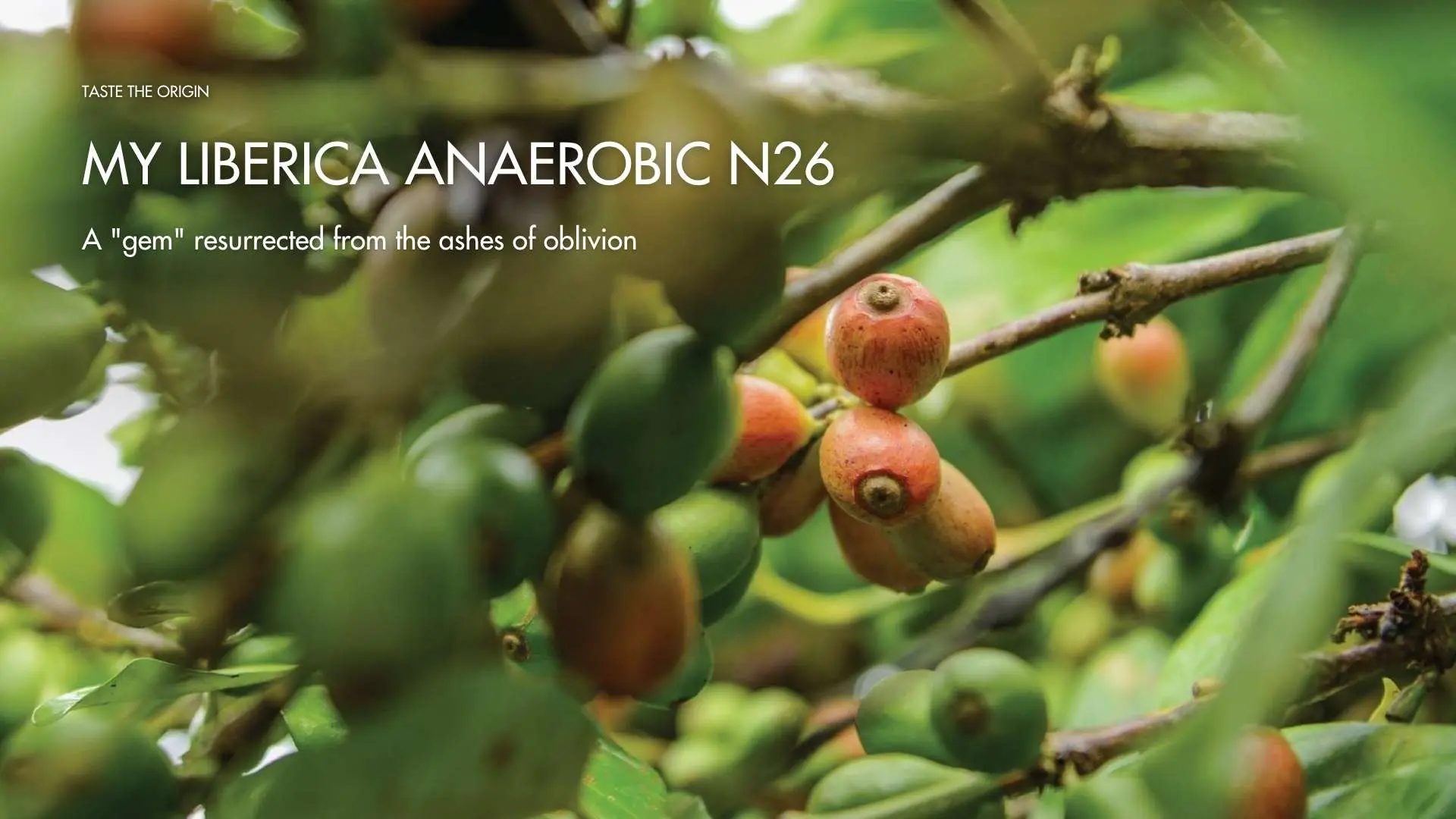
My Liberica Anaerobic N26 – A “gem” resurrected from the ashes of oblivion
The journey of My Liberica Anaerobic N26 is the triumph of a forgotten species, awakened by the depth of understanding, patience, and faith in its original essence. From the heavy clay layers of Kulai to 26 days of transformation in absolute darkness, each step contributes to unlocking layers of flavor that the world once thought could not exist in Liberica. More than just a cup of coffee, My Liberica Anaerobic N26 is a powerful declaration that all great values begin with the courage to delve into their essence, and then rise to a unique voice that resonates throughout the world.


- Taste the Origin
Finca Soledad Mejorado Tyoxy & Fincas Putushio Mejorado – The red thread of the Jijón family
The simultaneous arrival of Finca Soledad Mejorado Tyoxy and Fincas Putushio Mejorado at XLIII Coffee paints a remarkable portrait of the adaptability of the Mejorado variety within Ecuador’s specialty coffee landscape. Nurtured by a shared family philosophy and a commitment to principled cultivation, these two processed lots represent both a breakthrough in microbial innovation and the remarkable return of an exceptional flavor profile.

Finca La Palestina Gesha #5482 – A new chapter in the legend from Cajamarca
From the renowned Cajamarca region, Finca La Palestina Gesha #5482 returns after a period of absence with a proud and fresh appearance. Nurtured in ideal altitude conditions and the cool climate characteristic of the Andes, each coffee bean slowly accumulates subtle flavor nuances before being perfected using the Washed method to maximize the purity of the Gesha variety. Under a carefully refined extremely-light roast profile, this batch of coffee reveals layers of white jasmine, ripe citrus, and sweet golden apricot aromas, interwoven in an elegant and rich flavor structure.

- Taste the Origin
Finca La Palestina ‘Gesha Inca’ #5485 – A masterpiece carved from an ancient civilization
From the mist-covered hills of San José del Alto, Finca La Palestina ‘Gesha Inca’ #5485 emerges as a proud declaration of the convergence between more than seventy years of agricultural heritage and the resilient biological code of an ancient civilization. Through the clarity of meticulously executed Washed Processing, this coffee unveils a magnificent sensory progression across temperature ranges while extending a chain of integrity through the Direct Trade model.

- Taste the Origin
Finca La Palestina Red Bourbon #5487 – A blossoming legacy in the highlands of Cajamarca
Amidst the ethereal clouds of Cajamarca, where the deep forest, Mother Earth, and time harmonize, Finca La Palestina Red Bourbon #5487 is born as a proud epic of heritage. It bears witness to the story of three generations of the Alarcón Coronel family, to their respect for nature, and to their Cup of Excellence achievements. Each layer of fragrance is a journey for all the senses, leading the connoisseur into subtle and captivating depths.

Specialty Coffee in Vietnam
BRAND VALUE
YOU SHOULD HAVE KNOWN
XLIII Coffee has been aiming to become a big, impactful company with social responsibilities,
have access to high-quality raw materials and convey the complete original values of coffee to our customer
